SLUSF64B August   2024  – January 2025 LMR51625 , LMR51635

PRODUCTION DATA  

  1.   1
  2. Features
  3. Applications
  4. Description
  5. Device Comparison Table
  6. Pin Configuration and Functions
  7. Specifications
    1. 6.1 Absolute Maximum Ratings
    2. 6.2 ESD Ratings
    3. 6.3 Recommended Operating Conditions
    4. 6.4 Thermal Information
    5. 6.5 Electrical Characteristics
    6. 6.6 Typical Characteristics
  8. Detailed Description
    1. 7.1 Overview
    2. 7.2 Functional Block Diagram
    3. 7.3 Feature Description
      1. 7.3.1 Fixed Frequency Peak Current Mode Control
      2. 7.3.2 Adjustable Output Voltage
      3. 7.3.3 Enable
      4. 7.3.4 Minimum ON Time, Minimum OFF Time, and Frequency Foldback
      5. 7.3.5 Bootstrap Voltage
      6. 7.3.6 Overcurrent and Short-Circuit Protection
      7. 7.3.7 Soft Start
      8. 7.3.8 Thermal Shutdown
    4. 7.4 Device Functional Modes
      1. 7.4.1 Shutdown Mode
      2. 7.4.2 Active Mode
      3. 7.4.3 CCM Mode
      4. 7.4.4 Light Load Operation (PFM Version)
  9. Application and Implementation
    1. 8.1 Application Information
    2. 8.2 Typical Application
      1. 8.2.1 Design Requirements
      2. 8.2.2 Detailed Design Procedure
        1. 8.2.2.1 Custom Design With WEBENCH® Tools
        2. 8.2.2.2 Output Voltage Set-Point
        3. 8.2.2.3 Switching Frequency
        4. 8.2.2.4 Inductor Selection
        5. 8.2.2.5 Output Capacitor Selection
        6. 8.2.2.6 Input Capacitor Selection
        7. 8.2.2.7 Bootstrap Capacitor
        8. 8.2.2.8 Undervoltage Lockout Set-Point
      3. 8.2.3 Application Curves
    3. 8.3 Power Supply Recommendations
    4. 8.4 Layout
      1. 8.4.1 Layout Guidelines
        1. 8.4.1.1 Compact Layout for EMI Reduction
        2. 8.4.1.2 Feedback Resistors
      2. 8.4.2 Layout Example
  10. Device and Documentation Support
    1. 9.1 Device Support
      1. 9.1.1 Third-Party Products Disclaimer
      2. 9.1.2 Development Support
        1. 9.1.2.1 Custom Design With WEBENCH® Tools
    2. 9.2 Documentation Support
      1. 9.2.1 Related Documentation
    3. 9.3 Receiving Notification of Documentation Updates
    4. 9.4 Support Resources
    5. 9.5 Trademarks
    6. 9.6 Electrostatic Discharge Caution
    7. 9.7 Glossary
  11. 10Revision History
  12. 11Mechanical, Packaging, and Orderable Information

Package Options

Mechanical Data (Package|Pins)
Thermal pad, mechanical data (Package|Pins)
Orderable Information

Typical Characteristics

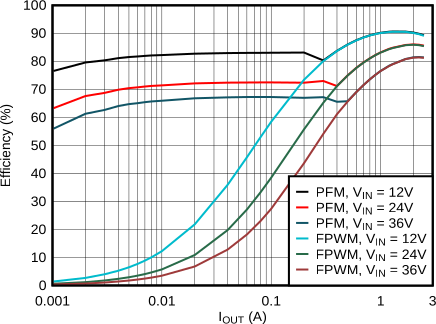
VIN = 24V, fSW= 400kHz, TA = 25°C, unless otherwise specified.

LMR51625 LMR51635  3.3V Efficiency Versus Load Current
fSW = 400kHzVOUT = 3.3VLMR51635X
Figure 6-1 3.3V Efficiency Versus Load Current
LMR51625 LMR51635  3.3V Efficiency Versus Load Current
fSW = 1100kHzVOUT = 3.3VLMR51635Y
Figure 6-3 3.3V Efficiency Versus Load Current
LMR51625 LMR51635  3.3V Efficiency Versus Load Current
fSW = 400kHzVOUT = 3.3VLMR51625X
Figure 6-5 3.3V Efficiency Versus Load Current
LMR51625 LMR51635  3.3V Efficiency Versus Load Current
fSW = 1100kHzVOUT = 3.3VLMR51625Y
Figure 6-7 3.3V Efficiency Versus Load Current
LMR51625 LMR51635  Line and Load Regulation
fSW = 400kHzVOUT = 5VLMR51635X
Figure 6-9 Line and Load Regulation
LMR51625 LMR51635  IQ vs TemperatureFigure 6-11 IQ vs Temperature
LMR51625 LMR51635  VIN UVLO vs TemperatureFigure 6-13 VIN UVLO vs Temperature
LMR51625 LMR51635  LMR51635 HS and LS Current Limit vs TemperatureFigure 6-15 LMR51635 HS and LS Current Limit vs Temperature
LMR51625 LMR51635  5V Efficiency Versus Load Current
fSW = 400kHzVOUT = 5VLMR51635X
Figure 6-2 5V Efficiency Versus Load Current
LMR51625 LMR51635  5V Efficiency Versus Load Current
fSW = 1100kHzVOUT = 5VLMR51635Y
Figure 6-4 5V Efficiency Versus Load Current
LMR51625 LMR51635  5V Efficiency Versus Load Current
fSW = 400kHzVOUT = 5VLMR51625X
Figure 6-6 5V Efficiency Versus Load Current
LMR51625 LMR51635  5V Efficiency Versus Load Current
fSW = 1100kHzVOUT = 5VLMR51625Y
Figure 6-8 5V Efficiency Versus Load Current
LMR51625 LMR51635  5V Dropout
fSW = 400kHzVOUT = 5VLMR51635X
Figure 6-10 5V Dropout
LMR51625 LMR51635  Reference Voltage vs TemperatureFigure 6-12 Reference Voltage vs Temperature
LMR51625 LMR51635  Precision Enable ThresholdsFigure 6-14 Precision Enable Thresholds
LMR51625 LMR51635  LMR51625 HS and LS Current Limit vs TemperatureFigure 6-16 LMR51625 HS and LS Current Limit vs Temperature