SBOSAA7 September   2025 OPA598

PRODUCTION DATA  

  1.   1
  2. Features
  3. Applications
  4. Description
  5. Pin Configuration and Functions
  6. Specifications
    1. 5.1 Absolute Maximum Ratings
    2. 5.2 ESD Ratings
    3. 5.3 Recommended Operating Conditions
    4. 5.4 Thermal Information
    5. 5.5 Electrical Characteristics
    6. 5.6 Typical Characteristics
  7. Detailed Description
    1. 6.1 Overview
    2. 6.2 Functional Block Diagram
    3. 6.3 Feature Description
      1. 6.3.1 Current Limit
      2. 6.3.2 Overcurrent Flag
      3. 6.3.3 Overtemperature Flag
      4. 6.3.4 Enable and Disable
      5. 6.3.5 Mux-Friendly Inputs
    4. 6.4 Device Functional Modes
  8. Application and Implementation
    1. 7.1 Application Information
    2. 7.2 Typical Application
      1. 7.2.1 High Voltage 2:1 Multiplexer With Unity Gain
        1. 7.2.1.1 Design Requirements
        2. 7.2.1.2 Detailed Design Procedure
      2. 7.2.2 Output Driver
        1. 7.2.2.1 Design Requirements
        2. 7.2.2.2 Detailed Design Procedure
        3. 7.2.2.3 Application Curve
      3. 7.2.3 Parallel Op Amps
      4. 7.2.4 Composite Amplifier
    3. 7.3 Power Supply Recommendations
    4. 7.4 Layout
      1. 7.4.1 Layout Guidelines
        1. 7.4.1.1 Thermal Considerations
      2. 7.4.2 Layout Example
  9. Device and Documentation Support
    1. 8.1 Device Support
      1. 8.1.1 Development Support
        1. 8.1.1.1 PSpice® for TI
        2. 8.1.1.2 TINA-TI™ Simulation Software (Free Download)
        3. 8.1.1.3 TI Precision Designs
    2. 8.2 Documentation Support
      1. 8.2.1 Related Documentation
    3. 8.3 Receiving Notification of Documentation Updates
    4. 8.4 Support Resources
    5. 8.5 Trademarks
    6. 8.6 Electrostatic Discharge Caution
    7. 8.7 Glossary
  10. Revision History
  11. 10Mechanical, Packaging, and Orderable Information

Package Options

Mechanical Data (Package|Pins)
Thermal pad, mechanical data (Package|Pins)
Orderable Information

Typical Characteristics

at TA = 25°C, VS = ±42.5V, ILIMIT = 100mA, and VCM = VOUT = mid-supply, RL = 10kΩ connected to VS/2 (unless otherwise noted)
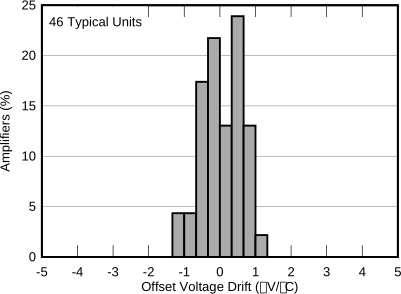
OPA598 Input Offset Drift Production Distribution
TA = −40ºC to +125ºC
Figure 5-1 Input Offset Drift Production Distribution
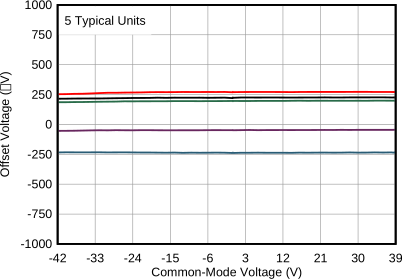
OPA598 Input Offset Voltage vs Common-mode VoltageFigure 5-3 Input Offset Voltage vs Common-mode Voltage
OPA598 Input Offset Voltage vs TemperatureFigure 5-5 Input Offset Voltage vs Temperature
OPA598 PSRR vs TemperatureFigure 5-7 PSRR vs Temperature
OPA598 Input Bias Current and Offset Current vs TemperatureFigure 5-9 Input Bias Current and Offset Current vs Temperature
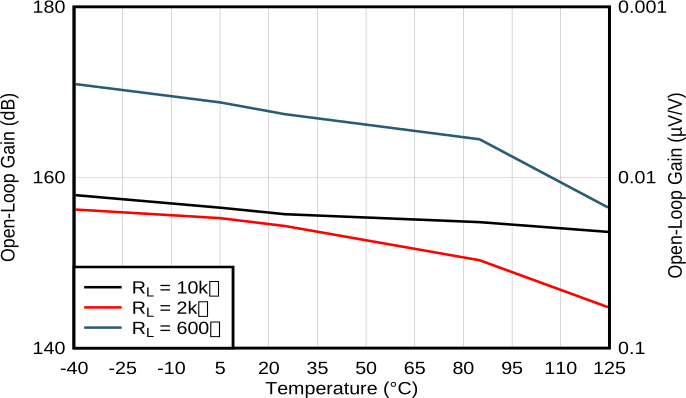
OPA598 Open-Loop Gain and TemperatureFigure 5-11 Open-Loop Gain and Temperature
OPA598 Maximum Output Voltage vs FrequencyFigure 5-13 Maximum Output Voltage vs Frequency
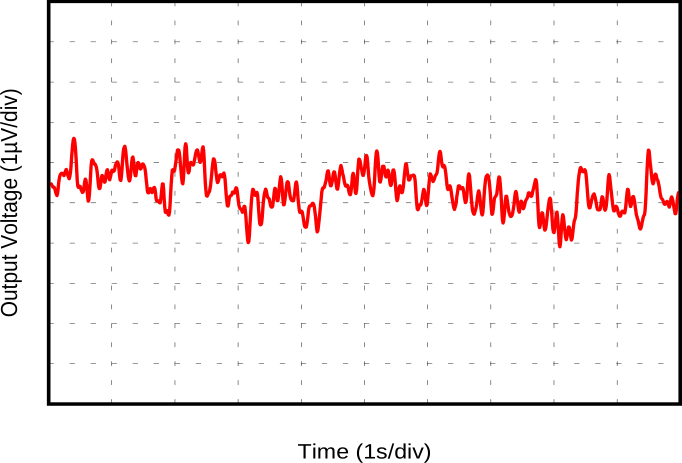
OPA598 0.1Hz to 10Hz NoiseFigure 5-15 0.1Hz to 10Hz Noise
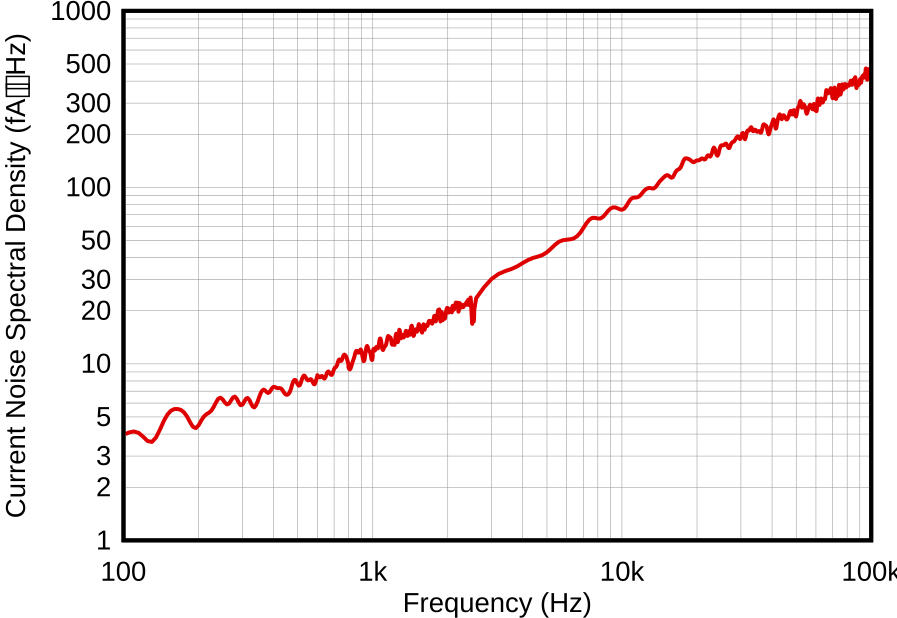
OPA598 Input Current Noise Spectral DensityFigure 5-17 Input Current Noise Spectral Density
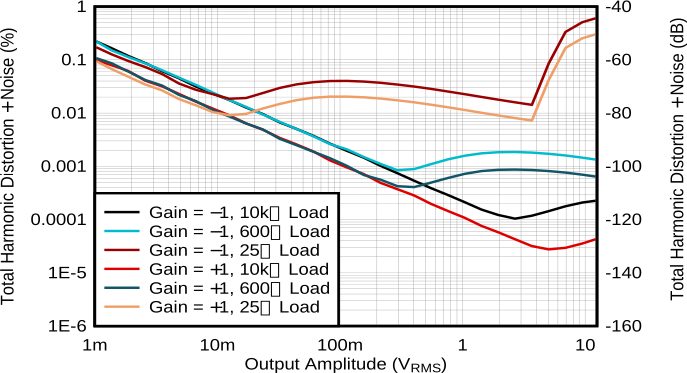
OPA598 Total Harmonic Distortion + Noise vs
                                                  Amplitude
VOUT = 3VRMS 
Figure 5-19 Total Harmonic Distortion + Noise vs Amplitude
OPA598 Total Harmonic Distortion + Noise vs
                                                  Amplitude
Gain = 10V/V, VOUT = 15VRMS 
Figure 5-21 Total Harmonic Distortion + Noise vs Amplitude
OPA598 Phase Margin vs Capacitive Load

Gain = 10V/V

Figure 5-23 Phase Margin vs Capacitive Load
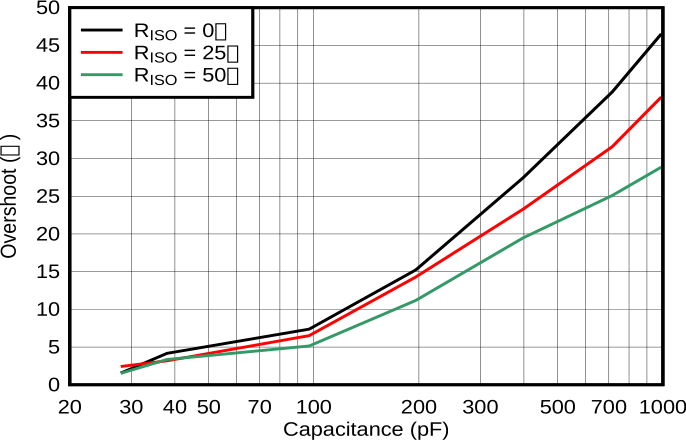
OPA598 Small-Signal Overshoot vs Capacitive Load
 Gain = −1V/V
Figure 5-25 Small-Signal Overshoot vs Capacitive Load
OPA598 Quiescent Current vs TemperatureFigure 5-27 Quiescent Current vs Temperature
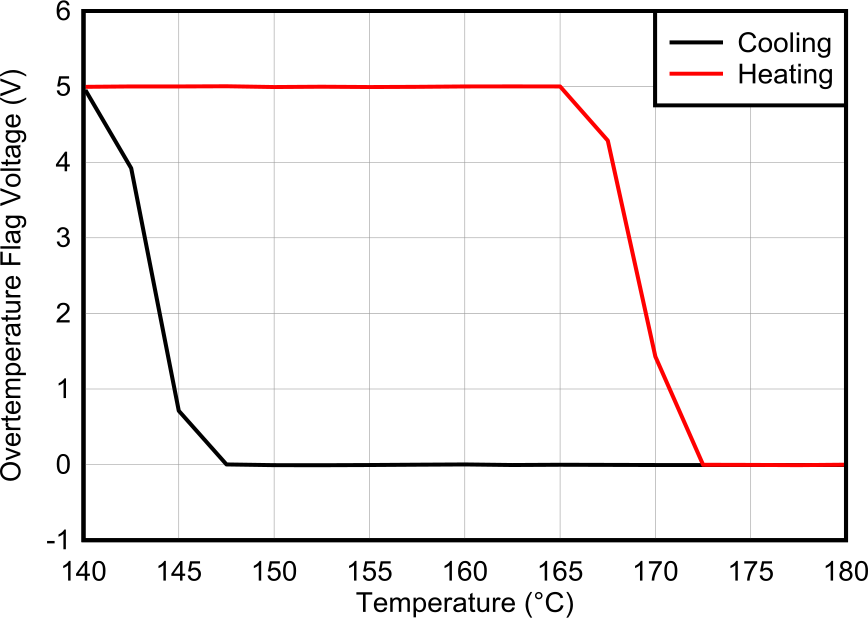
OPA598 Overtemperature Flag Pin Voltage vs
                                                  Temperature
 E/D Com = 0V
Figure 5-29 Overtemperature Flag Pin Voltage vs Temperature
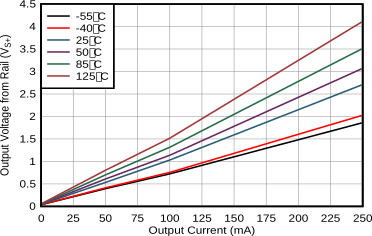
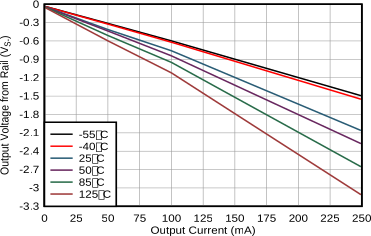
OPA598 Positive Output Voltage vs Output Current
 
Figure 5-31 Positive Output Voltage vs Output Current
OPA598 Rising Edge vs Time
 
Figure 5-33 Rising Edge vs Time
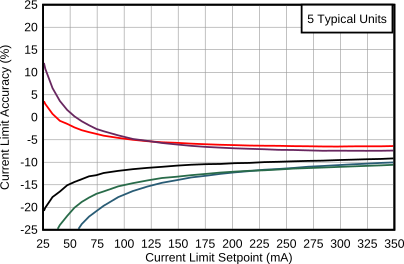
OPA598 Current Limit Setpoint vs Current Limit
                                                  Accuracy, Sourcing
Figure 5-35 Current Limit Setpoint vs Current Limit Accuracy, Sourcing
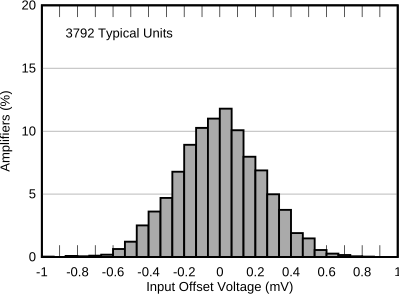
OPA598 Input Offset Production
                                                  Distribution
Figure 5-2 Input Offset Production Distribution
OPA598 Input Offset Voltage vs Supply VoltageFigure 5-4 Input Offset Voltage vs Supply Voltage
OPA598 CMRR vs TemperatureFigure 5-6 CMRR vs Temperature
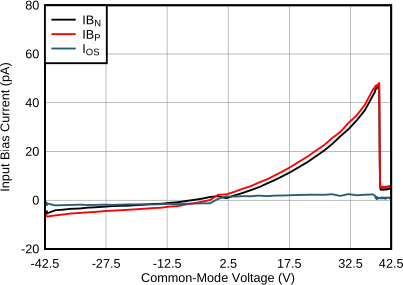
OPA598 Input Bias Current vs Common-Mode VoltageFigure 5-8 Input Bias Current vs Common-Mode Voltage
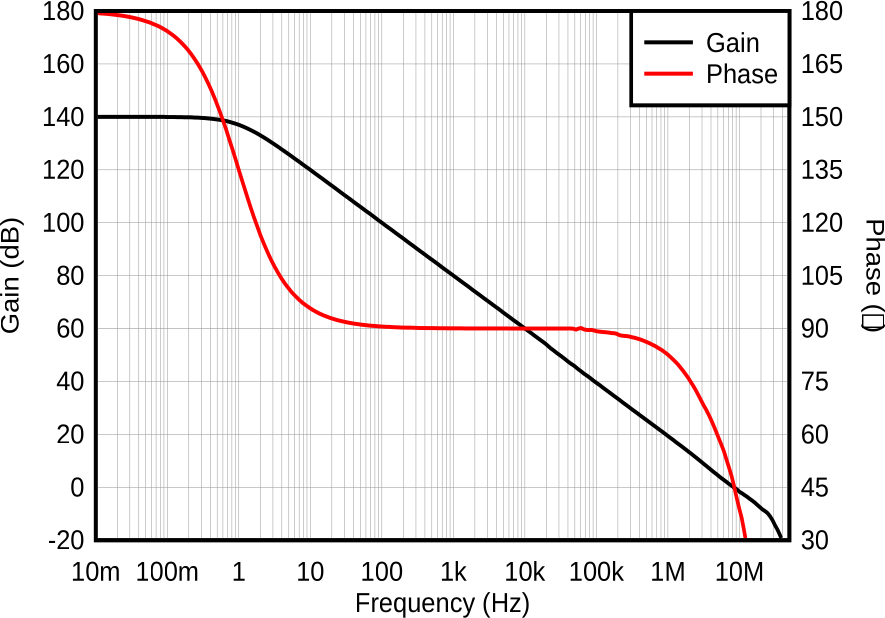
OPA598 Open-Loop Gain and Phase vs
                                                  FrequencyFigure 5-10 Open-Loop Gain and Phase vs Frequency
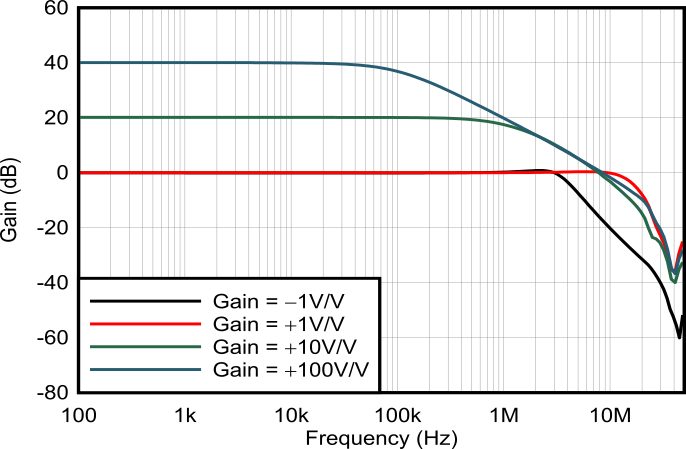
OPA598 Closed-Loop Gain vs FrequencyFigure 5-12 Closed-Loop Gain vs Frequency
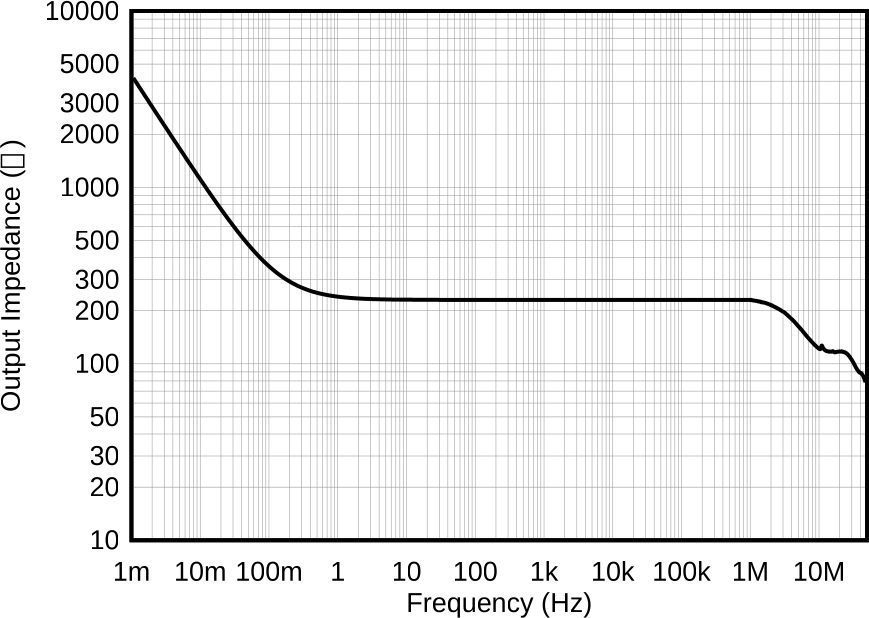
OPA598 Open-Loop Output Impedance vs FrequencyFigure 5-14 Open-Loop Output Impedance vs Frequency
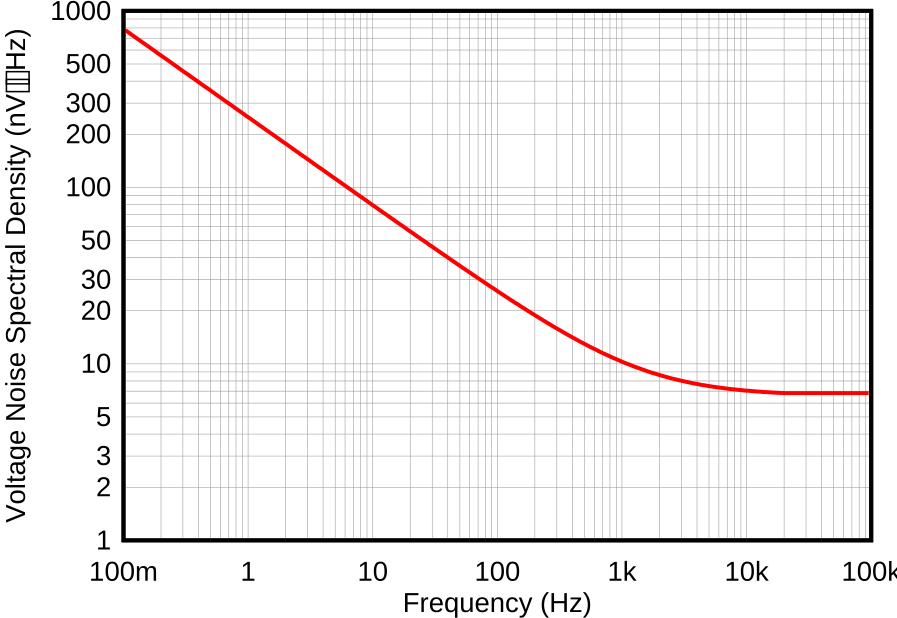
OPA598 Input Voltage Noise Spectral DensityFigure 5-16 Input Voltage Noise Spectral Density
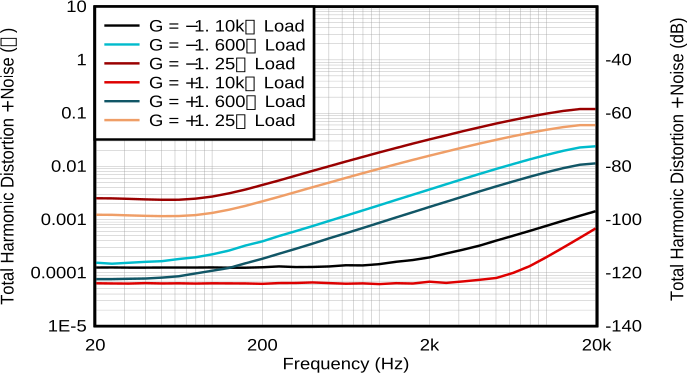
OPA598 Total Harmonic Distortion + Noise vs
                                                  Frequency
VOUT = 3VRMS 
Figure 5-18 Total Harmonic Distortion + Noise vs Frequency
OPA598 Total Harmonic Distortion + Noise vs
                                                  Frequency
 Gain = 10V/V, VOUT = 15VRMS 
Figure 5-20 Total Harmonic Distortion + Noise vs Frequency
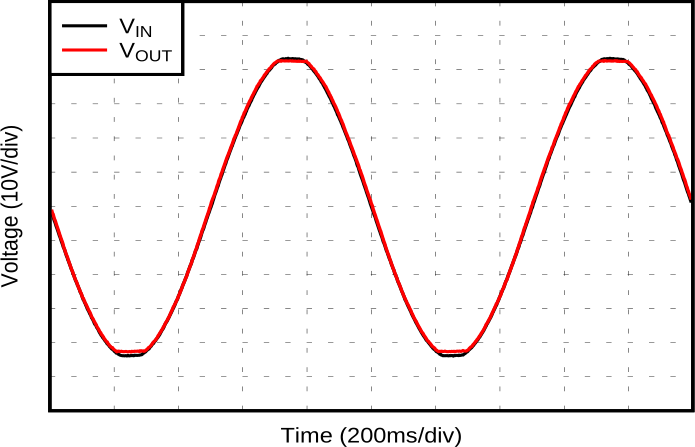
OPA598 No
                                                  Phase ReversalFigure 5-22 No Phase Reversal
OPA598 Small-Signal Overshoot vs Capacitive Load
Gain = 1V/V
Figure 5-24 Small-Signal Overshoot vs Capacitive Load
OPA598 Quiescent Current vs Supply VoltageFigure 5-26 Quiescent Current vs Supply Voltage
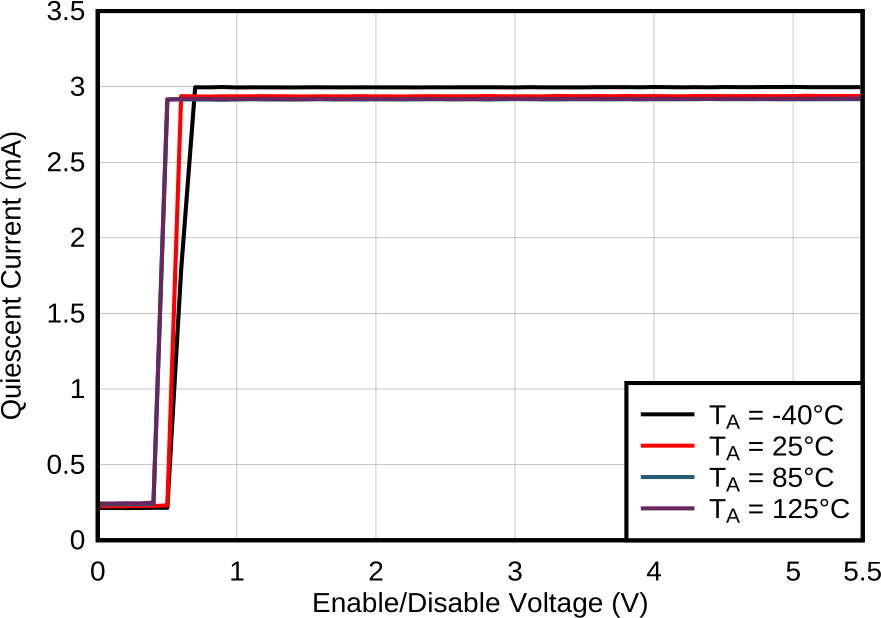
OPA598 Quiescent Current vs Enable VoltageFigure 5-28 Quiescent Current vs Enable Voltage
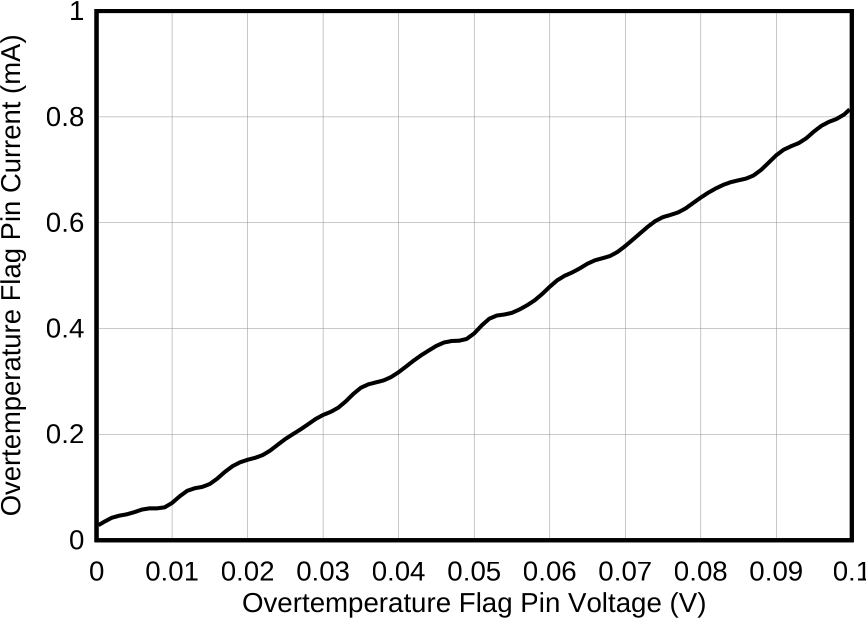
OPA598 Overtemperature Flag Pin Current vs
                                                  Overtemperature Flag Pin Voltage
Flag is asserted
Figure 5-30 Overtemperature Flag Pin Current vs Overtemperature Flag Pin Voltage
OPA598 Negative Output Voltage vs Output
                                                  Current
 
Figure 5-32 Negative Output Voltage vs Output Current
OPA598 Falling Edge vs Time
 
Figure 5-34 Falling Edge vs Time
OPA598 Current Limit Setpoint vs Current Limit
                                                  Accuracy, Sinking
Figure 5-36 Current Limit Setpoint vs Current Limit Accuracy, Sinking