SNLA429A November 2023 – April 2025 LMKDB1108 , LMKDB1120
5.2 PCIe Tool Input File Waveforms for the LMKDB1xxx Family
Figure 5-1 illustrates the output phase noise curve of the LMKDB1120 with a reference input of 100MHz, slew rate = 3.5V/ns, and peak-to-peak swing = 1.6Vpp. Figure 5-2 illustrates the output time domain trace waveform. All of these waveforms are inputted into TI's PCIe Compliance Tool (found within TI's TICS Pro Software, more information in Section 4) to determine PCIe compliance. These results and waveforms apply for all LMKDB1xxx devices.
 Figure 5-1 Output Phase Noise Curve From
the LMKDB1120 Having a 100MHz Reference Input Signal Into the LMKDB1xxx Device
With Slew Rate = 3.5V/ns and Peak-to-Peak Swing = 1.6Vpp
Figure 5-1 Output Phase Noise Curve From
the LMKDB1120 Having a 100MHz Reference Input Signal Into the LMKDB1xxx Device
With Slew Rate = 3.5V/ns and Peak-to-Peak Swing = 1.6Vpp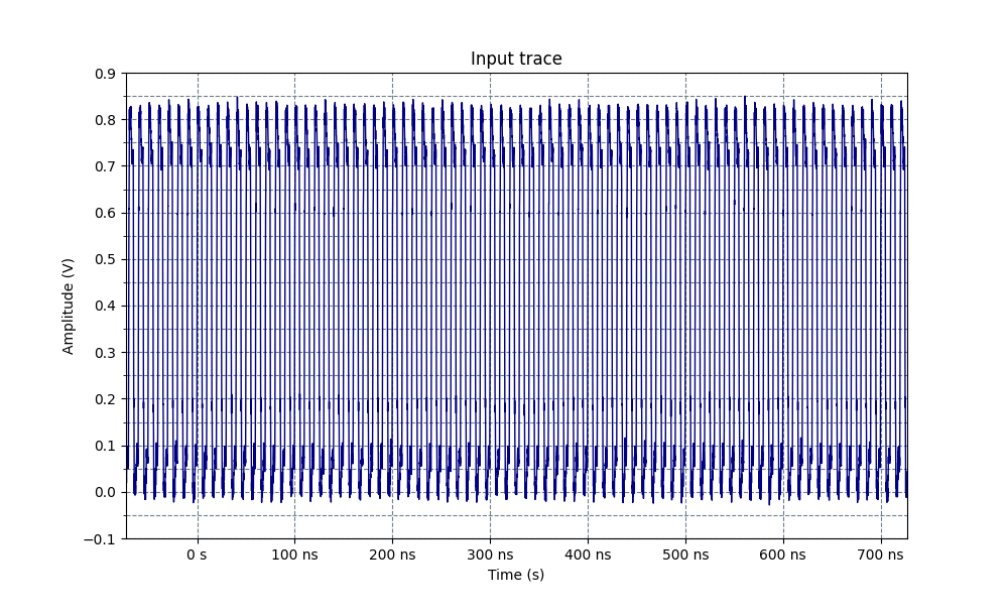 Figure 5-2 Output Time Domain Plot from
the LMKDB1120 having a 100-MHz Reference Input Signal into the LMKDB1xxx Device
with Slew Rate = 3.5 V/ns and Peak-to-Peak Swing = 1.6 Vpp
Figure 5-2 Output Time Domain Plot from
the LMKDB1120 having a 100-MHz Reference Input Signal into the LMKDB1xxx Device
with Slew Rate = 3.5 V/ns and Peak-to-Peak Swing = 1.6 Vpp