SPRADL9 February   2025 CC1310


  1.   1
  2.   Abstract
  3.   Trademarks
  4. 1Introduction
    1. 1.1 Sensor Controller in Building Automation
    2. 1.2 TI Devices
      1. 1.2.1 CC13x4 Wireless MCUs
      2. 1.2.2 CC26xx Wireless MCUs
  5. 2Sensor Controller
    1. 2.1 Features
    2. 2.2 Sensor Controller Power Modes
      1. 2.2.1 Active Mode
      2. 2.2.2 Low Power Mode
      3. 2.2.3 Standby Mode
      4. 2.2.4 Switching Between Power Modes
        1. 2.2.4.1 24MHz - Startup From Standby and Return to Standby Energy
        2. 2.2.4.2 2MHz - Startup From Standby and Return to Standby Energy
    3. 2.3 Power Measurement Setup
      1. 2.3.1 EnergyTrace™ Software
      2. 2.3.2 Software
      3. 2.3.3 Current Consumption Measurements
      4. 2.3.4 Hardware
  6. 3Building Automation Use-Cases and Techniques using Sensor Controller
    1. 3.1 PIR Motion Detection
      1. 3.1.1 PIR Traditional Signal-Chain
      2. 3.1.2 Capacitor-less Motion Detection Block Diagram
      3. 3.1.3 Digital Signal Processing
        1. 3.1.3.1 Hardware
        2. 3.1.3.2 Digital Signal Processing
    2. 3.2 Glass Break Detection
      1. 3.2.1 Low-Powered and Low-Cost Glass Break Block Diagram
    3. 3.3 Door and Window Sensor
    4. 3.4 Low-Power ADC
      1. 3.4.1 Code Implementation in Sensor Controller Studio
      2. 3.4.2 Measurements
    5. 3.5 Different Sensor Readings with BOOSTXL-ULPSENSE
      1. 3.5.1 Capacitive Touch
      2. 3.5.2 Analog Light Sensor
      3. 3.5.3 Potentiometer (0 to 200kΩ range)
      4. 3.5.4 Ultra-Low Power SPI Accelerometer
      5. 3.5.5 Reed Switch
  7. 4Summary
  8. 5References

Features

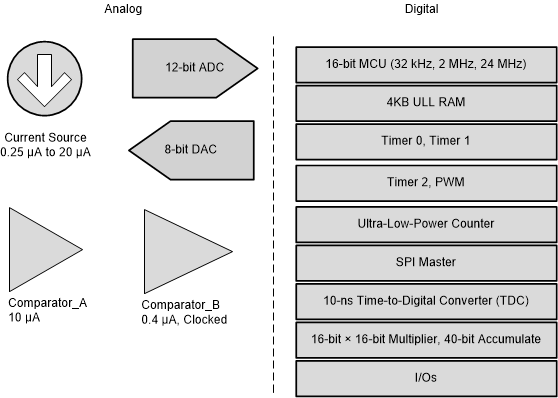
The Sensor Controller has access to both analog and digital peripherals which include:

  • 12-bit ADC capable of sampling analog capable I/Os or internal chip voltages.
  • Two comparators: one high speed continuous time comparator (CompA) and one low-power clocked comparator updated at 32kHz (CompB).
  • 8-bit reference DAC capable of supporting the comparators with reference voltages.
  • SPI master interface.
  • Bit-banged serial interfaces including I2C master, UART and more.
  • Time to digital converter capable of measuring the time between configurable start and stop triggers.
  • Programmable current source capable of giving out currents between 0 and 20µA.
  • Two simple 16-bit timers.
  • Timer with PWM and four capture/compare channels allowing event setting and clearing without waking up the Sensor Controller.
  • 16-bit asynchronous multipurpose timer with 4 capture or compare channels.
  • Ultra low power 16-bit pulse counter capable of count rising edges on any digital input pins or comparator output.
  • Access to all GPIO pins.
 Sensor Controller
                    peripherals Figure 2-3 Sensor Controller peripherals