SNOSAV4B April 2008 – January 2016 LM7332
PRODUCTION DATA.
- 1 Features
- 2 Applications
- 3 Description
- 4 Revision History
- 5 Pin Configuration and Functions
- 6 Specifications
- 7 Detailed Description
- 8 Application and Implementation
- 9 Power Supply Recommendations
- 10Layout
- 11Device and Documentation Support
- 12Mechanical, Packaging, and Orderable Information
Package Options
Mechanical Data (Package|Pins)
Thermal pad, mechanical data (Package|Pins)
Orderable Information
6 Specifications
6.1 Absolute Maximum Ratings
See (1)(2)| MIN | MAX | UNIT | ||
|---|---|---|---|---|
| VIN differential | ±10 | V | ||
| Output short-circuit duration | See (3)(4) | |||
| Supply voltage (VS = V+ – V−) | 35 | V | ||
| Voltage at input/output pins | V+ + 0.3 | V− − 0.3 | V | |
| Junction temperature(5) | 150 | °C | ||
| Soldering information | Infrared or convection (20 sec.) | 235 | °C | |
| Wave soldering (10 sec.) | 260 | °C | ||
| Storage temperature, Tstg | −65 | 150 | °C | |
(1) Stresses beyond those listed under Absolute Maximum Ratings may cause permanent damage to the device. These are stress ratings only, which do not imply functional operation of the device at these or any other conditions beyond those indicated under Recommended Operating Conditions. Exposure to absolute-maximum-rated conditions for extended periods may affect device reliability.
(2) If Military/Aerospace specified devices are required, contact the TI Sales Office/Distributors for availability and specifications.
(3) Applies to both single-supply and split-supply operation. Continuous short circuit operation at elevated ambient temperature can result in exceeding the maximum allowed junction temperature of 150°C.
(4) Short-circuit test is a momentary test. Output short circuit duration is infinite for VS ≤ 6 V at room temperature and below. For VS > 6 V, allowable short circuit duration is 1.5 ms.
(5) The maximum power dissipation is a function of TJ(MAX), RθJA. The maximum allowable power dissipation at any ambient temperature is PD = (TJ(MAX) – TA) / RθJA. All numbers apply for packages soldered directly onto a PC board.
6.2 ESD Ratings
| VALUE | UNIT | |||
|---|---|---|---|---|
| V(ESD) | Electrostatic discharge | Human-body model (HBM), per ANSI/ESDA/JEDEC JS-001(1)(2) | ±2000 | V |
| Machine model (MM) | ±200 | |||
(1) JEDEC document JEP155 states that 500-V HBM allows safe manufacturing with a standard ESD control process.
(2) Human Body Model, applicable std. MIL-STD-883, Method 3015.7. Machine Model, applicable std. JESD22-A115-A (ESD MM std. of JEDEC)Field-Induced Charge-Device Model, applicable std. JESD22-C101-C (ESD FICDM std. of JEDEC).
6.3 Recommended Operating Conditions
| MIN | MAX | UNIT | ||
|---|---|---|---|---|
| Supply voltage (VS = V+ – V−) | 2.5 | 32 | V | |
| Temperature range(2) | −40 | 125 | °C | |
6.4 Thermal Information
| THERMAL METRIC(1) | LM7332 | UNIT | ||
|---|---|---|---|---|
| DGK (VSSOP) | D (SOIC) | |||
| 8 PINS | 8 PINS | |||
| RθJA | Junction-to-ambient thermal resistance (2) | 161.1 | 109.1 | °C/W |
| RθJC(top) | Junction-to-case (top) thermal resistance | 55 | 55.8 | °C/W |
| RθJB | Junction-to-board thermal resistance | 80.5 | 49.2 | °C/W |
| ψJT | Junction-to-top characterization parameter | 5.5 | 10.7 | °C/W |
| ψJB | Junction-to-board characterization parameter | 79.2 | 48.7 | °C/W |
(1) For more information about traditional and new thermal metrics, see the Semiconductor and IC Package Thermal Metrics application report, SPRA953.
(2) The maximum power dissipation is a function of TJ(MAX), RθJA. The maximum allowable power dissipation at any ambient temperature is PD = (TJ(MAX) – TA) / RθJA. All numbers apply for packages soldered directly onto a PCB.
6.5 5-V Electrical Characteristics
Unless otherwise specified, all limits are ensured for TA = 25°C, V+ = 5 V, V− = 0 V, VCM = 0.5 V, VO = 2.5 V, and RL > 1 MΩ to 2.5 V.(1)| PARAMETER | TEST CONDITIONS | MIN (2) | TYP (3) | MAX (2) | UNIT | |
|---|---|---|---|---|---|---|
| VOS | Input offset voltage | VCM = 0.5 V and VCM = 4.5 V | −4 | ±1.6 | 4 | mV |
| At the temperature extremes | –5 | 5 | ||||
| TC VOS | Input offset voltage temperature drift | VCM = 0.5 V and VCM = 4.5 V (4) | ±2 | µV/°C | ||
| IB | Input bias current | See (5) | −2 | ±1 | 2 | µA |
| At the temperature extremes | −2.5 | 2.5 | ||||
| IOS | Input offset current | 20 | 250 | nA | ||
| At the temperature extremes | 300 | |||||
| CMRR | Common-mode Rejection Ratio | 0 V ≤ VCM ≤ 3 V | 67 | 80 | dB | |
| At the temperature extremes | 65 | |||||
| 0 V ≤ VCM ≤ 5 V | 62 | 70 | ||||
| At the temperature extremes | 60 | |||||
| PSRR | Power supply Rejection Ratio | 5 V ≤ V+ ≤ 30 V | 78 | 100 | dB | |
| At the temperature extremes | 74 | |||||
| CMVR | Input common-mode Voltage Range | CMRR > 50 dB | 5.1 | −0.3 | −0.1 | V |
| 5.3 | 0 | |||||
| At the temperature extremes | 5 | |||||
| AVOL | Large signal Voltage Gain | 0.5 V ≤ VO ≤ 4.5 V RL = 10 kΩ to 2.5 V |
70 | 77 | dB | |
| At the temperature extremes | 65 | |||||
| VO | Output swing high |
RL = 10 kΩ to 2.5 V VID = 100 mV |
60 | 150 | mV from either rail | |
| At the temperature extremes | 200 | |||||
| RL = 2 kΩ to 2.5 V VID = 100 mV |
100 | 300 | ||||
| At the temperature extremes | 350 | |||||
| Output swing low |
RL = 10 kΩ to 2.5 V VID = −100 mV |
5 | 150 | |||
| At the temperature extremes | 200 | |||||
| RL = 2 kΩ to 2.5 V VID = −100 mV |
20 | 300 | ||||
| At the temperature extremes | 350 | |||||
| ISC | Output short circuit current | Sourcing from V+, VID = 200 mV(6) | 60 | 90 | mA | |
| Sinking to V−, VID = –200 mV(6) | 60 | 90 | ||||
| IOUT | Output current | VID = ±200 mV, VO = 1 V from rails | ±55 | mA | ||
| IS | Total supply current | No Load, VCM = 0.5 V | 1.5 | 2.3 | mA | |
| At the temperature extremes | 2.6 | |||||
| SR | Slew rate(7) | AV = +1, VI = 5-V Step, RL = 1 MΩ, CL = 10 pF |
12 | V/µs | ||
| fu | Unity-gain frequency | RL = 10 MΩ, CL = 20 pF | 7.5 | MHz | ||
| GBWP | Gain bandwidth product | f = 50 kHz | 19.3 | MHz | ||
| en | Input-referred voltage noise | f = 2 kHz | 14.8 | nV/√HZ | ||
| in | Input-referred current noise | f = 2 kHz | 1.35 | pA/√HZ | ||
| THD+N | Total harmonic distortion + noise | AV = +2, RL = 100 kΩ, f = 1 kHz, VO = 4 VPP |
−84 | dB | ||
| CT Rej. | Crosstalk rejection | f = 3 MHz, Driver RL = 10 kΩ | 68 | dB | ||
(1) Electrical Characteristics values apply only for factory testing conditions at the temperature indicated. Factory testing conditions result in very limited self-heating of the device such that TJ = TA. No ensured specification of parametric performance is indicated in the electrical tables under conditions of internal self-heating where TJ > TA.
(2) All limits are ensured by testing or statistical analysis.
(3) Typical values represent the most likely parametric norm as determined at the time of characterization. Actual typical values may vary over time and will also depend on the application and configuration. The typical values are not tested and are not ensured on shipped production material.
(4) Offset voltage temperature drift determined by dividing the change in VOS at temperature extremes into the total temperature change.
(5) Positive current corresponds to current flowing in the device.
(6) Short-circuit test is a momentary test. Output short circuit duration is infinite for VS ≤ 6 V at room temperature and below. For VS > 6 V, allowable short circuit duration is 1.5 ms.
(7) Slew rate is the slower of the rising and falling slew rates. Connected as a voltage follower.
6.6 ±5-V Electrical Characteristics
Unless otherwise specified, all limits are ensured for TA = 25°C, V+ = +5 V, V− = −5 V, VCM = 0 V, VO = 0 V, and RL > 1 MΩ to 0 V.(1)| PARAMETER | TEST CONDITIONS | MIN (2) | TYP (3) | MAX (2) | UNIT | |
|---|---|---|---|---|---|---|
| VOS | Input offset voltage | VCM = −4.5 V and VCM = 4.5 V | −4 | ±1.6 | 4 | mV |
| At the temperature extremes | −5 | 5 | ||||
| TC VOS | Input offset voltage temperature drift | VCM = −4.5 V and VCM = 4.5 V (4) | ±2 | µV/°C | ||
| IB | Input bias current | See (5) | −2 | ±1 | 2 | µA |
| At the temperature extremes | −2.5 | 2.5 | ||||
| IOS | Input offset current | 20 | 250 | nA | ||
| At the temperature extremes | 300 | |||||
| CMRR | Common-mode rejection ratio | −5 V ≤ VCM ≤ 3 V | 74 | 88 | dB | |
| At the temperature extremes | 75 | |||||
| −5 V ≤ VCM ≤ 5 V | 70 | 74 | ||||
| At the temperature extremes | 65 | |||||
| PSRR | Power supply rejection ration | 5 V ≤ V+ ≤ 30 V, VCM = −4.5 V | 78 | 100 | dB | |
| At the temperature extremes | 74 | |||||
| CMVR | Input common-mode voltage range | CMRR > 50 dB | 5.1 | –5.3 | –5.1 | V |
| At the temperature extremes | 5 | 5.3 | –5.1 | |||
| AVOL | Large signal voltage gain | −4 V ≤ VO ≤ 4 V RL = 10 kΩ to 0 V |
72 | 80 | dB | |
| At the temperature extremes | 70 | |||||
| VO | Output swing high |
RL = 10 kΩ to 0 V VID = 100 mV |
75 | 250 | mV from either rail | |
| At the temperature extremes | 300 | |||||
| RL = 2 kΩ to 0 V VID = 100 mV |
125 | 350 | ||||
| At the temperature extremes | 400 | |||||
| Output swing low |
RL = 10 kΩ to 0 V VID = −100 mV |
10 | 250 | |||
| At the temperature extremes | 300 | |||||
| RL = 2 kΩ to 0V VID = −100 mV |
30 | 350 | ||||
| At the temperature extremes | 400 | |||||
| ISC | Output short circuit current | Sourcing from V+, VID = 200 mV (6) | 90 | 120 | mA | |
| Sinking to V−, VID = −200 mV (6) | 90 | 100 | ||||
| IOUT | Output current | VID = ±200 mV, VO = 1 V from rails | ±65 | mA | ||
| IS | Total supply current | No Load, VCM = −4.5 V | 1.5 | 2.4 | mA | |
| At the temperature extremes | 2.6 | |||||
| SR | Slew rate(7) | AV = +1, VI = 8-V step, RL = 1 MΩ, CL = 10 pF |
13.2 | V/µs | ||
| ROUT | Close-loop output resistance | AV = +1, f = 100 kHz | 3 | Ω | ||
| fu | Unity-gain frequency | RL = 10 MΩ, CL = 20 pF | 7.9 | MHz | ||
| GBWP | Gain bandwidth product | f = 50 kHz | 19.9 | MHz | ||
| en | Input-referred voltage noise | f = 2 kHz | 14.7 | nV/√HZ | ||
| in | Input-referred current noise | f = 2 kHz | 1.3 | pA/√HZ | ||
| THD+N | Total harmonic distortion + noise | AV = +2, RL = 100 kΩ, f = 1 kHz VO = 8 VPP |
−87 | dB | ||
| CT Rej. | Crosstalk rejection | f = 3 MHz, driver RL = 10 kΩ | 68 | dB | ||
(1) Electrical Characteristics values apply only for factory testing conditions at the temperature indicated. Factory testing conditions result in very limited self-heating of the device such that TJ = TA. No ensured specification of parametric performance is indicated in the electrical tables under conditions of internal self-heating where TJ > TA.
(2) All limits are ensured by testing or statistical analysis.
(3) Typical values represent the most likely parametric norm as determined at the time of characterization. Actual typical values may vary over time and will also depend on the application and configuration. The typical values are not tested and are not ensured on shipped production material.
(4) Offset voltage temperature drift determined by dividing the change in VOS at temperature extremes into the total temperature change.
(5) Positive current corresponds to current flowing in the device.
(6) Short-circuit test is a momentary test. Output short circuit duration is infinite for VS ≤ 6 V at room temperature and below. For VS > 6 V, allowable short circuit duration is 1.5 ms.
(7) Slew rate is the slower of the rising and falling slew rates. Connected as a voltage follower.
6.7 ±15-V Electrical Characteristics
Unless otherwise specified, all limits are ensured for TA = 25°C, V+ = +15 V, V− = −15 V, VCM = 0 V, VO = 0 V, and RL > 1 MΩ to 0 V.(1)| PARAMETER | TEST CONDITIONS | MIN (2) | TYP (3) | MAX (2) | UNIT | |
|---|---|---|---|---|---|---|
| VOS | Input offset voltage | VCM = −14.5 V and VCM = 14.5 V | −5 | ±2 | 5 | mV |
| At the temperature extremes | −6 | 6 | ||||
| TC VOS | Input offset voltage temperature drift | VCM = −14.5 V and VCM = 14.5 V (4) |
±2 | µV/°C | ||
| IB | Input bias current | See (5) | −2 | ±1 | 2 | µA |
| At the temperature extremes | −2.5 | 2.5 | ||||
| IOS | Input offset current | 20 | 250 | nA | ||
| At the temperature extremes | 300 | |||||
| CMRR | Common-mode rejection ratio | −15 V ≤ VCM ≤ 12 V | 74 | 88 | dB | |
| At the temperature extremes | 74 | |||||
| −15 V ≤ VCM ≤ 15 V | 72 | 80 | ||||
| At the temperature extremes | 72 | |||||
| PSRR | Power supply rejection ratio | −10 V ≤ V+ ≤ 15 V, VCM = −14.5 V | 78 | 100 | dB | |
| At the temperature extremes | 74 | |||||
| CMVR | Input common-mode voltage range | CMRR > 50 dB | 15.1 | −15.3 | −15.1 | V |
| 15.3 | −15 | |||||
| At the temperature extremes | 15 | |||||
| AVOL | Large signal voltage gain | −14 V ≤ VO ≤ 14 V RL = 10 kΩ to 0 V |
72 | 80 | dB | |
| At the temperature extremes | 70 | |||||
| VO | Output swing high |
RL = 10 kΩ to 0 V VID = 100 mV |
100 | 350 | mV from either rail | |
| At the temperature extremes | 400 | |||||
| RL = 2 kΩ to 0 V VID = 100 mV |
200 | 550 | ||||
| At the temperature extremes | 600 | |||||
| Output swing low |
RL = 10 kΩ to 0 V VID = −100 mV |
20 | 450 | |||
| At the temperature extremes | 500 | |||||
| RL = 2 kΩ to 0 V VID = −100 mV |
25 | 550 | ||||
| At the temperature extremes | 600 | |||||
| ISC | Output short circuit current | Sourcing from V+, VID = 200 mV(6) | 140 | mA | ||
| Sinking to V−, VID = −200 mV (6) | 140 | |||||
| IOUT | Output current | VID = ±200 mV, VO = 1 V from rails | ±70 | mA | ||
| IS | Total supply current | No Load, VCM = −14.5 V | 2 | 2.5 | mA | |
| At the temperature extremes | 3 | |||||
| SR | Slew rate(7) | AV = +1, VI = 20-V Step, RL = 1 MΩ, CL = 10 pF |
15.2 | V/µs | ||
| fu | Unity-gain frequency | RL = 10 MΩ, CL = 20 pF | 9 | MHz | ||
| GBWP | Gain bandwidth product | f = 50 kHz | 21 | MHz | ||
| en | Input-referred voltage noise | f = 2 kHz | 15.5 | nV/√HZ | ||
| in | Input-referred current noise | f = 2 kHz | 1 | pA/√HZ | ||
| THD+N | Total harmonic distortion plus noise | AV = +2, RL = 100 kΩ, f = 1 kHz VO = 25 VPP |
−93 | dB | ||
| CT Rej. | Crosstalk rejection | f = 3 MHz, Driver RL = 10 kΩ | 68 | dB | ||
(1) Electrical Characteristics values apply only for factory testing conditions at the temperature indicated. Factory testing conditions result in very limited self-heating of the device such that TJ = TA. No ensured specification of parametric performance is indicated in the electrical tables under conditions of internal self-heating where TJ > TA.
(2) All limits are ensured by testing or statistical analysis.
(3) Typical values represent the most likely parametric norm as determined at the time of characterization. Actual typical values may vary over time and will also depend on the application and configuration. The typical values are not tested and are not ensured on shipped production material.
(4) Offset voltage temperature drift determined by dividing the change in VOS at temperature extremes into the total temperature change.
(5) Positive current corresponds to current flowing in the device.
(6) Short-circuit test is a momentary test. Output short circuit duration is infinite for VS ≤ 6 V at room temperature and below. For VS > 6V, allowable short circuit duration is 1.5 ms.
(7) Slew rate is the slower of the rising and falling slew rates. Connected as a voltage follower.
6.8 Typical Characteristics
Unless otherwise specified, TA = 25°C.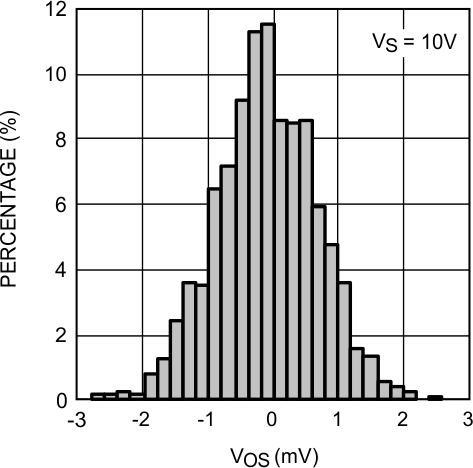 Figure 1. VOS Distribution
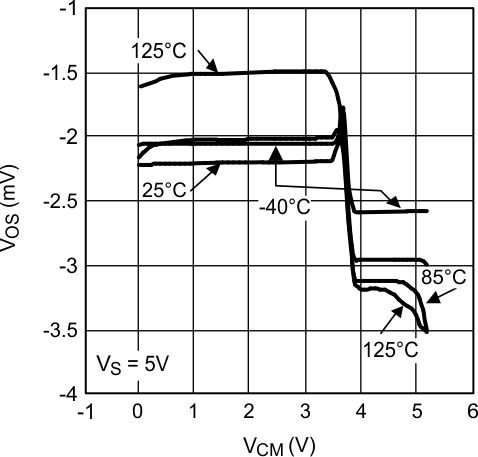 Figure 3. VOS vs VCM (Unit 2)
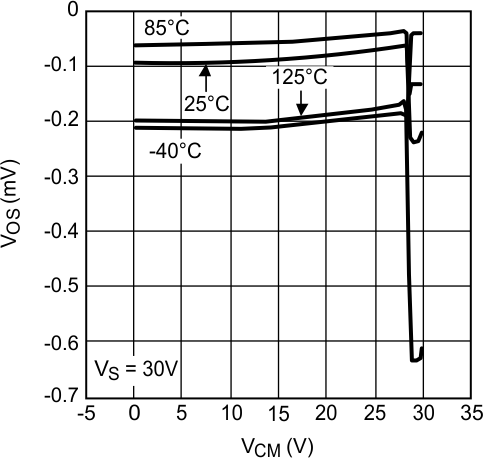 Figure 5. VOS vs VCM (Unit 1)
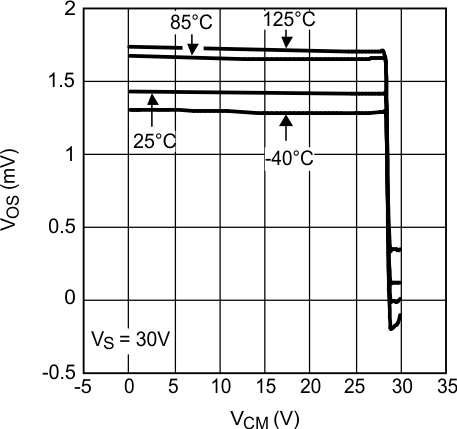 Figure 7. VOS vs VCM (Unit 3)
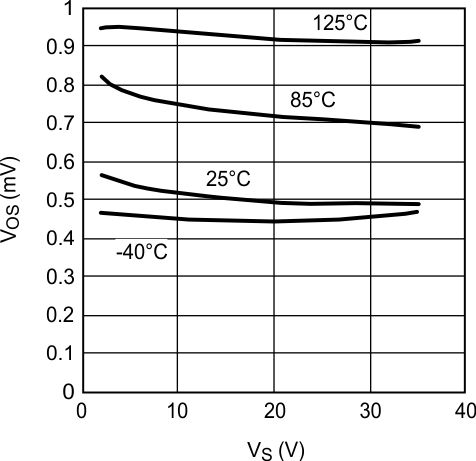 Figure 9. VOS vs VS (Unit 2)
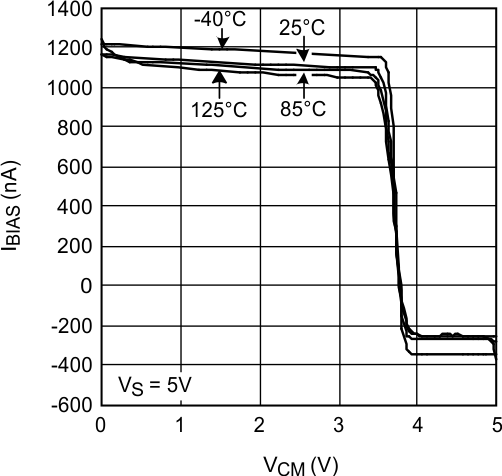 Figure 11. IBIAS vs VCM
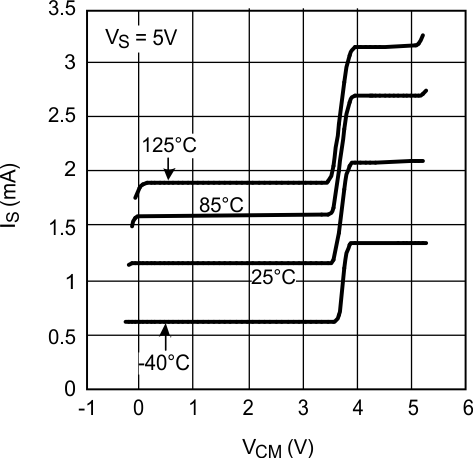 Figure 13. IS vs VCM
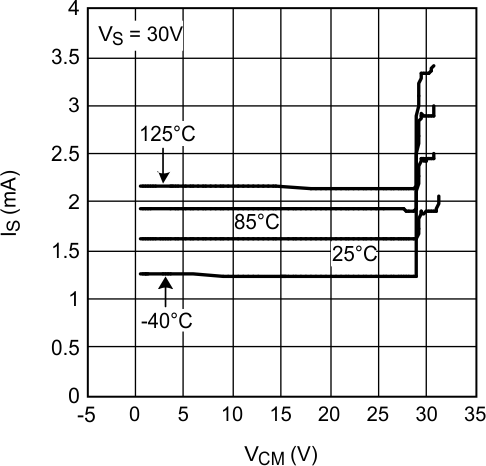 Figure 15. IS vs VCM
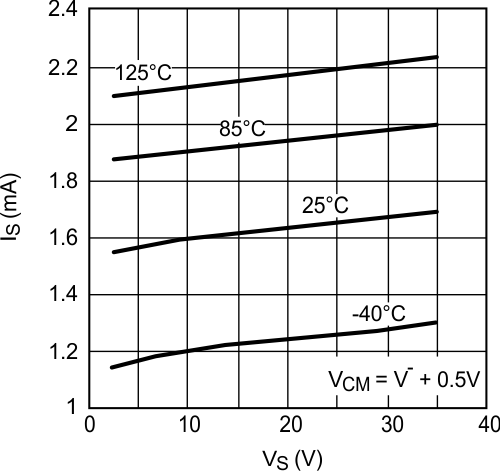 Figure 17. IS vs Supply Voltage
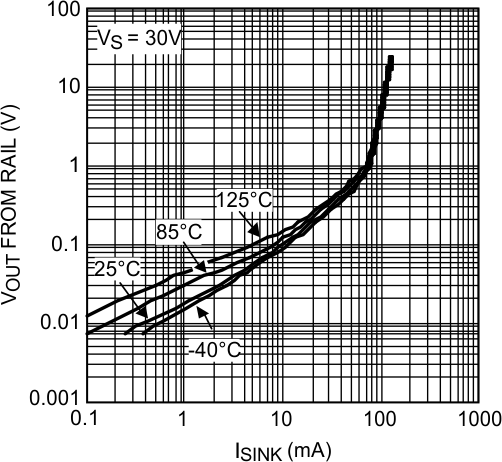 Figure 19. Output Swing vs Sinking Current
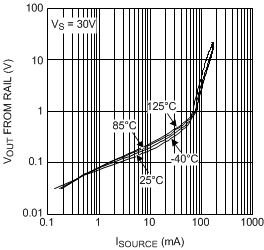 Figure 21. Output Swing vs Sourcing Current
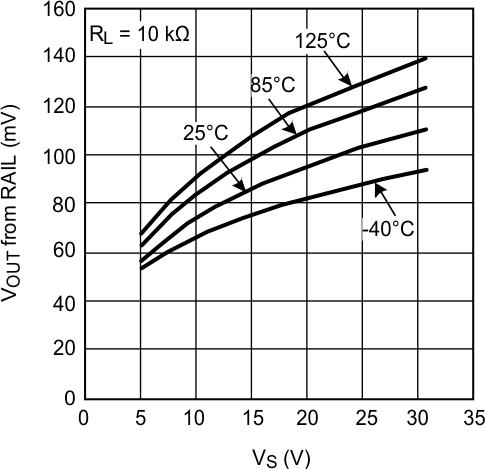 Figure 23. Positive Output Swing vs Supply Voltage
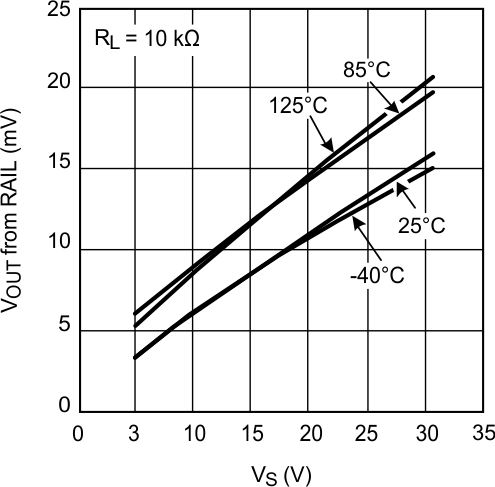 Figure 25. Negative Output Swing vs Supply Voltage
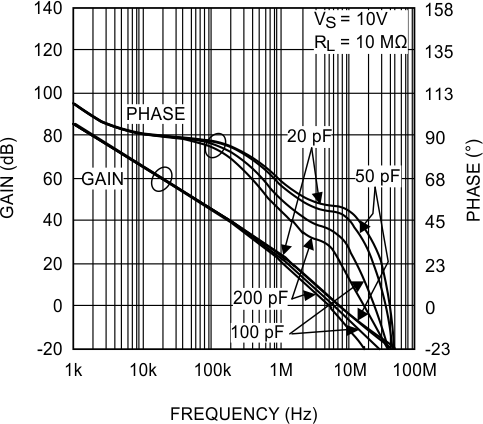 Figure 27. Open-Loop Frequency Response With
Various Capacitive Loads
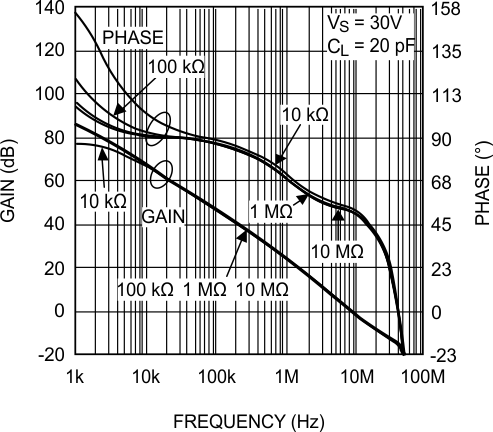 Figure 29. Open-Loop Frequency Response vs
With Various Resistive Loads
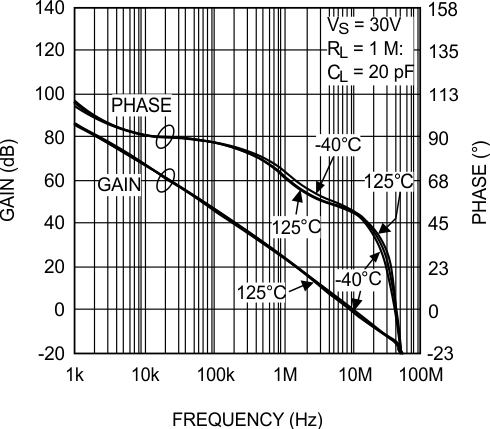 Figure 31. Open-Loop Frequency Response at Various Temperatures
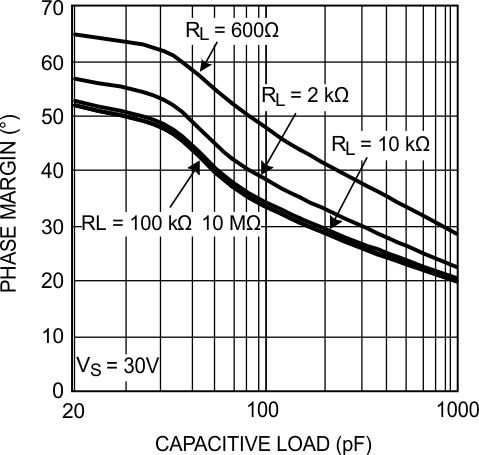 Figure 33. Phase Margin vs Capacitive Load
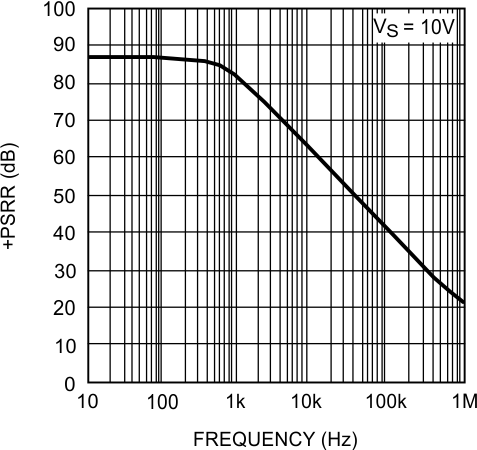 Figure 35. +PSRR vs Frequency
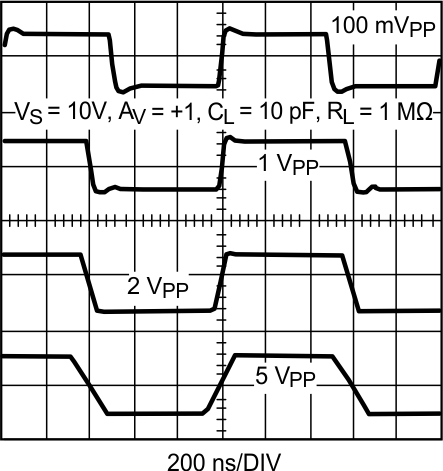 Figure 37. Step Response for Various Amplitudes
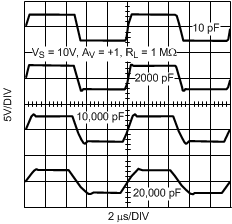 Figure 39. Large Signal Step Response for Various Capacitive Loads
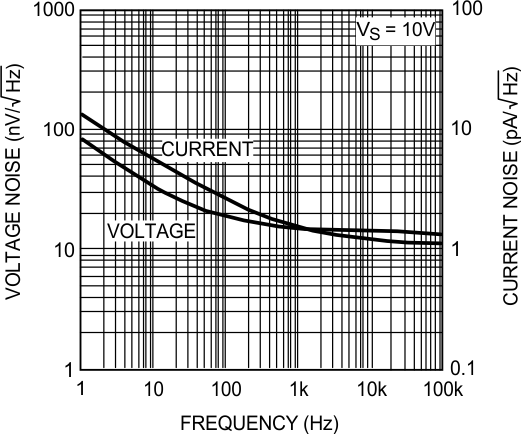 Figure 41. Input-Referred Noise Density vs Frequency
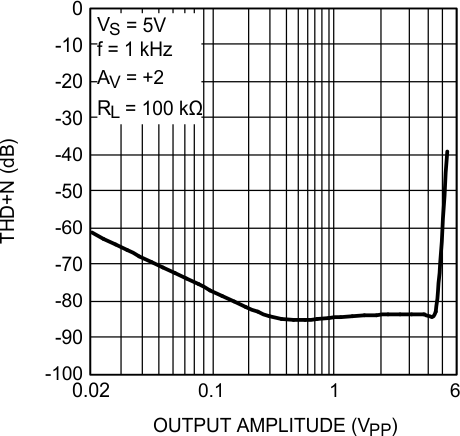 Figure 43. THD+N vs Output Amplitude (VPP)
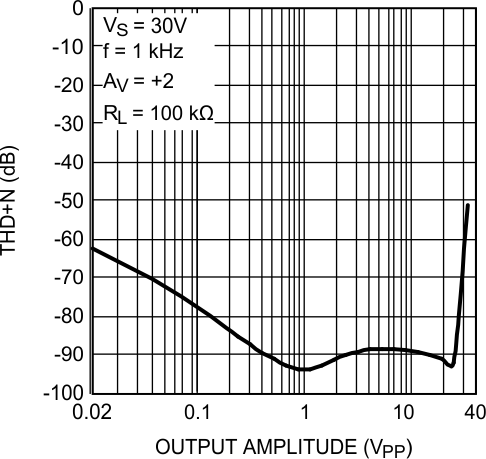 Figure 45. THD+N vs Output Amplitude (VPP)
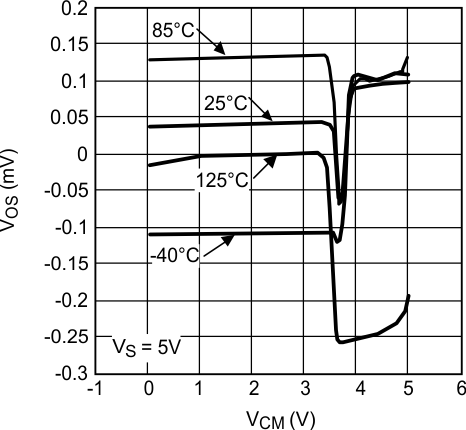 Figure 2. VOS vs VCM (Unit 1)
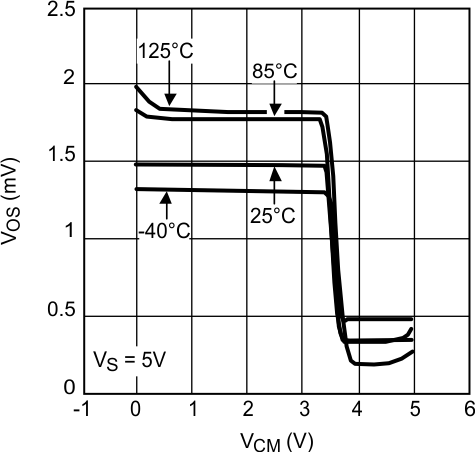 Figure 4. VOS vs VCM (Unit 3)
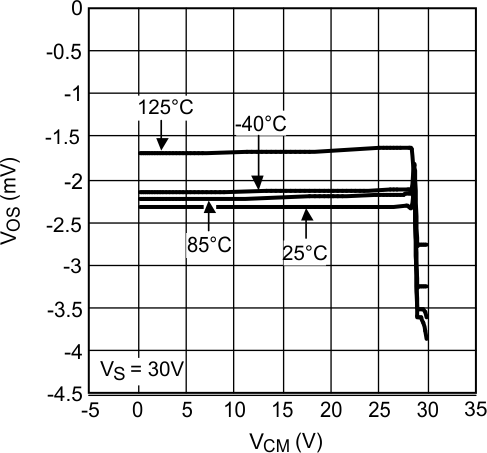 Figure 6. VOS vs VCM (Unit 2)
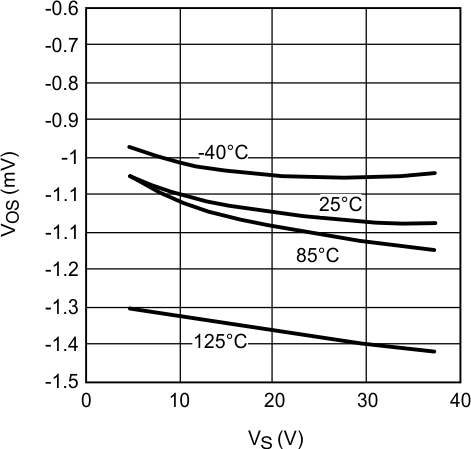 Figure 8. VOS vs VS (Unit 1)
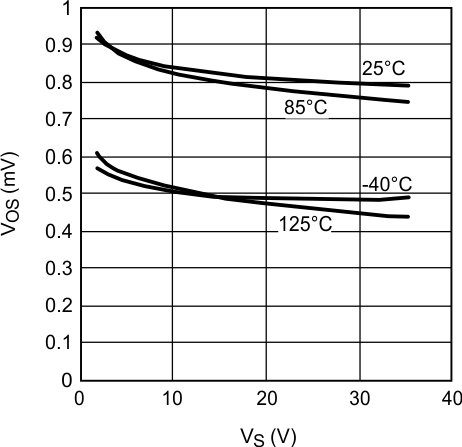 Figure 10. VOS vs VS (Unit 3)
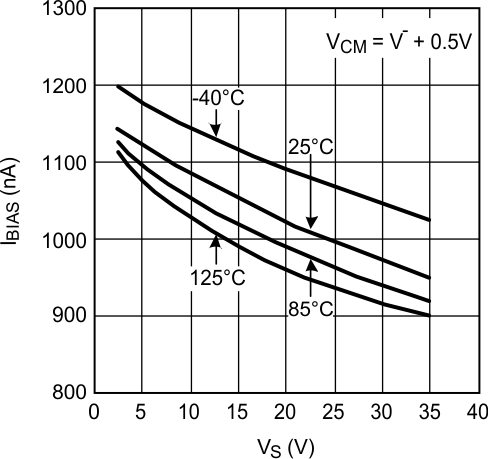 Figure 12. IBIAS vs Supply Voltage
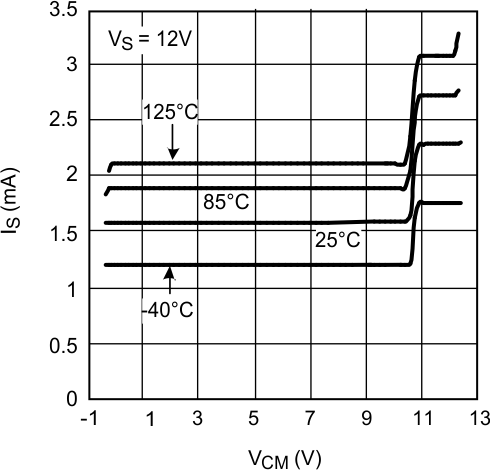 Figure 14. IS vs VCM
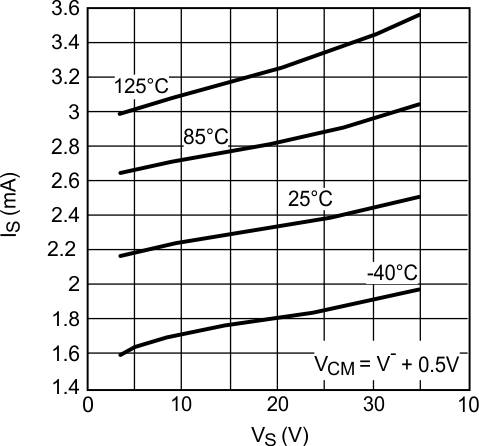 Figure 16. IS vs Supply Voltage
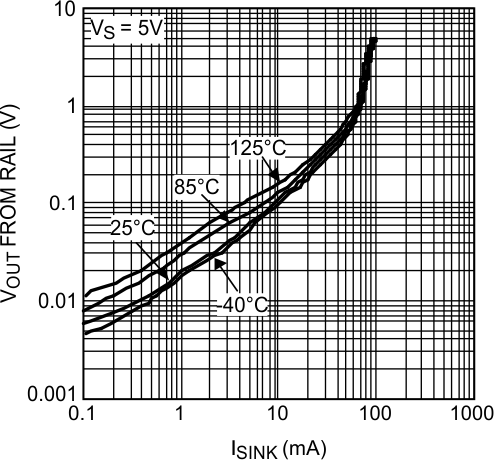 Figure 18. Output Swing vs Sinking Current
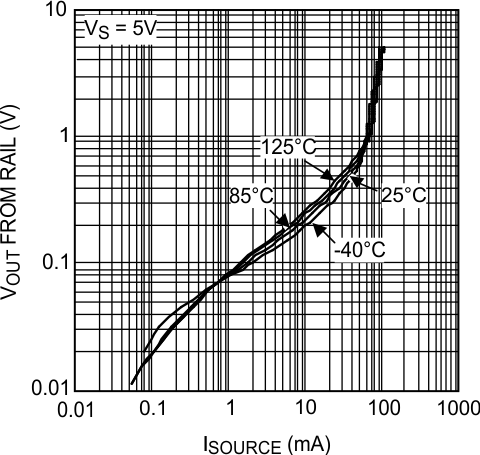 Figure 20. Output Swing vs Sourcing Current
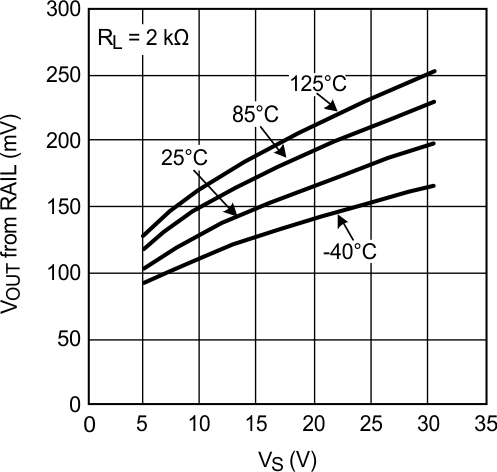 Figure 22. Positive Output Swing vs Supply Voltage
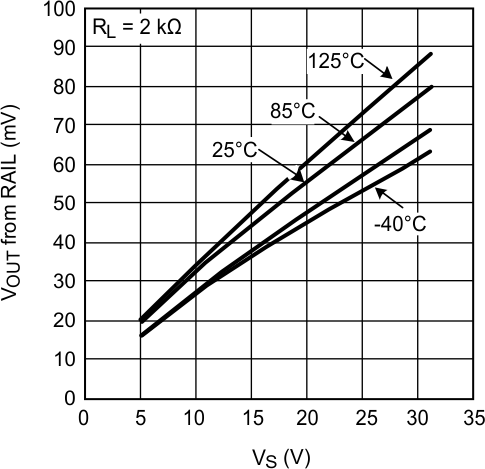 Figure 24. Negative Output Swing vs Supply Voltage
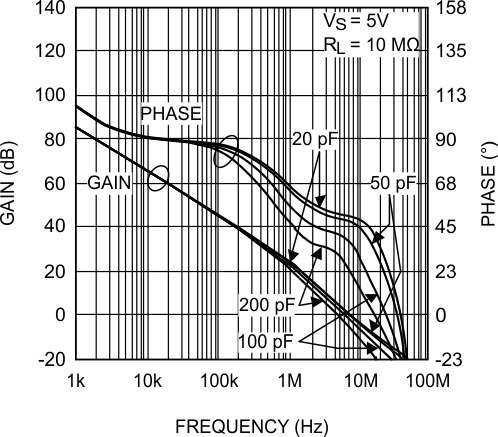 Figure 26. Open-Loop Frequency Response With
Various Capacitive Loads
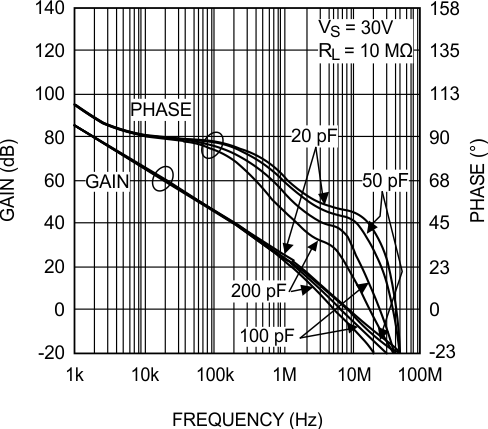 Figure 28. Open-Loop Frequency Response With
Various Capacitive Loads
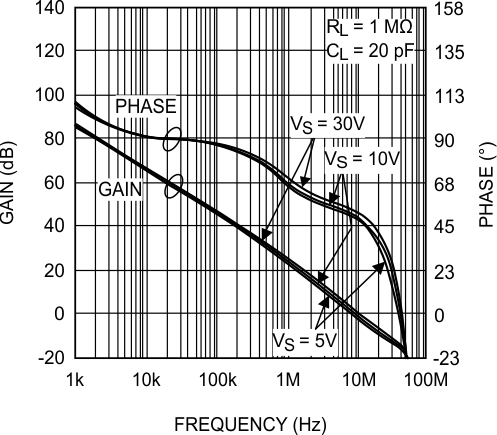 Figure 30. Open-Loop Frequency Response vs
 With Various Supply Voltages
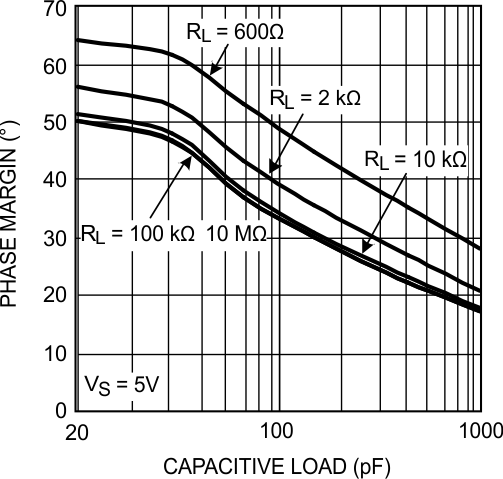 Figure 32. Phase Margin vs Capacitive Load
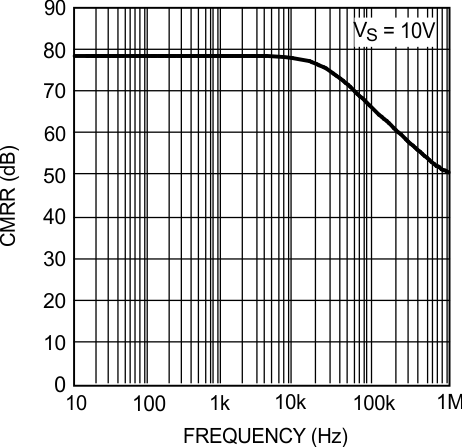 Figure 34. CMRR vs Frequency
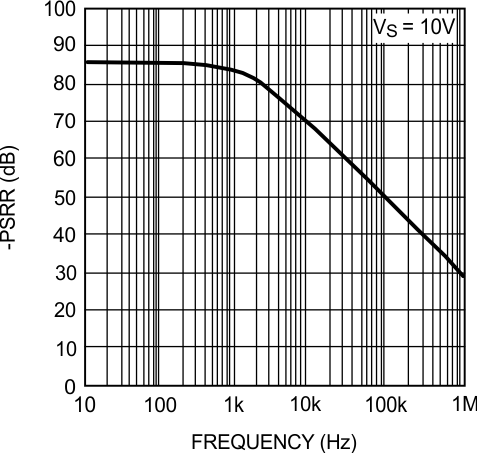 Figure 36. −PSRR vs Frequency
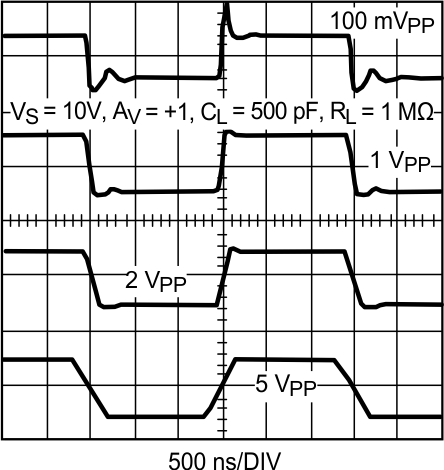 Figure 38. Step Response for Various Amplitudes
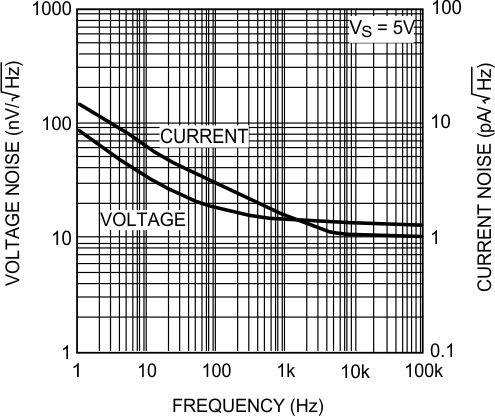 Figure 40. Input-Referred Noise Density vs Frequency
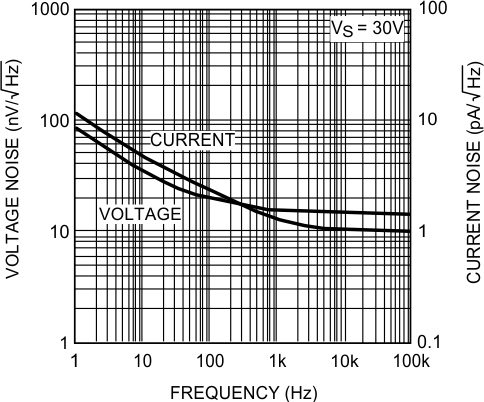 Figure 42. Input-Referred Noise Density vs Frequency
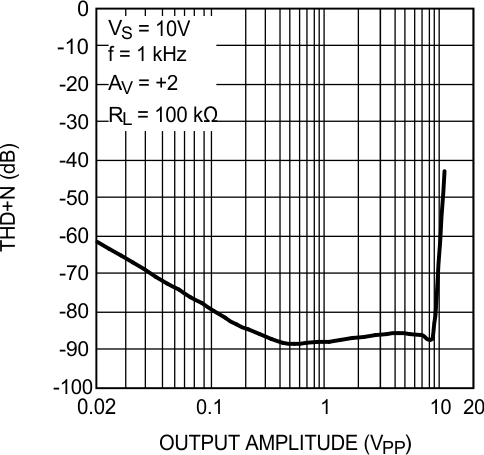 Figure 44. THD+N vs Output Amplitude (VPP)
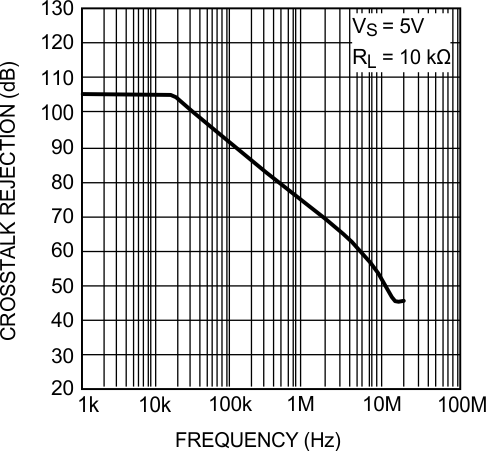 Figure 46. Crosstalk vs Frequency