SLLS121E August   1990  – April 2024 SN75ALS172A

PRODUCTION DATA  

  1.   1
  2. 1 Feature
  3. 2 Applications
  4. 3 Description
  5. 4 Pin Configuration and Functions
  6. 5 Specifications
    1. 5.1 Absolute Maximum Ratings
    2. 5.2 Dissipation Rating Table
    3. 5.3 Recommended Operating Conditions
    4. 5.4 Thermal Information
    5. 5.5 Electrical Characteristics
    6. 5.6 Switching Characteristics
  7. 6 Parameter Measurement Information
  8. 7 Detailed Description
    1. 7.1 Device Functional Modes
  9. 8 Device and Documentation Support
    1. 8.1 Receiving Notification of Documentation Updates
    2. 8.2 Support Resources
    3. 8.3 Trademarks
    4. 8.4 Electrostatic Discharge Caution
    5. 8.5 Glossary
  10. 9 Revision History
  11. 10Mechanical, Packaging, and Orderable Information

Description

The SN75ALS172A comprises four line drivers with 3-state differential outputs. Which are designed to meet the requirements of ANSI Standards EIA/TIA-422-B and RS-485 and ITU Recommendation V.11. The device is optimized for balanced multipoint bus transmission at rates of up to 20Mbaud. Each driver features wide positive and negative common-mode output voltage ranges, making the driver suitable for party-line applications in noisy environments.

The SN75ALS172A provides positive- and negative-current limiting, and thermal shutdown for protection from line-fault conditions on the transmission bus line. Shutdown occurs at a junction temperature of approximately 150°C.

The SN75ALS172A is characterized for operation from 0°C to 70°C.

Package Information
PART NUMBER PACKAGE(1) PACKAGE SIZE(2)
SN75ALS172A SOIC (DW, 20) 12.8mm × 10.3mm
PDIP (N, 16) 19.3mm × 9.4mm
For more information, see Section 10.
The package size (length × width) is a nominal value and includes pins, where applicable.
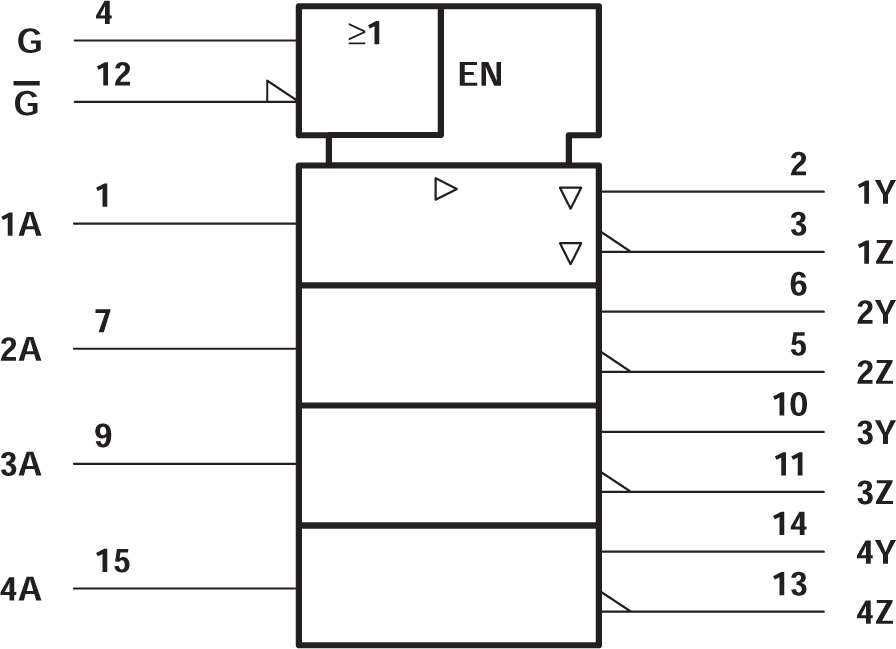
GUID-E27BBEFD-4D26-432E-883D-9E816A212D3C-low.pngLogic Symbol(1)
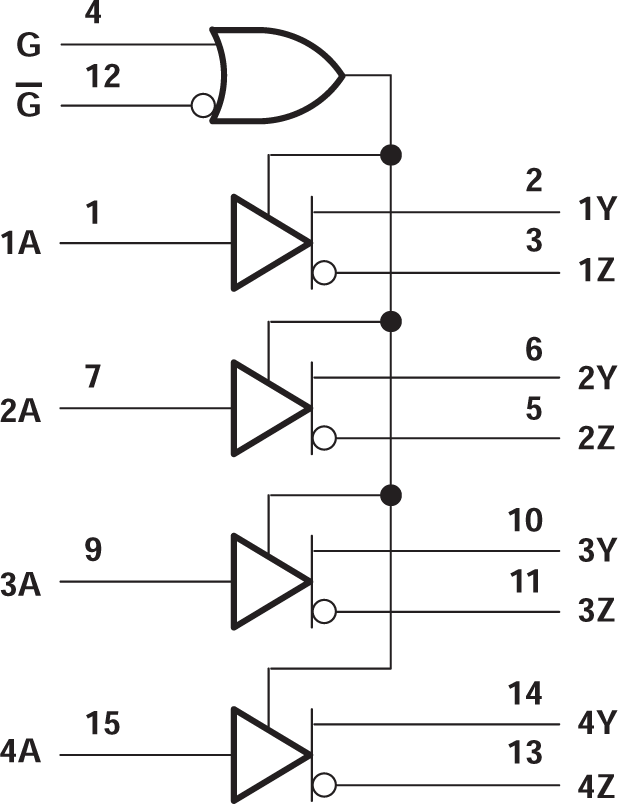
GUID-55E14C06-3864-467A-B093-DAF8EA84E496-low.png
Pin numbers shown are for the N package.
Logic Diagram (Positive Logic)
This symbol is in accordance with ANSI/IEEE Std 91-1984 and IEC Publication 617-12.