SLVSDZ4D February 2018 – February 2020 TPS2HB35-Q1
PRODUCTION DATA.
- 1 Features
- 2 Applications
- 3 Description
- 4 Revision History
- 5 Device Comparison Table
- 6 Pin Configuration and Functions
- 7 Specifications
- 8 Parameter Measurement Information
-
9 Detailed Description
- 9.1 Overview
- 9.2 Functional Block Diagram
- 9.3
Feature Description
- 9.3.1 Protection Mechanisms
- 9.3.2 Diagnostic Mechanisms
- 9.4 Device Functional Modes
- 10Application and Implementation
- 11Power Supply Recommendations
- 12Layout
- 13Device and Documentation Support
- 14Mechanical, Packaging, and Orderable Information
9.3.1.6 Fault Event – Timing Diagrams (Version A/B/C)
NOTE
All timing diagrams assume that the SELx pins are set to select the relevant channel.
The LATCH, DIA_EN, and ENx pins are controlled by the user. The timing diagrams represent a possible use-case.
Figure 40 shows the immediate current limit switch off and the retry behavior of versions A and B of the device. As shown, the switch will remain latched off until the LATCH pin is low.
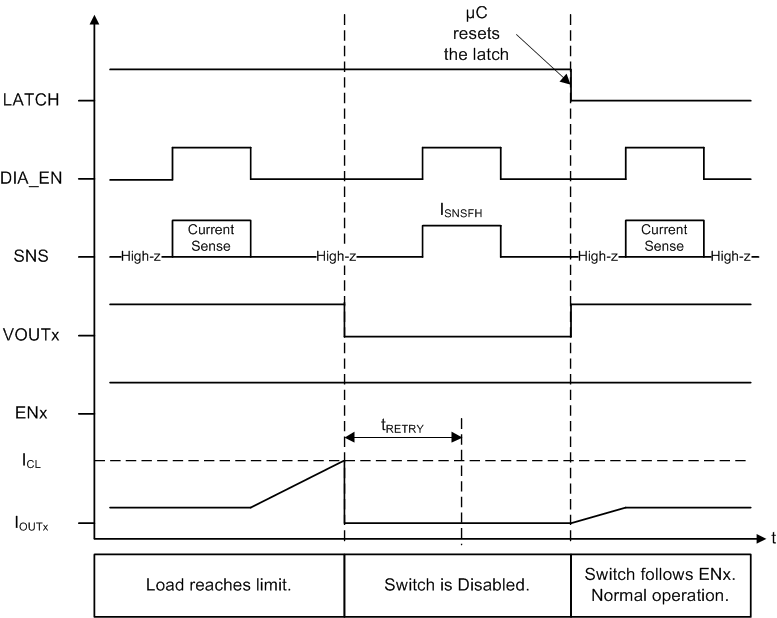 Figure 40. Current Limit – Version A and B - Latched Behavior
 Figure 41 shows the immediate current limit switch off behavior of versions A and B. In this example, LATCH is tied to GND; hence, the switch will retry after the fault is cleared and tRETRY has expired.
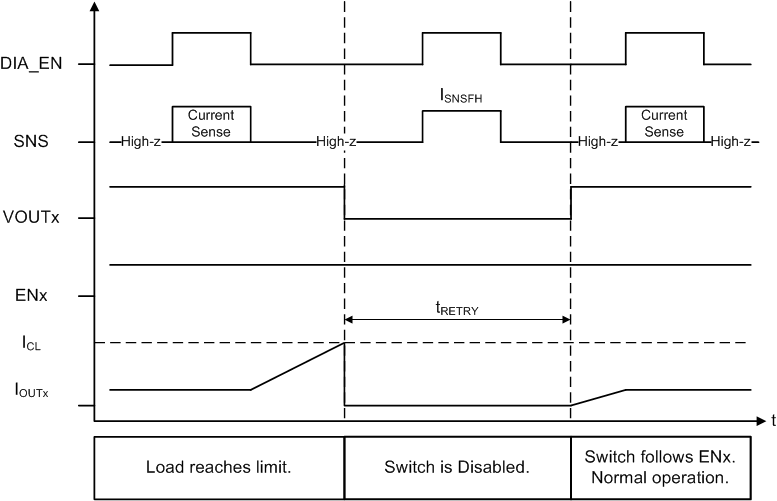 Figure 41. Current Limit – Version A and B - LATCH = 0
 Figure 42 shows the active current limiting behavior of version C. In version C, the switch will not shutdown until thermal shutdown is reached.
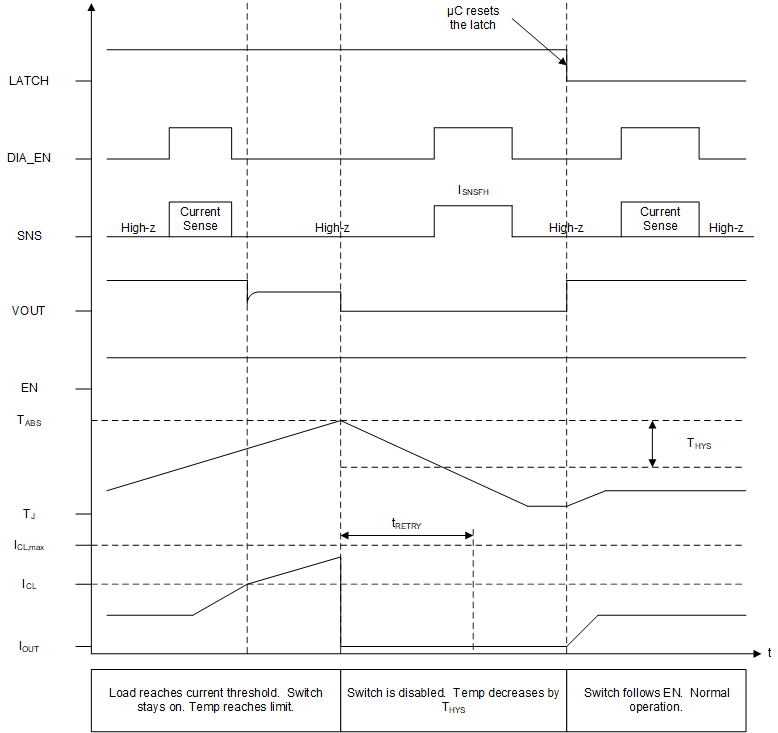 Figure 42. Current Limit – Version C - Latched Behavior
 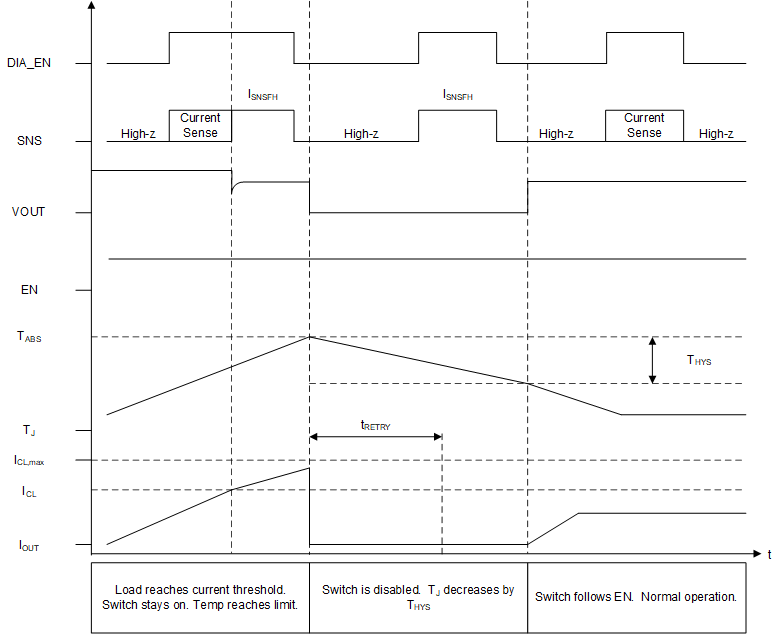 Figure 43. Current Limit – Version C - LATCH = 0
 Figure 44 illustrates auto-retry behavior and provides a zoomed-in view of the fault indication during retry. When the switch retries after a shutdown event, the SNS fault indication will remain at the fault state until VOUT has risen to VBB – 1.8 V. Once VOUT has risen, the SNS fault indication is reset and current sensing is available. If there is a short-to-ground and VOUT cannot rise, the SNS fault indication will remain indefinitely.
NOTE
Figure 44 assumes that tRETRY has expired by the time that TJ reaches the hysteresis threshold.
| LATCH = 0 V and DIA_EN = 5 V |
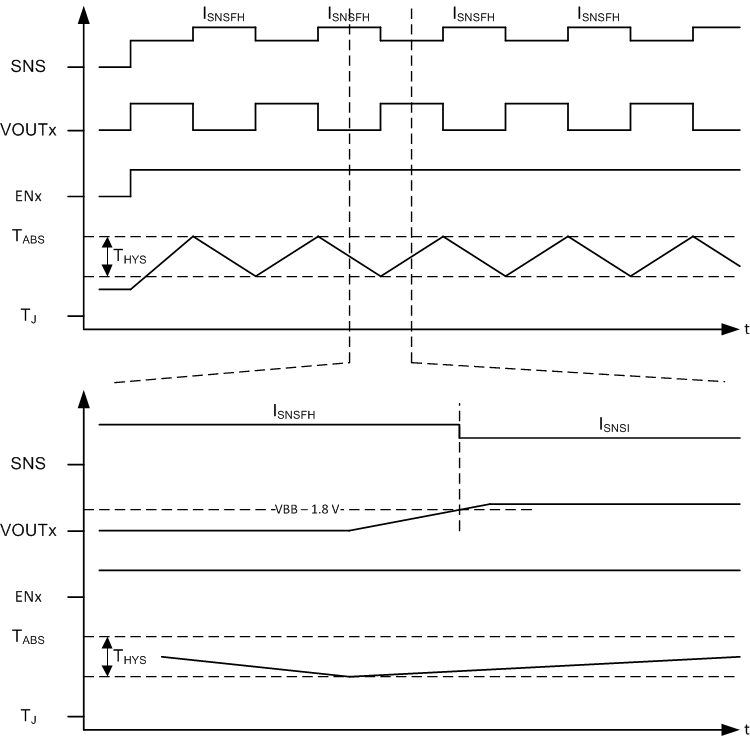 Figure 44. Fault Indication During Retry