This typical
characteristics section is applicable for LM2902B-Q1 and LM2902BA-Q1. Typical
characteristics data in this section was taken with TA = 25°C,
VS = 36V (±18V), VCM = VS / 2, RLOAD
= 10kΩ connected to VS / 2 (unless otherwise noted).
 Figure 5-1 Offset Voltage Production Distribution
 Figure 5-3 Offset Voltage vs Temperature
 Figure 5-5 Open-Loop Gain and Phase vs Frequency
 Figure 5-7 Output Voltage Swing vs Output Current (Sourcing)
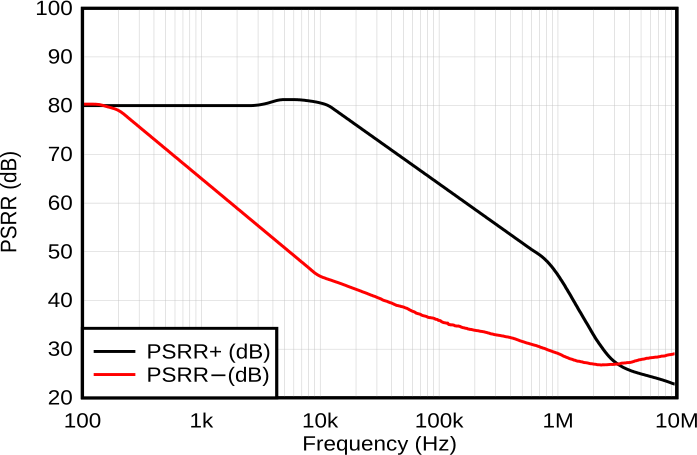 Figure 5-9 PSRR
vs Frequency
Figure 5-9 PSRR
vs Frequency Figure 5-11 Power
Supply Rejection Ratio vs Temperature (dB)
Figure 5-11 Power
Supply Rejection Ratio vs Temperature (dB)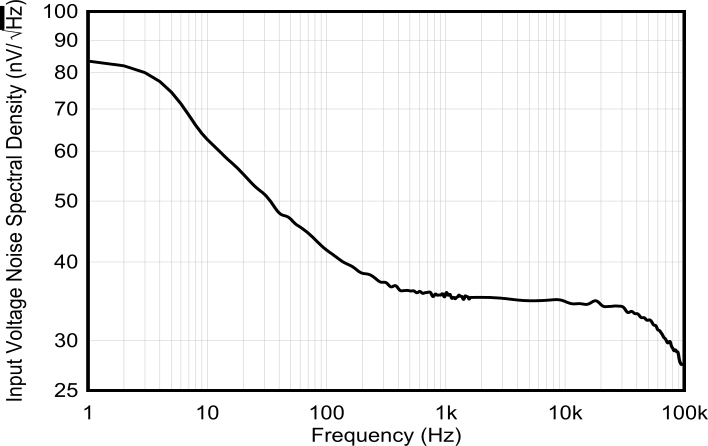 Figure 5-13 Input
Voltage Noise Spectral Density vs Frequency
Figure 5-13 Input
Voltage Noise Spectral Density vs Frequency
| G = –1, f = 1kHz, BW =
80kHz, |
| VOUT =
10VPP, RL connected to
V– |
| See Section 6 |
Figure 5-15 THD+N
Ratio vs Frequency, G = –1
| G = –1, f = 1kHz, BW =
80kHz, |
| RL connected to
V– |
| See Section 6 |
Figure 5-17 THD+N
vs Output Amplitude, G = –1 Figure 5-19 Quiescent Current vs Temperature
| G = 1, 100mV output step,
RL = open |
Figure 5-21 Small-Signal Overshoot vs Capacitive Load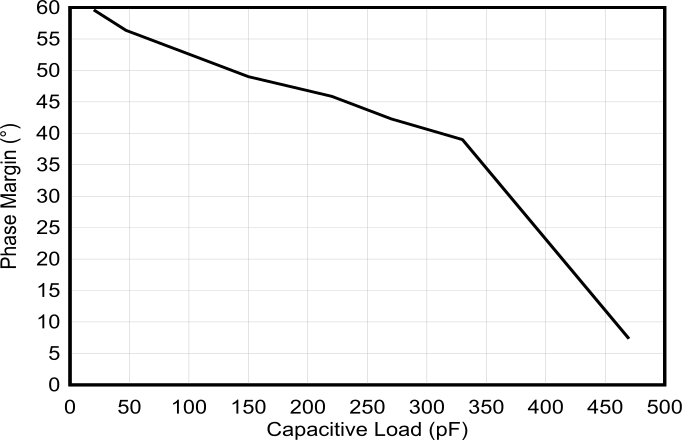
| G = +1, RL =
10kΩ, CL = 20pF |
Figure 5-23 Phase
Margin vs Capacitive Load Figure 5-25 Overload Recovery (Negative Rail)
 Figure 5-27 Small-Signal Step Response, G = –1
 Figure 5-29 Large-Signal Step Response, G = 1
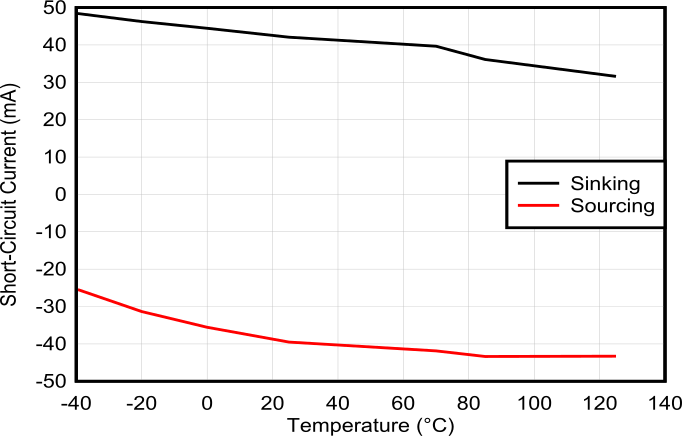 Figure 5-31 Short-Circuit Current vs Temperature
 Figure 5-33 Channel Separation vs Frequency
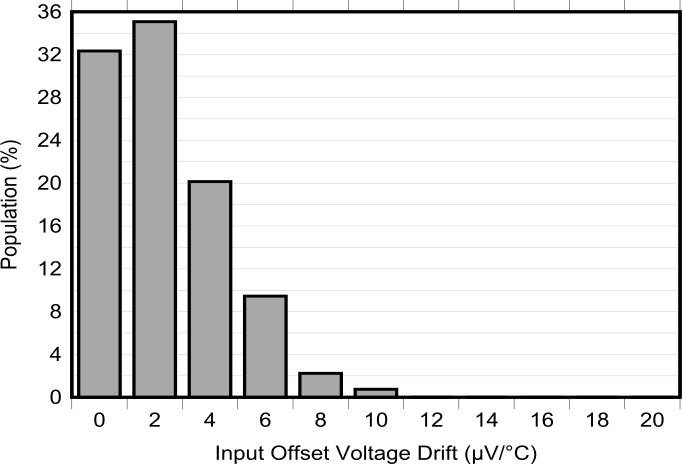 Figure 5-2 Offset Voltage Drift Distribution
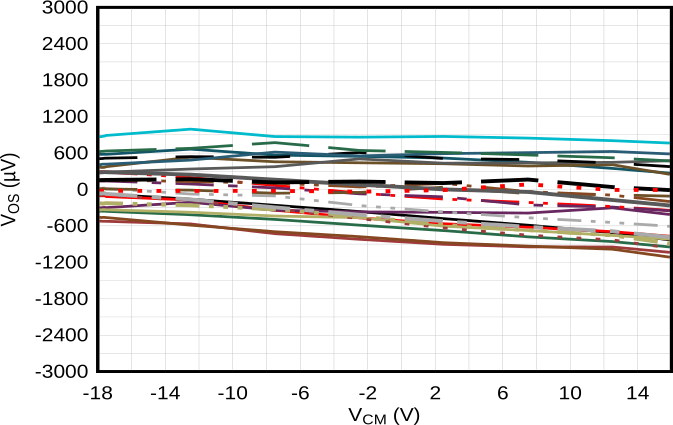 Figure 5-4 Offset Voltage vs Common-Mode Voltage
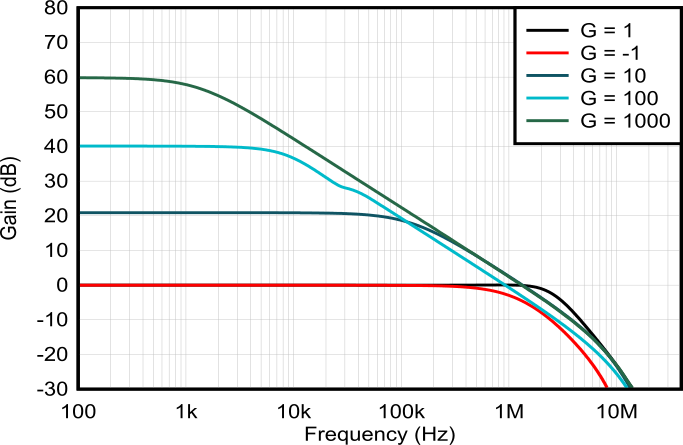 Figure 5-6 Closed-Loop Gain vs Frequency
 Figure 5-8 CMRR
vs Frequency
Figure 5-8 CMRR
vs Frequency Figure 5-10 Common-Mode Rejection Ratio vs
Temperature
(dB) Figure 5-12 0.1Hz
to 10Hz Noise
Figure 5-12 0.1Hz
to 10Hz Noise
| G = 1, f = 1kHz, BW =
80kHz, |
| VOUT =
10VPP, RL connected to
V– |
Figure 5-14 THD+N
Ratio vs Frequency, G = 1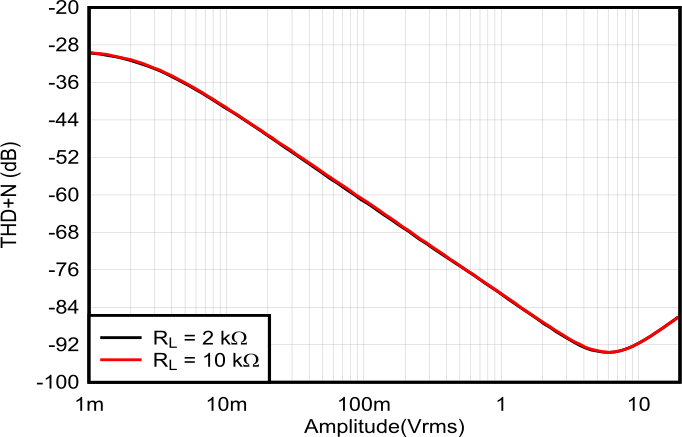
| G = 1, f = 1kHz, BW =
80kHz, |
| RL connected to
V– |
| |
Figure 5-16 THD+N
vs Output Amplitude, G = 1 Figure 5-18 Quiescent Current vs Supply Voltage
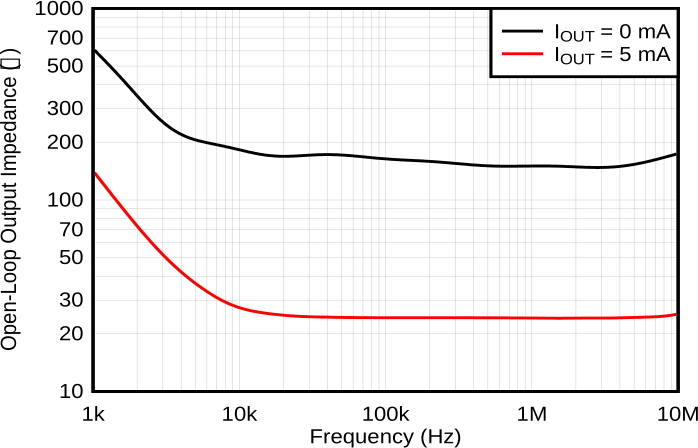 Figure 5-20 Open-Loop Output Impedance vs Frequency
| G = –1, 100mV output step,
RL = open |
Figure 5-22 Small-Signal Overshoot vs Capacitive Load Figure 5-24 Overload Recovery (Positive Rail)
 Figure 5-26 Small-Signal Step Response, G = 1
 Figure 5-28 Large-Signal Step Response (Falling)
 Figure 5-30 Large-Signal Step Response, G = –1
 Figure 5-32 Maximum Output Voltage vs Frequency
 Figure 5-34 EMIRR
(Electromagnetic Interference Rejection Ratio) vs Frequency
Figure 5-34 EMIRR
(Electromagnetic Interference Rejection Ratio) vs Frequency