SNOSDJ0C August 2024 – June 2025 TLV3231 , TLV3232
PRODMIX
- 1
- 1 Features
- 2 Applications
- 3 Description
- 4 Pin Configuration and Functions
- 5 Specifications
- 6 Detailed Description
- 7 Application and Implementation
- 8 Device and Documentation Support
- 9 Revision History
- 10Mechanical, Packaging, and Orderable Information
Package Options
Mechanical Data (Package|Pins)
Thermal pad, mechanical data (Package|Pins)
- DSG|8
Orderable Information
5.8 Typical Characteristics
 Figure 5-1 Offset vs. Temperature
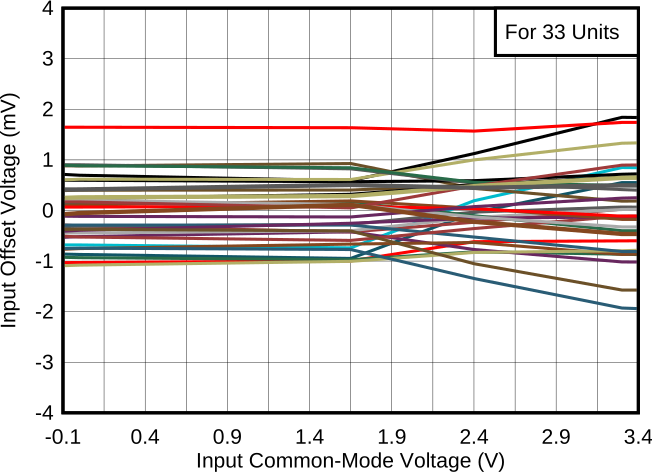 Figure 5-3 Offset vs. Common-Mode, 3.3V
 Figure 5-5 Offset vs. Common-Mode, 5V
 Figure 5-7 Bias Current vs. Common-Mode
 Figure 5-9 Output Voltage vs. Output Sourcing Current, 3.3V
 Figure 5-11 Output Voltage vs. Output Sourcing Current, 5V
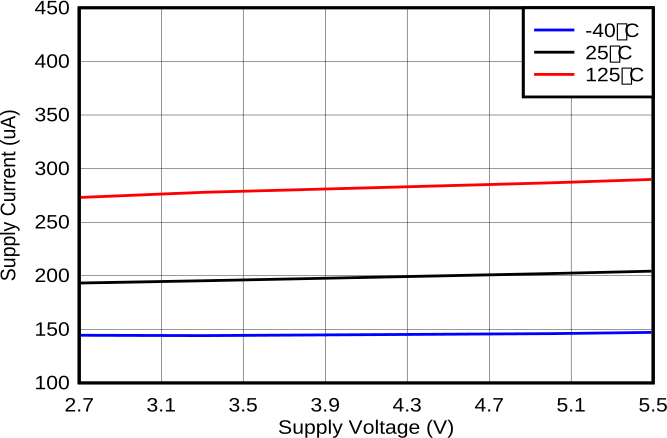 Figure 5-13 Supply Current vs. Supply Voltage (Output Low)
 Figure 5-15 Supply Current vs. Temperature (Output Low)
 Figure 5-17 Propagation Delay (Low to High) vs. Common-Mode
 Figure 5-19 SINGLE Propagation Delay (Low to High) vs. Overdrive
(3.3V)
Figure 5-19 SINGLE Propagation Delay (Low to High) vs. Overdrive
(3.3V)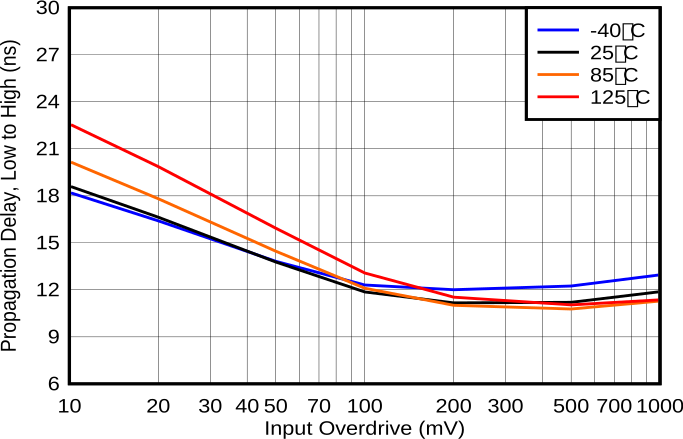 Figure 5-21 SINGLE Propagation Delay (Low to High) vs. Overdrive
(5V)
Figure 5-21 SINGLE Propagation Delay (Low to High) vs. Overdrive
(5V) Figure 5-23 SINGLE Propagation Delay (Low to High) vs.
Underdrive (3.3V)
Figure 5-23 SINGLE Propagation Delay (Low to High) vs.
Underdrive (3.3V)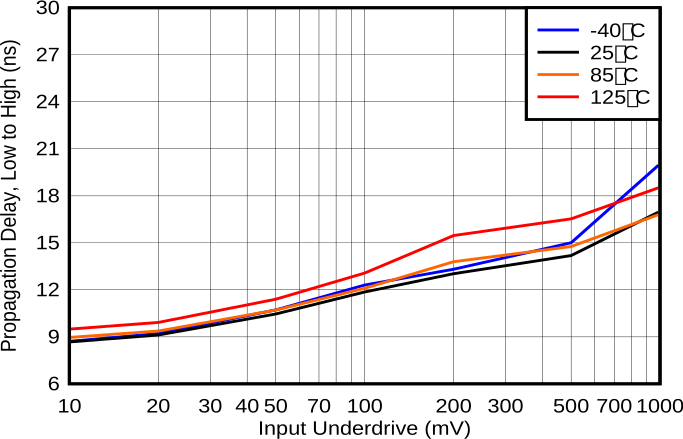 Figure 5-25 SINGLE Propagation Delay (Low to High) vs.
Underdrive (5V)
Figure 5-25 SINGLE Propagation Delay (Low to High) vs.
Underdrive (5V) Figure 5-27 DUAL Propagation Delay (Low to High) vs. Overdrive
(3.3V)
Figure 5-27 DUAL Propagation Delay (Low to High) vs. Overdrive
(3.3V)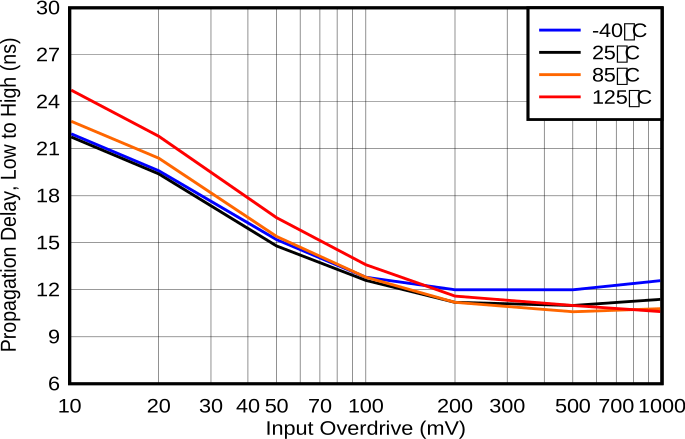 Figure 5-29 DUAL Propagation Delay (Low to High) vs. Overdrive
(5V)
Figure 5-29 DUAL Propagation Delay (Low to High) vs. Overdrive
(5V) Figure 5-31 DUAL Propagation Delay (Low to High) vs. Underdrive
(3.3V)
Figure 5-31 DUAL Propagation Delay (Low to High) vs. Underdrive
(3.3V) Figure 5-33 DUAL Propagation Delay (Low to High) vs. Underdrive
(5V)
Figure 5-33 DUAL Propagation Delay (Low to High) vs. Underdrive
(5V) Figure 5-35 Rise and Fall Times vs. Capacitive Loads
 Figure 5-2 Hysteresis vs. Temperature
 Figure 5-4 Hysteresis vs. Common-Mode, 3.3V
 Figure 5-6 Hysteresis vs. Common-Mode, 5V
 Figure 5-8 Bias Current vs. Temperature
 Figure 5-10 Output Voltage vs. Output Sinking Current, 3.3V
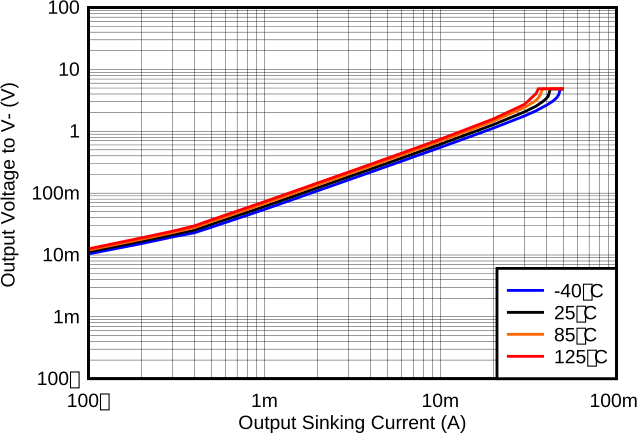 Figure 5-12 Output Voltage vs. Output Sinking Current, 5V
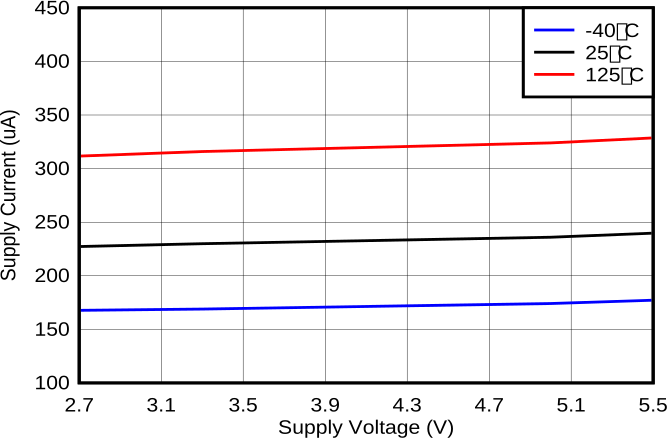 Figure 5-14 Supply Current vs. Supply Voltage (Output High)
 Figure 5-16 Supply Current vs. Temperature (Output High)
 Figure 5-18 Propagation Delay (High to Low) vs. Common-Mode
 Figure 5-20 SINGLE Propagation Delay (High to Low) vs. Overdrive
(3.3V)
Figure 5-20 SINGLE Propagation Delay (High to Low) vs. Overdrive
(3.3V) Figure 5-22 SINGLE Propagation Delay (High to Low) vs. Overdrive
(5V)
Figure 5-22 SINGLE Propagation Delay (High to Low) vs. Overdrive
(5V) Figure 5-24 SINGLE Propagation Delay (High to Low) vs.
Underdrive (3.3V)
Figure 5-24 SINGLE Propagation Delay (High to Low) vs.
Underdrive (3.3V)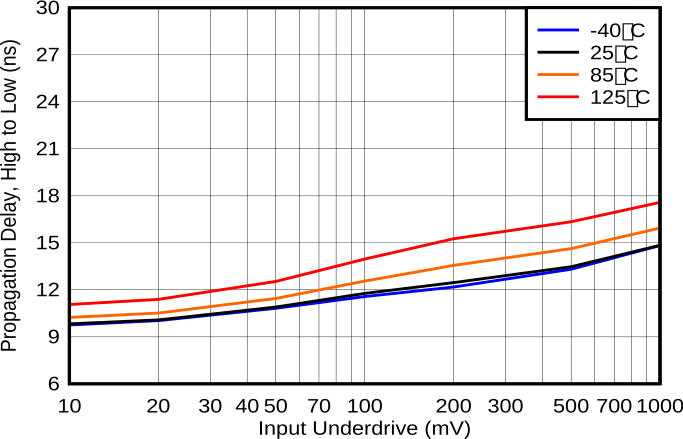 Figure 5-26 SINGLE Propagation Delay (High to Low) vs.
Underdrive (5V)
Figure 5-26 SINGLE Propagation Delay (High to Low) vs.
Underdrive (5V)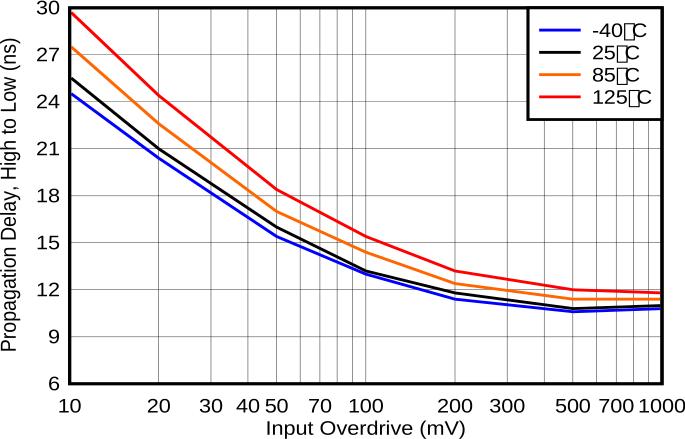 Figure 5-28 DUAL Propagation Delay (High to Low) vs. Overdrive
(3.3V)
Figure 5-28 DUAL Propagation Delay (High to Low) vs. Overdrive
(3.3V) Figure 5-30 DUAL
Propagation Delay (High to Low) vs. Overdrive (5V)
Figure 5-30 DUAL
Propagation Delay (High to Low) vs. Overdrive (5V) Figure 5-32 DUAL Propagation Delay (High to Low) vs. Underdrive
(3.3V)
Figure 5-32 DUAL Propagation Delay (High to Low) vs. Underdrive
(3.3V) Figure 5-34 DUAL Propagation Delay (High to Low) vs. Underdrive
(5V)
Figure 5-34 DUAL Propagation Delay (High to Low) vs. Underdrive
(5V)