JAJSM42C may 2021 – march 2023 TPS629210-Q1
PRODUCTION DATA
- 1 特長
- 2 アプリケーション
- 3 概要
- 4 Revision History
- 5 Device Comparison Table
- 6 Pin Configuration and Functions
- 7 Specifications
-
8 Detailed Description
- 8.1 Overview
- 8.2 Functional Block Diagram
- 8.3
Feature Description
- 8.3.1 Mode Selection and Device Configuration (MODE/S-CONF Pin)
- 8.3.2 Adjustable VO Operation (External Voltage Divider)
- 8.3.3 Selectable VO Operation (VSET and Internal Voltage Divider)
- 8.3.4 Smart Enable with Precise Threshold
- 8.3.5 Power Good (PG)
- 8.3.6 Output Discharge Function
- 8.3.7 Undervoltage Lockout (UVLO)
- 8.3.8 Current Limit and Short Circuit Protection
- 8.3.9 Thermal Shutdown
- 8.4 Device Functional Modes
- 9 Application and Implementation
- 10Device and Documentation Support
- 11Mechanical, Packaging, and Orderable Information
7.7 Typical Characteristics
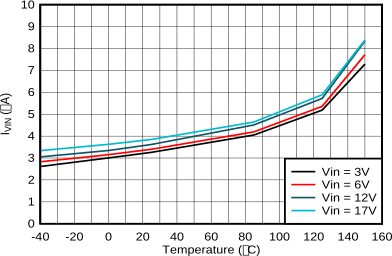
| Measured with the device not switching | ||
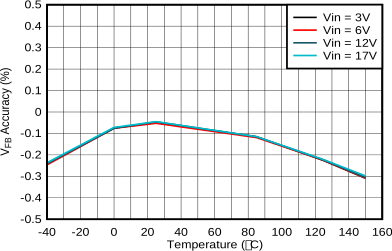 Figure 7-3 Output Voltage Accuracy –
External Feedback
Figure 7-3 Output Voltage Accuracy –
External Feedback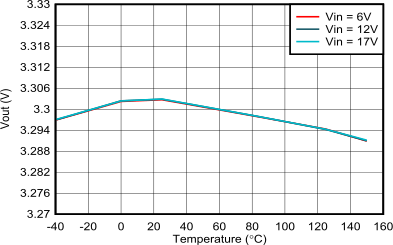
| VOUT = 3.3 V | ||
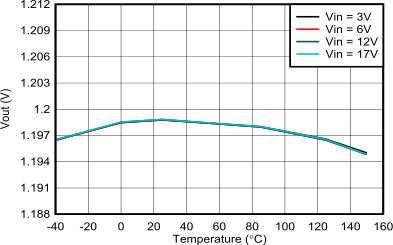
| VOUT = 1.2 V | ||
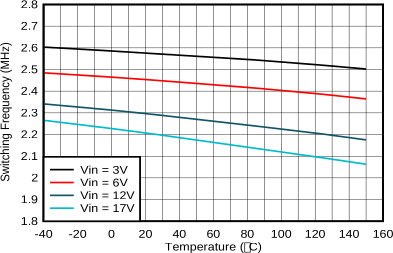
| VOUT = 1.2 V | FSW = 2.5 MHz | IOUT = 0 A |
| FPWM |
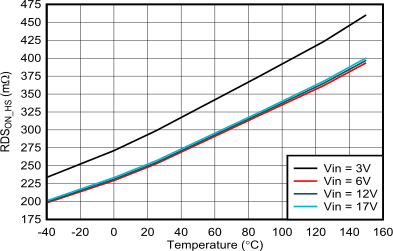 Figure 7-11 High-Side
RDSON vs Temperature
Figure 7-11 High-Side
RDSON vs Temperature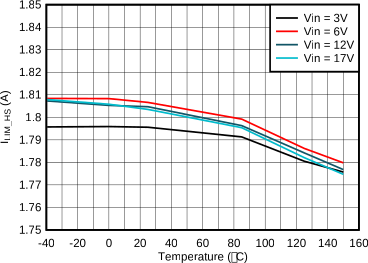 Figure 7-13 High-Side ILIM
vs Temperature
Figure 7-13 High-Side ILIM
vs Temperature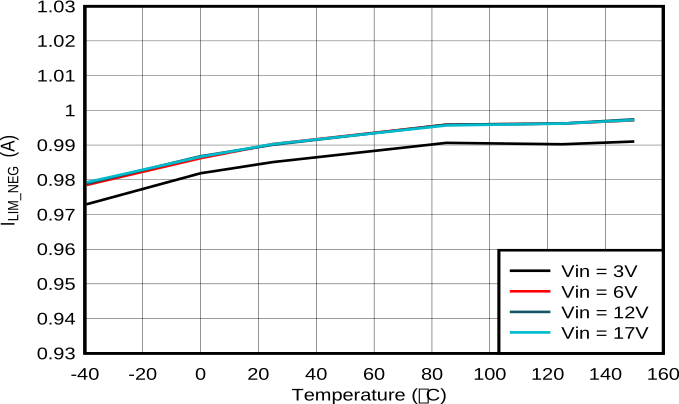 Figure 7-15 Low-Side INEG
vs Temperature
Figure 7-15 Low-Side INEG
vs Temperature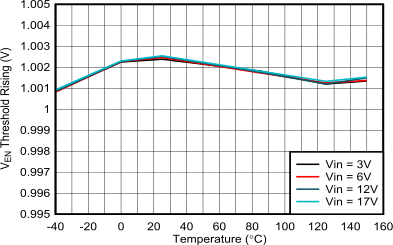 Figure 7-17 Precision Enable
Threshold vs Temperature
Figure 7-17 Precision Enable
Threshold vs Temperature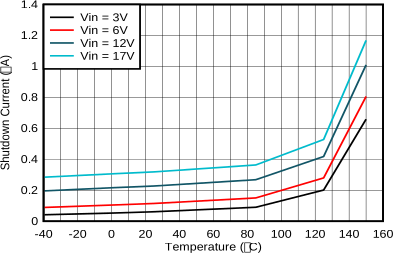 Figure 7-2 Typical Shutdown Current
vs Temperature
Figure 7-2 Typical Shutdown Current
vs Temperature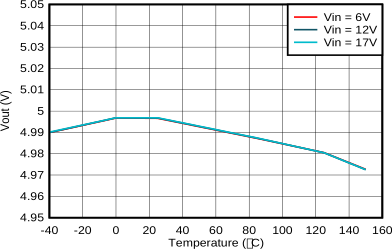
| VOUT = 5.0 V | ||
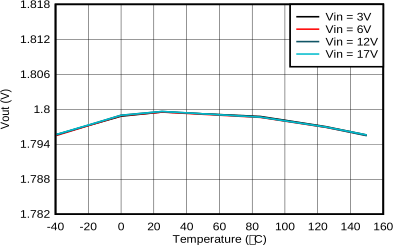
| VOUT = 1.8 V | ||
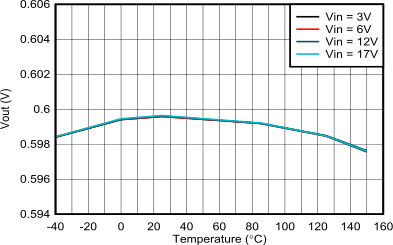
| VOUT = 0.6 V | ||
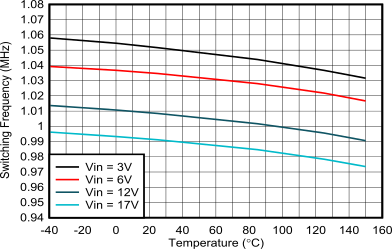
| VOUT = 1.2 V | Fsw = 1.0 MHz | IOUT = 0 A |
| FPWM |
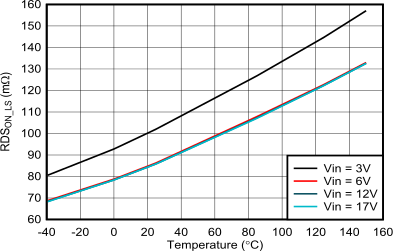 Figure 7-12 Low-Side RDSON
vs Temperature
Figure 7-12 Low-Side RDSON
vs Temperature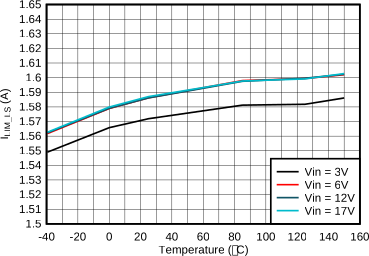 Figure 7-14 Low-Side ILIM
vs Temperature
Figure 7-14 Low-Side ILIM
vs Temperature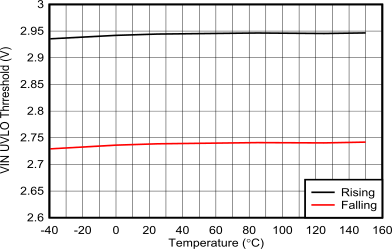 Figure 7-16 VIN UVLO
Thresholds vs Temperature
Figure 7-16 VIN UVLO
Thresholds vs Temperature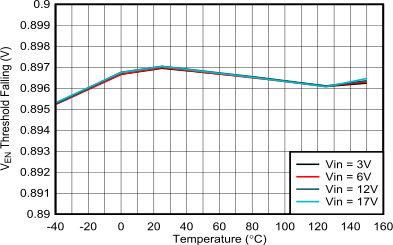 Figure 7-18 Precision Enable
Threshold vs Temperature
Figure 7-18 Precision Enable
Threshold vs Temperature