SLYT864 April 2025 LM5066I
2 Comparing current-sensor elements used for energy metering
Table 1 summarizes the performance benefits and challenges vs. cost for three current-sensing technologies used in energy metering applications. Current transformers are the most popular sensors given their wide dynamic range, durability and low insertion impedance (noninvasive current measurement) [4]. Their cost is most likely the highest of all current-sensing technologies, however. Shunt resistors (shunts) are very attractive given their magnetic immunity, smaller size and reduced cost, but lack isolation and provide less accuracy at higher currents because of thermal self-heating [5].
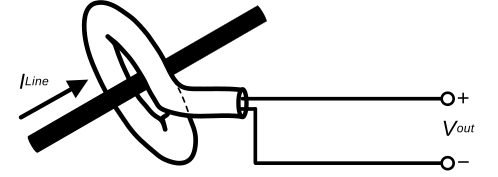
Rogowski coils are an interesting alternative to the other two sensors and are the lowest-cost option, especially when considering printed circuit board (PCB) coils vs. bulk Rogowski coils [6].
| Sensor Type | Current Transformer | Rogowski Coil | Shunt |
|---|---|---|---|
| Block diagram |

|
|

|
| Transfer function | |||
| Benefits |
|
|
|
| Challenges |
|
|
|
| Cost | ≥$0.21 (no shield) ≥$0.26 (with shield) |
<$0.10 for some PCB coils ≥$0.10 for bulk coils |
≥$0.10 (manganese) |
Because of their low cost and flexibility of installation, PCB Rogowski coils are attractive for low-cost energy metering applications [7], [8]. Let’s analyze the benefits and challenges of a PCB Rogowski-based metering design and how to optimize the signal chain for the lowest possible cost while complying with regional metering standards.