SNOAA91 may 2023 TLV1812 , TLV1851 , TLV7011
2.2 ESD Protected Inputs
CMOS and modern low voltage bipolar devices will have ESD clamps on the inputs to protect the inputs from ESD strikes and voltage excursions. These ESD structures are present on both Rail to Rail and non-Rail to Rail inputs.
The most common ESD protection is to have a diode from each pin to both supplies.
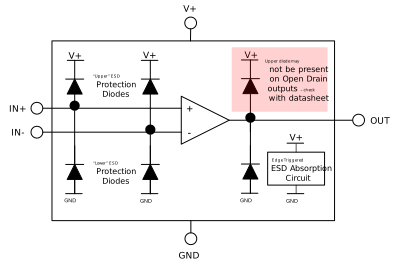 Figure 2-1 Typical ESD Protection Scheme
Having the "upper" ESD diode to the positive supply clamps the input to a diode drop above the positive supply. This limits the amount of voltage the input can go above the supply, usually just 0.2 V to 0.5 V above the supply. If a signal is applied to the input that is larger than the supply voltage and has sufficient current available (such as a battery or another power supply line), it is possible to back-feed the comparators V+ power supply line through the ESD diode. A series current limiting resistor is always recommended in series with the input.