SNAS883A June 2024 – May 2025 LMX1860-SEP
PRODUCTION DATA
- 1
- 1 Features
- 2 Applications
- 3 Description
- 4 Pin Configuration and Functions
- 5 Specifications
-
6 Detailed Description
- 6.1 Overview
- 6.2 Functional Block Diagram
- 6.3
Feature Description
- 6.3.1 Power On Reset
- 6.3.2 Temperature Sensor
- 6.3.3 Clock Outputs
- 6.3.4 LOGICLK Output
- 6.3.5 SYSREF
- 6.4 Device Functional Modes Configurations
- 7 Application and Implementation
- 8 Device and Documentation Support
- 9 Revision History
- 10Mechanical, Packaging, and Orderable Information
Package Options
Refer to the PDF data sheet for device specific package drawings
Mechanical Data (Package|Pins)
- PAP|64
Thermal pad, mechanical data (Package|Pins)
Orderable Information
5.8 Typical Characteristics
If not otherwise, the following
conditions can be assumed: Temperature = 25°C, VCC = 2.5V, OUTx_PWR = 5,
CLKIN driven differentially with 8dBm at each pin. Signal source used is Rohde & Schwarz® SMA100B with
ultra-low noise option B711. 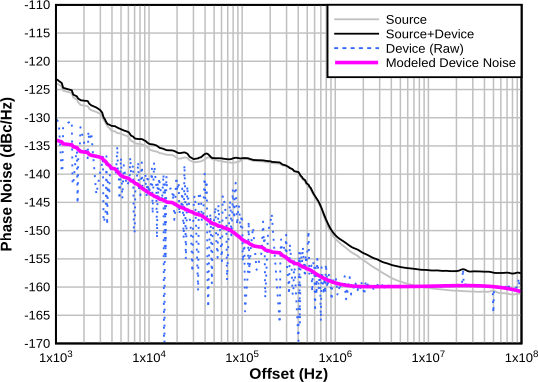
Figure 5-2 Buffer Phase Noise Plot at 6GHz Output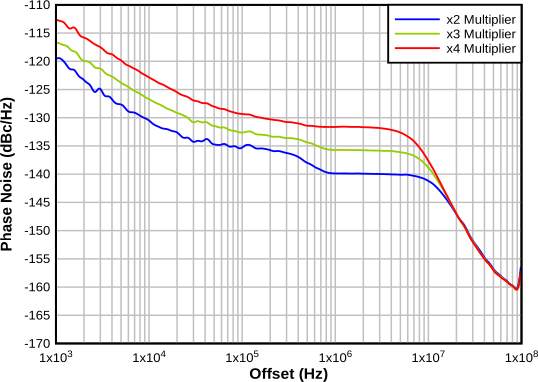 Figure 5-4 Multiplier Phase Noise Plot at 6GHz Output
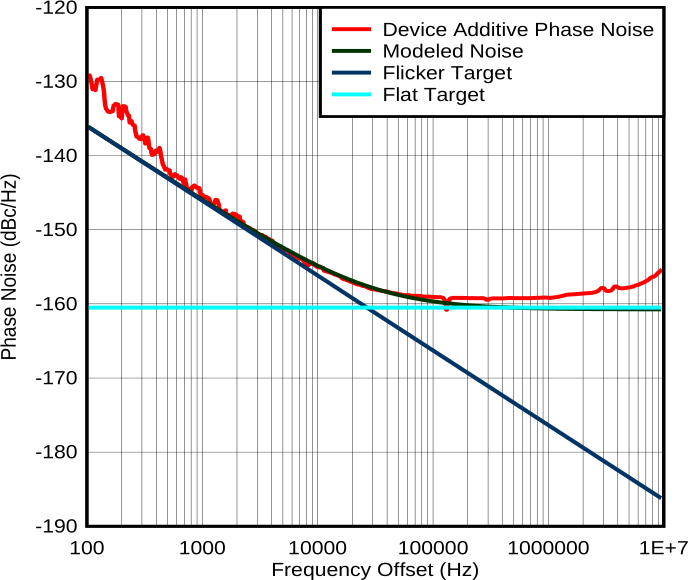 Figure 5-6 Flicker Noise
Figure 5-8 Noise
Floor in Multiply x2 Mode
Figure 5-10 Buffer Mode Single-Ended Output Power Figure 5-12 Multiplier 1/2 Sub-Harmonic in X2 Mode
 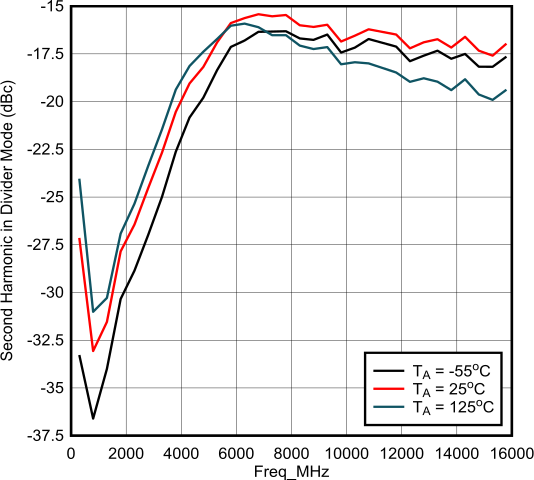 Figure 5-14 Second Harmonic on Divider Mode (Single-Ended Input)
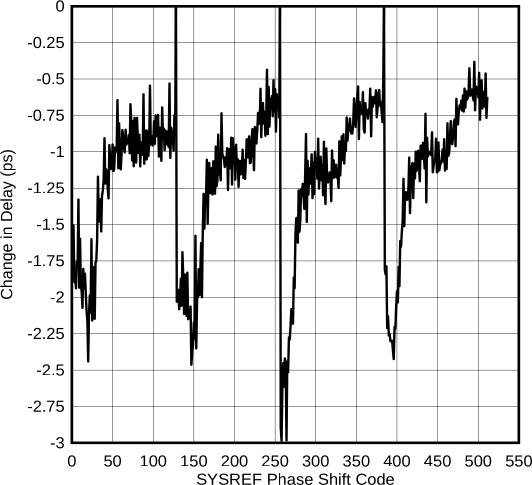 Figure 5-16 SYSREF Delta Delay vs. Code
 Figure 5-18 Propagation Delay
 Figure 5-20 Channel Disable Setting Time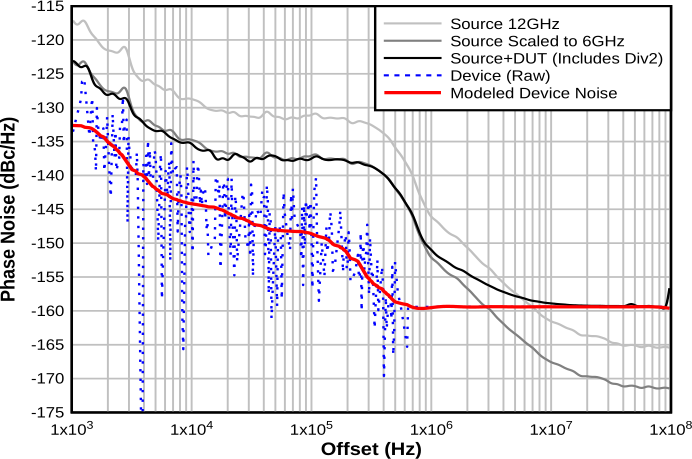
Figure 5-3 Divider Phase Noise Plot at 6GHz Output (Divide by 2) 
Figure 5-5 Noise
Floor in Buffer Mode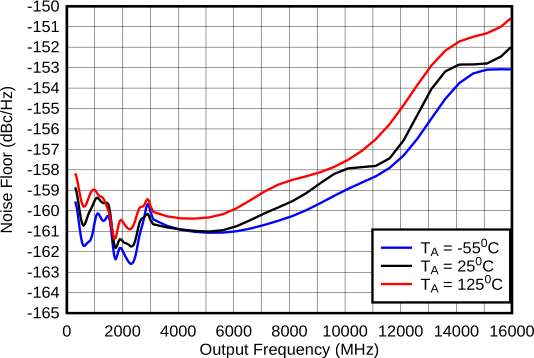 Figure 5-7 Noise
Floor in Buffer Mode
Figure 5-7 Noise
Floor in Buffer Mode
Figure 5-9 Buffer Mode Single-Ended Output Power Figure 5-11 Second Harmonic in Multiply X2 Mode (Differential Output)
 Figure 5-13 Multiplier Sub-Harmonics (Harmonic Frequency = Output Frequency / M )
  Figure 5-15 Output to Output Skew (ps)
 Figure 5-19 Channel Enable Setting Time
| Noise Floor = -160dBc/Hz |
Figure 5-4 Multiplier Phase Noise Plot at 6GHz OutputFigure 5-6 Flicker Noise| Input power is differential |
| CLKOUTx_PWR = 7 |
Figure 5-12 Multiplier 1/2 Sub-Harmonic in X2 Mode Figure 5-14 Second Harmonic on Divider Mode (Single-Ended Input)Figure 5-16 SYSREF Delta Delay vs. CodeFigure 5-18 Propagation DelayFigure 5-20 Channel Disable Setting Time| Noise Floor = -159.8dBc/Hz |
| Stated input power is applied at each pin |
Figure 5-7 Noise
Floor in Buffer Mode| Applies to all modes except divider mode with odd divide (which have slightly lower power). |
Figure 5-11 Second Harmonic in Multiply X2 Mode (Differential Output)Figure 5-13 Multiplier Sub-Harmonics (Harmonic Frequency = Output Frequency / M ) Figure 5-15 Output to Output Skew (ps)Measured
in power-down mode to make Junction Temperature = Ambient
Temperature.
Figure 5-17 Temperature Sensor ReadbackFigure 5-19 Channel Enable Setting Time