SLVSDP7A February 2017 – May 2017 DLPA1000
PRODUCTION DATA.
- 1 Features
- 2 Applications
- 3 Description
- 4 Revision History
- 5 Pin Configuration and Functions
- 6 Specifications
-
7 Detailed Description
- 7.1 Overview
- 7.2 Functional Block Diagram
- 7.3 Feature Description
- 7.4 Device Functional Modes
- 7.5 Programming
- 7.6
Register Maps
- 7.6.1 Chip ID (CHIPID) Register (address = 0x00h) [reset = A6h]
- 7.6.2 Enable (ENABLE) Register (address = 0x01h) [reset = 3h]
- 7.6.3 Switch Transient Current Limit (IREG) Register (address = 0x02h) [reset = 28h]
- 7.6.4 SW4 LED DC Regulation Current, MSB (SW4MSB) Register (address = 0x03h) [reset = 0h]
- 7.6.5 SW4 LED DC Regulation Current, LSB (SW4LSB) Register (address = 0x04h) [reset = 0h]
- 7.6.6 SW5 LED DC Regulation Current, MSB (SW5MSB) Register (address = 0x05h) [reset = 0h]
- 7.6.7 SW5 LED DC Regulation Current, LSB (SW5LSB) Register (address = 0x06h) [reset = 0h]
- 7.6.8 SW6 LED DC Regulation Current, MSB (SW6MSB) Register (address = 0x07h) [reset = 0h]
- 7.6.9 SW6 LED DC Regulation Current, LSB (SW6LSB) Register (address = 0x08h) [reset = 0h]
- 7.6.10 Analog Front End Control (AFE) Register (address = 0x0Ah) [reset = 0h]
- 7.6.11 Strobe Decode - Break Before Make Timing Control (BBM) Register (address = 0x0Bh) [reset = 0h]
- 7.6.12 Interrupt (INT) Register (address = 0x0Ch) [reset = X]
- 7.6.13 Interrupt Mask (MASK) Register (address = 0x0Dh) [reset = 0h]
- 7.6.14 Password (PASSWORD) Register (address = 0x10h) [reset = 0h]
- 7.6.15 System Configuration (SYSTEM) Register (address = 0x11h) [reset = 0h]
- 7.6.16 EEPROM User Register, Byte0 (BYTE0) (address = 0x20h) [reset = 0h]
- 7.6.17 EEPROM User Register, Byte1 (BYTE1) (address = 0x21h) [reset = 0h]
- 7.6.18 EEPROM User Register, Byte2 (BYTE2) (address = 0x22h) [reset = 0h]
- 7.6.19 EEPROM User Register, Byte3 (BYTE3) (address = 0x23h) [reset = 0h]
- 7.6.20 EEPROM User Register, Byte4 (BYTE4) (address = 0x24h) [reset = 0h]
- 7.6.21 EEPROM User Register, Byte5 (BYTE5) (address = 0x25h) [reset = 0h]
- 7.6.22 EEPROM User Register, Byte6 (BYTE6) (address = 0x26h) [reset = 0h]
- 7.6.23 EEPROM User Register, Byte7 (BYTE7) (address = 0x27h) [reset = 0h]
- 8 Application and Implementation
- 9 Power Supply Recommendations
- 10Layout
- 11Device and Documentation Support
- 12Mechanical, Packaging, and Orderable Information
Package Options
Refer to the PDF data sheet for device specific package drawings
Mechanical Data (Package|Pins)
- YFF|49
Thermal pad, mechanical data (Package|Pins)
Orderable Information
6 Specifications
6.1 Absolute Maximum Ratings
over operating free-air temperature range (unless otherwise noted)(1)(2)| MIN | MAX | UNIT | |||
|---|---|---|---|---|---|
| Input voltage | VINL, VINA, VINR | –0.3 | 7 | V | |
| Ground pins to system ground | –0.3 | 0.3 | V | ||
| Voltage | SWN | –18 | 7 | V | |
| SWP, VBIAS | –0.3 | 20 | |||
| VOFS | –0.3 | 10 | |||
| V6V, VLED, L1, L2, SW1, SW2, SW3, SW4, SW5, SW6, INTZ, PROJ_ON | –0.3 | 7 | |||
| All pins unless noted otherwise | –0.3 | 3.6 | V | ||
| Source current | RESETZ, PWR_EN, CMP_OUT | 1 | mA | ||
| SPI_DOUT | 5.5 | ||||
| Sink current | RESETZ, PWR_EN, CMP_OUT | 1 | mA | ||
| SPI_DOUT, INTZ | 5.5 | ||||
| Peak output current | Internally limited | mA | |||
| Continuous total power dissipation | Internally limited | W | |||
| TA | Operating ambient temperature | –30 | 85 | °C | |
| Tstg | Storage temperature | –65 | 150 | °C | |
(1) Stresses beyond those listed under Absolute Maximum Ratings may cause permanent damage to the device. These are stress ratings only, which do not imply functional operation of the device at these or any other conditions beyond those indicated under Recommended Operating Conditions. Exposure to absolute-maximum-rated conditions for extended periods may affect device reliability.
(2) All voltage values are with respect to network ground terminal.
6.2 ESD Ratings
| VALUE | UNIT | |||
|---|---|---|---|---|
| V(ESD) | Electrostatic discharge | Human-body model (HBM), per ANSI/ESDA/JEDEC JS-001(1) | ±2000 | V |
| Charged-device model (CDM), per JEDEC specification JESD22-C101(2) | ±500 | |||
(1) JEDEC document JEP155 states that 500-V HBM allows safe manufacturing with a standard ESD control process.
(2) JEDEC document JEP157 states that 250-V CDM allows safe manufacturing with a standard ESD control process.
6.3 Recommended Operating Conditions
over operating free-air temperature range (unless otherwise noted)| MIN | NOM | MAX | UNIT | |||
|---|---|---|---|---|---|---|
| Input voltage at VINL, VINA, VINR | Full functional and parametric performance | 2.7 | 3.6 | 6 | V | |
| Extended operation, limited parametric performance | 2.3 | 3.6 | 6 | |||
| Voltage at VSPI | 1.7 | 1.8 | 3.6 | V | ||
| TA | Operating ambient temperature | –10 | 85 | °C | ||
| TJ | Operating junction temperature | –10 | 125 | °C | ||
6.4 Thermal Information
| THERMAL METRIC(1) | DLPA1000 | UNIT | |
|---|---|---|---|
| YFF (DSBGA) | |||
| 49 PINS | |||
| RθJA | Junction-to-ambient thermal resistance | 49 | °C/W |
| RθJC(top) | Junction-to-case (top) thermal resistance | 0.1 | °C/W |
| RθJB | Junction-to-board thermal resistance | 6.9 | °C/W |
| ψJT | Junction-to-top characterization parameter | 1.1 | °C/W |
| ψJB | Junction-to-board characterization parameter | 6.9 | °C/W |
(1) For more information about traditional and new thermal metrics, see the Semiconductor and IC Package Thermal Metrics application report.
6.5 Electrical Characteristics
VIN = 3.6 V, TA = –10°C to 85°C, typical values are at TA = 25°C (unless otherwise noted)| PARAMETER | TEST CONDITIONS | MIN | TYP | MAX | UNIT | ||
|---|---|---|---|---|---|---|---|
| INPUT VOLTAGE | |||||||
| VIN | Input voltage range | VINA, VINR, VINL | 2.7 | 3.6 | 6 | V | |
| Extended input voltage range(1) | 2.3 | 3.6 | 6 | ||||
| VLOW_BAT | Low battery warning threshold | VINA falling | 3 | V | |||
| Hysteresis | VINA rising | 100 | mV | ||||
| VUVLO | Undervoltage lockout threshold | VINA falling | 2.3 | V | |||
| Hysteresis | VINA rising | 100 | mV | ||||
| VSTARTUP | Startup voltage | VBIAS, VOFS, VRST loaded with 2 mA | 2.5 | V | |||
| INPUT CURRENT | |||||||
| IQ | ACTIVE2 mode | 12 | mA | ||||
| ISTD | STANDBY mode | 360 | µA | ||||
| ISLEEP | SLEEP mode | 10 | µA | ||||
| INTERNAL SUPPLIES | |||||||
| VV6V | Internal supply, analog | 6.25 | V | ||||
| CLDO_V6V | Filter capacitor for V6V LDO | 100 | nF | ||||
| VV2V5 | Internal supply, logic | 2.5 | V | ||||
| CLDO_V2V5 | Filter capacitor for V2V5 LDO | 2.2 | µF | ||||
| DMD REGULATOR | |||||||
| RDS(ON) | MOSFET on resistance | Switch E (from VINR to SWN) | 1000 | mΩ | |||
| Switch F (from SWP to PGND) | 320 | ||||||
| VFW | Forward voltage drop | Switch G (from SWP to VBIAS)(2)
VINR = 5 V, VSWP = 2 V, IF = 100 mA |
1.3 | V | |||
| Switch H (from SWP to VOFS) VINR = 5 V, VSWP = 2 V, IF = 100 mA |
1.3 | ||||||
| RDIS | Discharge resistor (SWP to GND) | Active when all rails are disabled | 2 | kΩ | |||
| tPG | Power-good timeout | Not tested in production | 6 | ms | |||
| ILIMIT | Switch current limit | 200(3) | mA | ||||
| L | Inductor value | 10 | µH | ||||
| VOFS REGULATOR | |||||||
| VOFS | Output voltage | 8.5 | V | ||||
| DC output voltage accuracy | IOUT = 2 mA | –2% | 2% | ||||
| DC load regulation | VIN = 3.6 V, IOUT= 0 mA to 4 mA | –19 | V/A | ||||
| DC line regulation | VINA, VINL, VINR 2.7 V to 6 V, IOUT = 2 mA |
35 | mV/V | ||||
| VRIPPLE | Output ripple | VIN = 3.6 V, IOUT = 4 mA, COUT = 220 nF | 240 | mV | |||
| IOUT | Output current | 0 | 3 | mA | |||
| PG | Power-good threshold (fraction of nominal output voltage) |
VOFS rising | 85% | ||||
| VOFS falling | 62% | ||||||
| RDIS | Output discharge resistor | Active when rail is disabled | 2 | kΩ | |||
| C | Output capacitor | Recommended value | 110 | 220 | nF | ||
| VBIAS REGULATOR | |||||||
| VBIAS | Output voltage | 16 | V | ||||
| DC output voltage accuracy | IOUT = 2 mA | –2% | 2% | ||||
| DC load regulation | VIN = 3.6 V, IOUT = 0 mA to 4 mA | –14 | V/A | ||||
| DC line regulation | VINA, VINL, VINR 2.7 V to 6 V, IOUT = 2 mA |
18 | mV/V | ||||
| VRIPPLE | Output ripple | VIN = 3.6 V, IOUT = 4 mA, COUT = 220 nF | 240 | mV | |||
| IOUT | Output current | 0 | 4 | mA | |||
| PG | Power-good threshold (fraction of nominal output voltage) |
VOFS rising | 85% | ||||
| VOFS falling | 62% | ||||||
| RDIS | Output discharge resistor | Active when rail is disabled | 2 | kΩ | |||
| C | Output capacitor | Recommended value | 110 | 220 | nF | ||
| VRST REGULATOR | |||||||
| VRST | Output voltage | –10 | V | ||||
| DC output voltage accuracy | IOUT = 2 mA | –2% | 2% | ||||
| DC load regulation | VIN = 3.6 V, IOUT = 0 mA to 4 mA | 13 | V/A | ||||
| DC line regulation | VINA, VINL, VINR 2.7 V to 6 V, IOUT = 2 mA |
–21 | mV/V | ||||
| VRIPPLE | Output ripple | VIN = 3.6 V, IOUT = 4 mA, COUT = 220 nF | 240 | mV | |||
| VREF_VRST | Reference voltage | 500 | mV | ||||
| IOUT | Output current | 0 | 4 | mA | |||
| PG | Power-good threshold | –9.1 | V | ||||
| C | Output capacitor | Recommended value | 110 | 220 | nF | ||
| VLED BUCK-BOOST | |||||||
| VLED | Output voltage range | 1.2 | 5.9 | V | |||
| Default output voltage | SW4/5/6 in OPEN position | 3.5 | |||||
| VOVP | Output overvoltage protection | Clamps buck-boost output | 5.9 | V | |||
| VLED_OVP | Fault detection threshold | Triggers VLED_OVP interrupt | 5.4 | V | |||
| ISW | Switch current limit | 1.65 | 2.2 | 2.5 | A | ||
| RDS(ON) | MOSFET on resistance | Switch A (from VINL to L1) | 100 | mΩ | |||
| Switch B (from L1 to GND) | 100 | ||||||
| Switch C (from L2 to GND) | 100 | ||||||
| Switch D (from L2 to VLED) | 100 | ||||||
| fSW | Switching frequency | 2.25 | MHz | ||||
| COUT | Output capacitance | 2 × 10 | µF | ||||
| RGB STROBE CONTROLLER SWITCHES | |||||||
| RDS(ON) | Drain-source on resistance | SW1, SW2, SW3 | 50 | 100 | mΩ | ||
| SW4, SW5, SW6 | 40 | 100 | |||||
| ILEAK | Off-state leakage current | VDS = 5 V | 1 | µA | |||
| LED CURRENT CONTROL | |||||||
| Vf | LED forward voltage | ILED = 1 A | 4.8 | V | |||
| ILED | Maximum LED drive current | VIN = 3.1 V, VLED = 4.4 V | 700 | mA | |||
| VIN = 4 V, VLED = 4.4 V | 1000 | ||||||
| DC current accuracy, SW4, 5, 6 | SWx_IDAC[9:0] = 0x100h RLIM = 100 mΩ, 0.1%, TA = 25°C |
258 | 272 | 286 | mA | ||
| Transient LED current limit range | ILIM[2:0] = 000 | 260 | mA | ||||
| ILIM[2:0] = 111 | 1250 | ||||||
| trise | Current rise time(4) | ILED from 5% to 95%, ILED = 300 mA, transient current limit disabled | 50 | µs | |||
| MEASUREMENT SYSTEM (AFE) | |||||||
| G | Amplifier gain (PGA) | AFE_GAIN[1:0] = 01 | 1 | V/V | |||
| AFE_GAIN[1:0] = 10 | 9.5 | ||||||
| AFE_GAIN[1:0] = 11 | 18 | ||||||
| VOFS | Input referred offset voltage(4) | PGA, AFE_CAL_DIS = 1 | –1 | 1 | mV | ||
| Comparator | –1.5 | 1.5 | |||||
| tsettle | Settling time(4) | To 1% of final value | 15 | µs | |||
| To 0.1% of final value | 52 | ||||||
| fsample | Sampling rate(4) | 19 | kHz | ||||
| LOGIC LEVELS AND TIMING CHARACTERISTICS | |||||||
| VOL | Output low-level | IO = 0.5 mA, sink current (RESETZ, PWR_EN, CMP_OUT) |
0 | 0.3 | V | ||
| IO = 5 mA, sink current (SPI_DOUT, INTZ) |
0 | 0.3 | |||||
| VOH | Output high-level | IO = 0.5 mA, source current (RESETZ, PWR_EN, CMP_OUT) |
1.3 | 2.5 | V | ||
| IO = 5 mA, sink current (SPI_DOUT) |
1.3 | 2.5 | |||||
| VIL | Input low-level | TEST, PROJ_ON, LED_SEL0, LED_SEL1, SPI_CSZ, SPI_CLK, SPI_DIN | 0.4 | V | |||
| VIH | Input high-level | TEST, PROJ_ON, LED_SEL0, LED_SEL1, SPI_CSZ, SPI_CLK, SPI_DIN | 1.2 | V | |||
| I(bias) | Input bias current | VIO = 3.3 V Any input pin |
0.5 | µA | |||
| tdeglitch | Deglitch time(4) | (PROJ_ON, TEST) pins | 1 | ms | |||
| (LED_SEL0, LED_SEL1) pins | 300 | ns | |||||
| INTERNAL OSCILLATOR | |||||||
| fOSC | Oscillator frequency | 9 | MHz | ||||
| Frequency accuracy | TA = –40°C to 85°C | –10% | 10% | ||||
| THERMAL SHUTDOWN | |||||||
| TWARN | Thermal warning (HOT threshold) | 120 | °C | ||||
| Hysteresis | 10 | ||||||
| TSHTDWN | Thermal shutdown (TSD threshold) | 150 | °C | ||||
| Hysteresis | 15 | ||||||
(1) Full functional but limited parametric performance.
(2) Including rectifying diode.
(3) Contact factory for 100-mA and 300-mA options.
(4) Not tested in production.
6.6 Timing Requirements
VBAT = 3.6 V ±5%, TA = 25°C, CL = 10 pF (unless otherwise noted)| PARAMETER | MIN | TYP | MAX | UNIT | |
|---|---|---|---|---|---|
| fCLK | Serial clock frequency | 0 | 33.34 | MHz | |
| tCLKL | Pulse width low, SPI_CLK, 50% level | 10 | ns | ||
| tCLKH | Pulse width high, SPI_CLK, 50% level | 10 | ns | ||
| tt | Transition time, 20% to 80% level, all signals | 0.2 | 4 | ns | |
| tCSCR | SPI_CSZ falling to SPI_CLK rising, 50% level | 8 | ns | ||
| tCFCS | SPI_CLK falling to SPI_CSZ rising, 50% level | 1 | ns | ||
| tCDS | SPI_DIN data setup time, 50% level | 7 | ns | ||
| tCDH | SPI_DIN data hold time, 50% level | 6 | ns | ||
| tiS | SPI_DOUT data setup time(1), 50% level | 10 | ns | ||
| tiH | SPI_DOUT data hold time(1), 50% level | 0 | ns | ||
| tCFDO | SPI_CLK falling to SPI_DOUT data valid, 50% level | 13 | ns | ||
| tCSZ | SPI_CSZ rising to SPI_DOUT HiZ | 6 | ns | ||
(1) The DPPxxxx processors send and receive data on the falling edge of the clock.
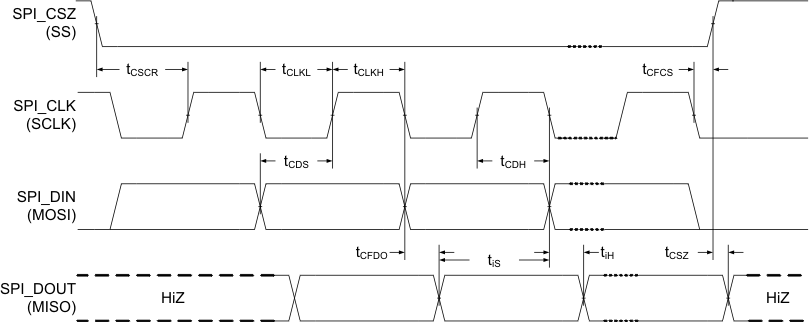 Figure 1. SPI Timing Diagram
6.7 Typical Characteristics
The maximum output current of the buck-boost is a function of input voltage (VIN), and output voltage (VLED). The relationship between VIN, VLED, and MAX ILED is shown in Figure 2. Please note that VLED is the output of the buck-boost regulator which includes the voltage drop across the sense resistor (100 mΩ), internal strobe control switch (100-mΩ max), and the forward voltage of the LED. For example, to drive 1-A of current through a LED with Vf = 4.2 V, the minimum input voltage needs to be ≥ 3.7 V (VLED = 4.2 V + 1 A × 100 mΩ + 1 A × 100 mΩ = 4.4 V). For an input voltage of 3.1 V and a drive current of 700 mA, the max VLED voltage cannot exceed 4.4 V.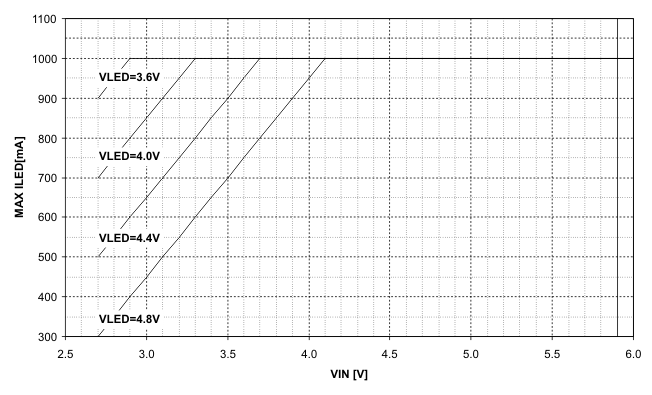
1. Measured on a typical unit. Note that VLED is the output of the buck-boost regulator and includes the voltage drop across the sense resistor, internal strobe control switch, and the forward voltage of the LED.
Figure 2. Maximum LED Output Current as a Function of Input Voltage (VIN) and BB Output Voltage (VLED)