SLVSDQ0K September   2017  – September 2025 TPS7B82-Q1

PRODUCTION DATA  

  1.   1
  2. Features
  3. Applications
  4. Description
  5. Pin Configuration and Functions
  6. Specifications
    1. 5.1 Absolute Maximum Ratings
    2. 5.2 ESD Ratings
    3. 5.3 Recommended Operating Conditions
    4. 5.4 Thermal Information
    5. 5.5 Electrical Characteristics: Grade 1 Options
    6. 5.6 Electrical Characteristics: Grade 0 Options
    7. 5.7 Typical Characteristics
  7. Detailed Description
    1. 6.1 Overview
    2. 6.2 Functional Block Diagram
    3. 6.3 Feature Description
      1. 6.3.1 Device Enable (EN)
      2. 6.3.2 Undervoltage Shutdown
      3. 6.3.3 Current Limit
      4. 6.3.4 Thermal Shutdown
    4. 6.4 Device Functional Modes
      1. 6.4.1 Operation With VIN Lower Than 3 V
      2. 6.4.2 Operation With VIN Larger Than 3 V
  8. Application and Implementation
    1. 7.1 Application Information
    2. 7.2 Typical Application
      1. 7.2.1 Design Requirements
      2. 7.2.2 Detailed Design Procedure
        1. 7.2.2.1 Input Capacitor
        2. 7.2.2.2 Output Capacitor
      3. 7.2.3 Application Curve
    3. 7.3 Power Supply Recommendations
    4. 7.4 Layout
      1. 7.4.1 Layout Guidelines
      2. 7.4.2 Layout Example
  9. Device and Documentation Support
    1. 8.1 Device Nomenclature
    2. 8.2 Receiving Notification of Documentation Updates
    3. 8.3 Support Resources
    4. 8.4 Trademarks
    5. 8.5 Electrostatic Discharge Caution
    6. 8.6 Glossary
  10. Revision History
  11. 10Mechanical, Packaging, and Orderable Information

Package Options

Mechanical Data (Package|Pins)
Thermal pad, mechanical data (Package|Pins)
Orderable Information

Typical Characteristics

VIN = 14 V, VEN ≥ 2 V, TJ = –40°C to 150°C (unless otherwise noted)

TPS7B82-Q1 Quiescent Current vs Output Current
VOUT = 5 V
Figure 5-1 Quiescent Current vs Output Current
TPS7B82-Q1 Shutdown Current vs Ambient Temperature
VEN = 0 V
Figure 5-3 Shutdown Current vs Ambient Temperature
TPS7B82-Q1 Dropout Voltage vs Output Current
VIN = 5 V, 5-V fixed output, V(Dropout) = VIN – VOUT
Figure 5-5 Dropout Voltage vs Output Current
TPS7B82-Q1 Output Voltage vs Ambient Temperature
VOUT = 5 V
Figure 5-7 Output Voltage vs Ambient Temperature
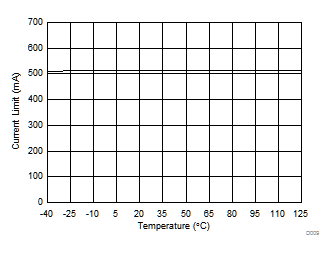
TPS7B82-Q1 Output Current Limit vs Ambient Temperature
VIN = 14 V, VOUT is shorted to 90% × VOUT
Figure 5-9 Output Current Limit vs Ambient Temperature
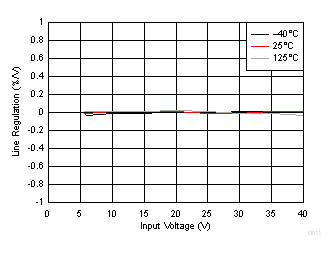
TPS7B82-Q1 Line Regulation
VOUT = 5 V, IOUT = 10 mA
Figure 5-11 Line Regulation
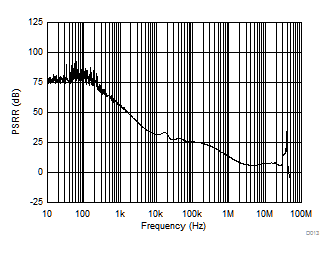
TPS7B82-Q1 PSRR vs Frequency
IOUT = 100 mA
Figure 5-13 PSRR vs Frequency
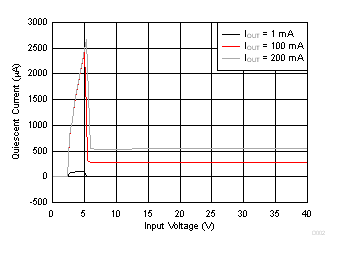
TPS7B82-Q1 Quiescent Current vs Input Voltage
VOUT = 5 V
Figure 5-2 Quiescent Current vs Input Voltage
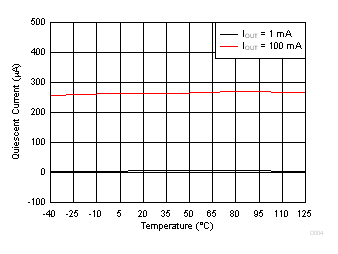
TPS7B82-Q1 Quiescent Current vs Ambient Temperature
VOUT = 5 V
Figure 5-4 Quiescent Current vs Ambient Temperature
TPS7B82-Q1 Dropout Voltage vs Ambient Temperature
VIN = 5 V, 5-V fixed output, V(Dropout) = VIN – VOUT
Figure 5-6 Dropout Voltage vs Ambient Temperature
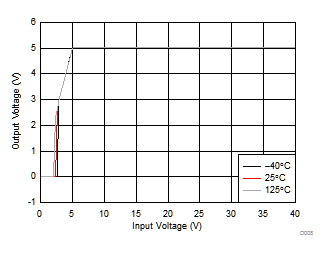
TPS7B82-Q1 Output Voltage vs Input Voltage
VOUT = 5 V, IOUT = 1 mA
Figure 5-8 Output Voltage vs Input Voltage
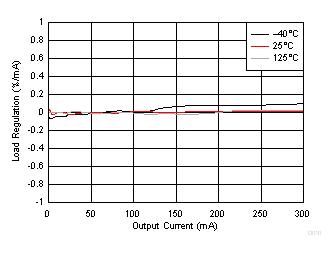
TPS7B82-Q1 Load Regulation
VOUT = 5 V
Figure 5-10 Load Regulation
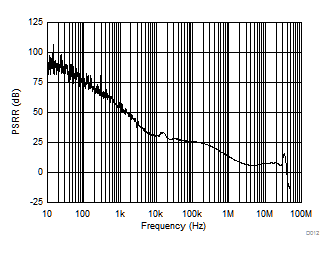
TPS7B82-Q1 PSRR vs Frequency
IOUT = 10 mA
Figure 5-12 PSRR vs Frequency
TPS7B82-Q1 Output Capacitance vs ESR Stability
 
Figure 5-14 Output Capacitance vs ESR Stability