SLUUC57B october 2019 – august 2023
3.1.2 Power Supply
The power supply connection is made from either the 5-V test point or 12-V test point. When powering the EVM directly through the 12-V battery, configure jumpers J1 and J3 in the "12V" configuration and connect the 12-V battery to the 12-V test point. If the EVM is powered up through a PMIC, configure jumpers J1 and J3 in the "5V" configuration and connect the PMIC 5-V output to the 5-V test point.
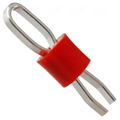 Figure 3-1 Keystone5010 (reference image
only)
Figure 3-1 Keystone5010 (reference image
only)Table 3-2 Pin Description
| Pin | Name | Comments |
|---|---|---|
| 1 | DVDD | 1.8-V regulated output. DVDD supplies the internal digital circuits |
| 2 | NFAULT | Fault indication output |
| 3 | VIO | Power supply input for UART/SPI input/output pins |
| 4 | RX/MOSI | UART receiver input or SPI controller out peripheral in |
| 5 | TX/MISO | UART transmitter output or SPI controller in peripheral out |
| 6 | SCLK | SPI clock input |
| 7 | nCS | Active low chip select pin for SPI |
| 8 | nUART/SPI (SPI_RDY) | This pin is used as an input pin to select SPI or UART interface before device finishes wakeup/reset initialization |
| 9 | GND | Ground |
| 10 | COMLP | AC coupled bi-directional I/O pin for daisy chain (VIF) communication |
| 11 | COMLN | AC coupled bi-directional I/O pin for daisy chain (VIF) communication |
| 12 | COMHP | AC coupled bi-directional I/O pin for daisy chain (VIF) communication |
| 13 | COMHN | AC coupled bi-directional I/O pin for daisy chain (VIF) communication |
| 14 | CVDD | Dedicated 5-V supply used for the daisy chain communications |
| 15 | BAT | Battery supply Input |
| 16 | INH | Inhibit pin to control system voltage regulators |