SLVAFR8 January 2025 TPS1685 , TPS1689 , TPS25984 , TPS25984B , TPS25985 , TPS25990
- 1
- Abstract
- Trademarks
- 1Introduction
- 2Over-Current Response of Conventional eFuse Devices
- 3Challenges with Current Limit Functionality
- 4Proposed Design Using TI's High-Current eFuses
- 5Thermal Performance with Continual Transient Load Current
- 6System Level Advantages with TI's eFuse Design
- 7Summary
- 8References
3 Challenges with Current Limit Functionality
The over-current response of the conventional eFuses is the current-limit, which means the device current is limited to the current-limit threshold for a user-defined or a fixed fault timer interval. Generally, the over-current protection (OCP) threshold is set at around 1.1-1.2 times the thermal design current (TDC) to protect the complete server power delivery systems and the PSU from the thermal runway due to excessive overheating. If the current amplitudes of the load transients are more than the OCP threshold, the devices mentioned above do not allow the flow of that transient current into the load from the supply as it gets limited. The solution is to set the OCP threshold beyond the maximum amplitude of the transient pulse current to avoid the device's false turn-off in the presence of the load transients. This behavior in one of the conventional eFuses is demonstrated in Figure 3-1 and Figure 3-2. In both cases, a load transient of 100A for 12ms to 160A for 12ms and then back to 100A is applied. However, the OCP threshold is set at 120A in Figure 3-1, 1.2 times the steady-state current of 100A. As the amplitude of the load transient (160A) is more than the OCP threshold of 120A, the devices are turned off. Also, the OCP threshold is set at 170A in Figure 3-2, which is more than the load transient magnitude of 160A. Therefore, the load transients of 100A for 12ms to 160A for 12ms and then back to 100A pass through.
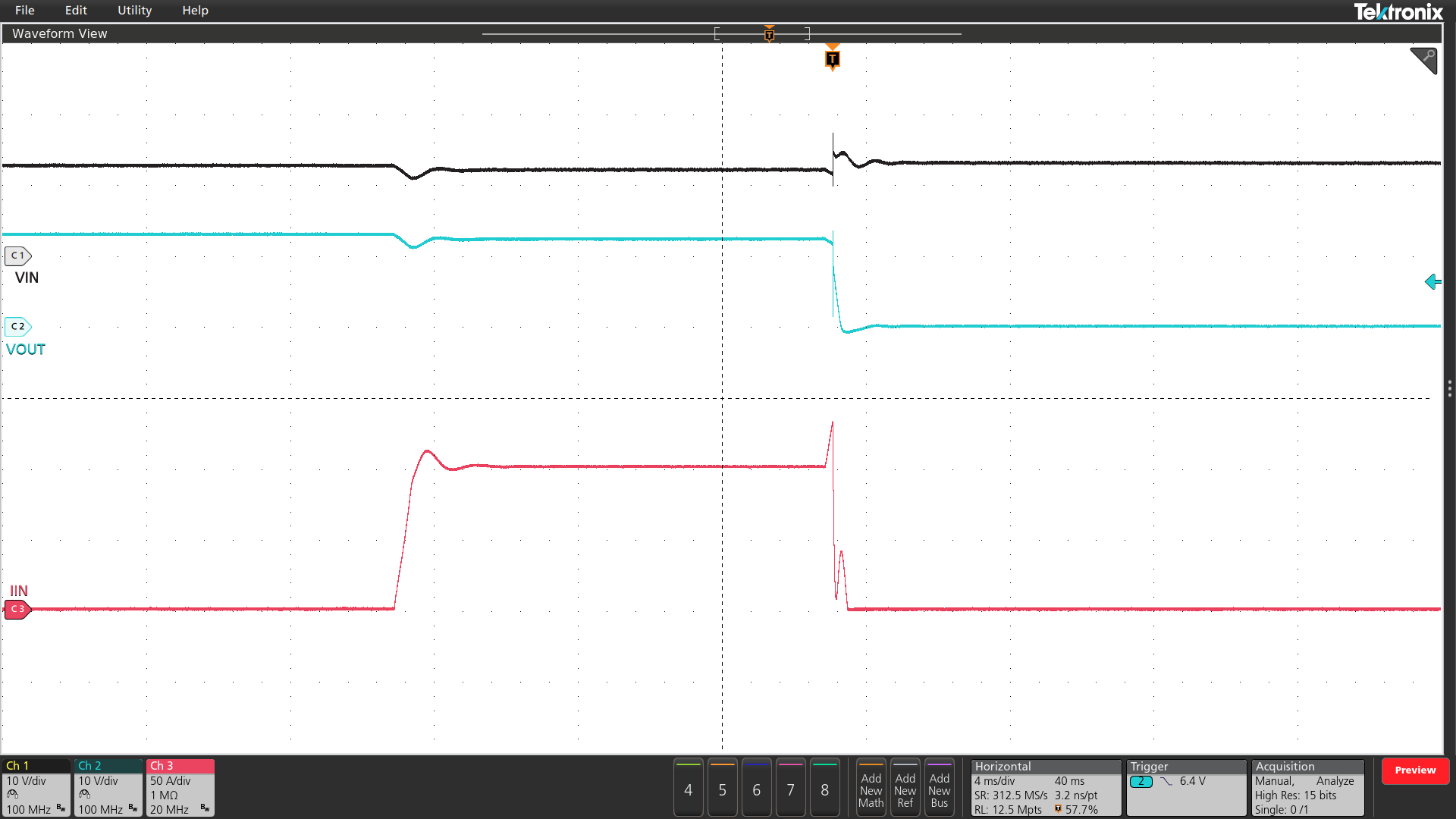 Figure 3-1 Conventional eFuse-1: Load
Transient of 100A for 12ms to 160A for 12ms and Then Back to 100A With OCP
Threshold of 120A
Figure 3-1 Conventional eFuse-1: Load
Transient of 100A for 12ms to 160A for 12ms and Then Back to 100A With OCP
Threshold of 120A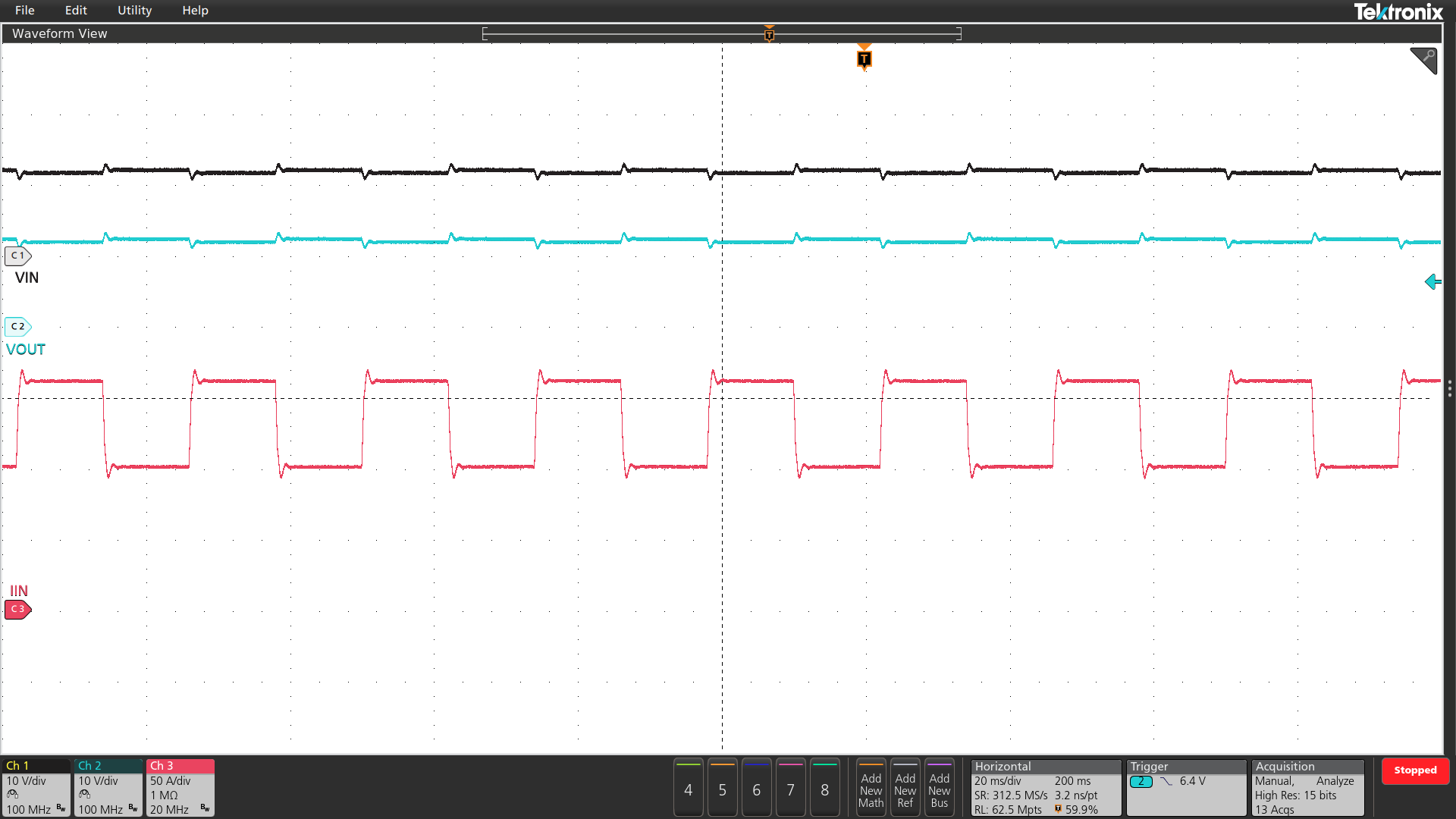 Figure 3-2 Conventional eFuse-1: Load
Transient of 100A for 12ms to 160A for 12ms and Then Back to 100A With OCP
Threshold of 170A
Figure 3-2 Conventional eFuse-1: Load
Transient of 100A for 12ms to 160A for 12ms and Then Back to 100A With OCP
Threshold of 170AHowever, there is a challenge in increasing the OCP threshold more than the peak pulse current level as outlined in the following. Increasing the OCP threshold beyond the transient peak pulse current level instead of setting it at 1.1-1.2 times the TDC level makes the input power path not have any over-current protection till the peak pulse current level although it is a transient load. Therefore, the input PSU and the power distribution systems of the server motherboard have to be designed for a continuous current rating of transient peak pulse current instead of TDC. This increases the overall system cost and solution size as each power component must be rated for a much higher current rating or more power components need to be in parallel. This is required to handle the system's increased current rating. The system utilization also becomes poor as the system is designed for a current rating of transient peak pulse current but is used at the level of TDC for a duty cycle of more than 90%. The steady-state power rating of the input PSU has to correspond to the transient peak pulse current instead of TDC as there is no over-current protection till the current level of the transient peak pulse current.