SLVAFR8 January 2025 TPS1685 , TPS1689 , TPS25984 , TPS25984B , TPS25985 , TPS25990
- 1
- Abstract
- Trademarks
- 1Introduction
- 2Over-Current Response of Conventional eFuse Devices
- 3Challenges with Current Limit Functionality
- 4Proposed Design Using TI's High-Current eFuses
- 5Thermal Performance with Continual Transient Load Current
- 6System Level Advantages with TI's eFuse Design
- 7Summary
- 8References
2 Over-Current Response of Conventional eFuse Devices
The conventional eFuse devices continuously monitor the current flowing through it and provide a current output to a particular pin. Connecting an appropriate resistance to this pin generates a voltage, which is linearly proportional to the current flowing through the device. This voltage is compared with a reference voltage to detect an output over-current event. The reference voltage is user-configurable. Once the current sense voltage (configured via an external resistor) exceeds the current limit reference voltage threshold, the internal circuitry regulates its gate to maintain a constant current on the MOSFET and an internal fault timer (not user-configurable) starts. The device resumes normal operation if the load current drops below the current limit set point within the fixed fault timer period. Otherwise, the device is turned off in the event of a persistent over-current event. The over-current responses of two conventional eFuses are shown in Figure 2-1 and Figure 2-2.
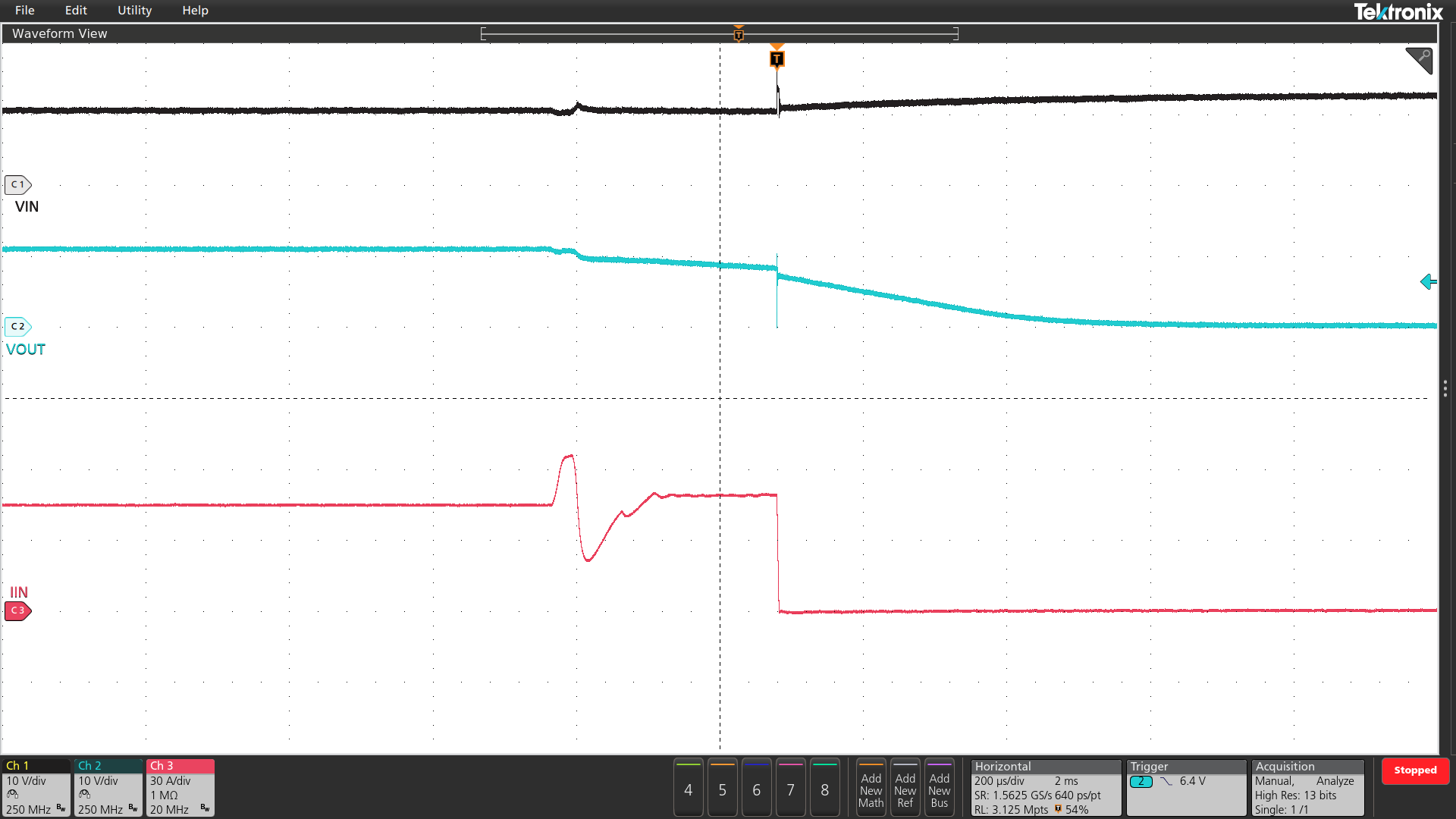 Figure 2-1 Over-Current
Response of the Conventional eFuse-1
Figure 2-1 Over-Current
Response of the Conventional eFuse-1 Figure 2-2 Over-Current
Response of the Conventional eFuse-2
Figure 2-2 Over-Current
Response of the Conventional eFuse-2