SLVAFY5 May 2025 TPS1685 , TPS1689 , TPS25984 , TPS25985
1 Introduction
Artificial intelligence (AI) advancements has led to an unprecedented surge in power and current consumption in AI-powered processors and servers. As AI models grow increasingly complex, requiring massive computational resources, power demands have skyrocketed. Modern AI processors, such as graphics processing units (GPUs) and tensor processing units (TPUs), consume significantly more power than the predecessors. AI-driven data centers and servers have seen a staggering increase in power consumption, with some estimates suggesting a 20-30% rise in energy usage over the past few years. This trend poses significant challenges for data center operators who must balance computational performance with energy efficiency, heat management, and environmental sustainability. To mitigate these concerns, researchers are exploring remarkable designs, including advanced cooling systems, low-power chip designs, and novel memory architectures, to make sure that AI's transformative potential is realized without compromising the planet's resources.
Figure 1-1 illustrates a 48V rack server architecture and a power distribution design commonly employed in data centers and server rooms to efficiently supply power to servers and other equipment. This architecture has gained widespread adoption due to the ability to minimize energy losses, maximize power density, and optimize overall system efficiency. TI’s high-current eFuse family of devices, TPS1685, TPS1689, TPS25984, TPS25985, provide input power path protection to devices such as inrush current management, input under-voltage, input over-voltage, power up into output short, over-current, output hot-short, and so forth. eFuses are placed in between the PSU and the power stages of voltage regulator modules (VRMs) and other end loads.
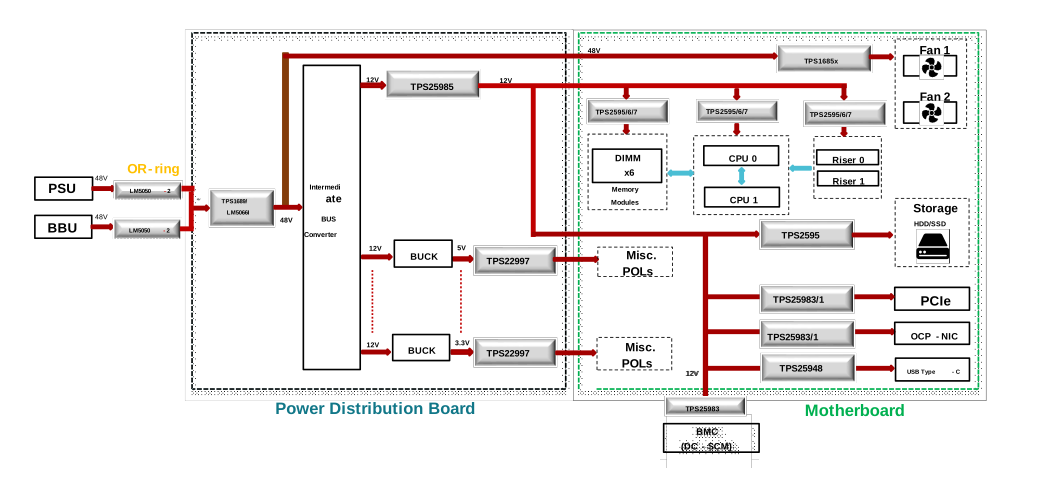 Figure 1-1 48V Rack Server Architecture