SLYA094 August 2025 LM5137F-Q1
3.4 Light Load Efficiency
The switch node and output ripple voltage waveforms are shown in Figure 3-6 to Figure 3-10.
 Figure 3-6 Ripple Voltage Waveform Under No Load
 Figure 3-8 PFM + Phase Shedding, Switch Node at 0.5A Load
 Figure 3-10 PFM + Phase Shedding, Switch Node at 1.2A Load
 Figure 3-7 PFM + Phase Shedding, Switch Node at 0A Load
 Figure 3-9 PFM + Phase Shedding, Switch Node at 0.8A Load
PMP41158 achieves excellent light load efficiency by shedding the phases at light load and minimizing current draw from the input supply. This results in only one phase operating under no load conditions, as Figure 3-7 shows. And as load increasing, the phase can start to work one by one, as Figure 3-8 to Figure 3-10 shows. In addition to phase shedding, the LM5137-Q1 operates in PFM mode. Refer to Figure 3-11 for light load efficiency performance.
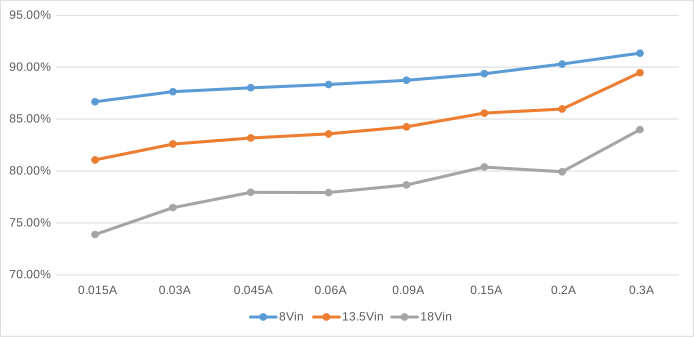 Figure 3-11 Light Load Efficiency 15mA-300mA