SLAAEN0 September 2024 MSPM0L1227 , MSPM0L1227-Q1 , MSPM0L1228 , MSPM0L1228-Q1 , MSPM0L2227 , MSPM0L2227-Q1 , MSPM0L2228 , MSPM0L2228-Q1
- 1
- Abstract
- Trademarks
- 1Introduction
- 2Low-Frequency Subsystem Introduction
- 3Application Examples
2.7 Real-Time Clock (RTC)
LFSS features an RTC module to provide time-keeping applications. With the counters, users are able to find seconds, minutes, hours, days of the week, day of the month, and year. The values can be displayed in binary or binary-coded decimal (BCD) in the LFSS registers. The RTC can also be used to set alarms based on calendar events or intervals. In the case of a tamper event or loss of VDD, the RTC performs a timestamp capture. The RTC control and calendar registers can be write-protected to prevent accidental updates. Figure 2-9 shows the full RTC flow diagram.
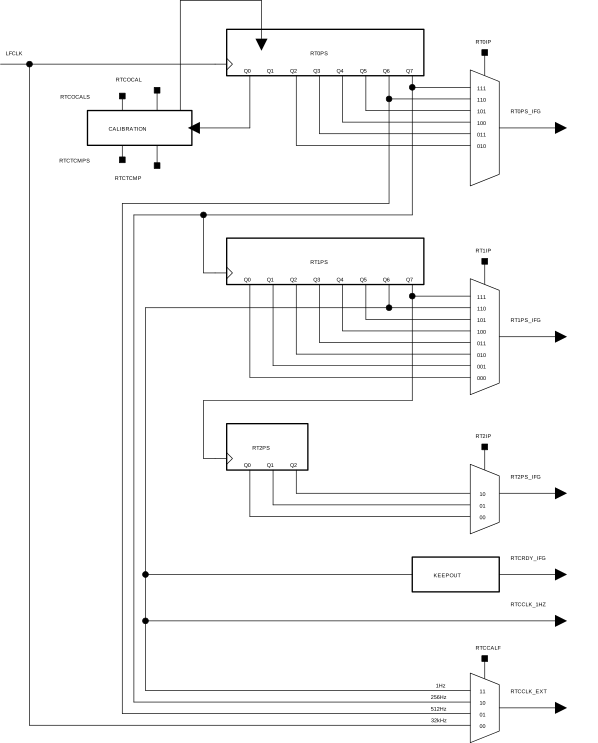 Figure 2-9 RTC Flow Diagram