SPRADH0 August 2024 AM625 , AM6442 , AM69 , TDA4VM
- 1
- Abstract
- Trademarks
- 1Introduction
- 2Evaluation Platform and Methods
- 3Performance Metrics
- 4Optimizations
- 5Summary
- 6References
- 7Appendix A: How to Setup TI Embedded Processors as EtherCAT Controller Using the CODESYS Stack
- 8Appendix B: How to Enable Unlimited Runtime on CODESYS Stack
1.1 What is EtherCAT?
EtherCAT is an IEEE 802.3 Ethernet-based fieldbus system standardized in International Electrotechnical Commission (IEC) 61158. The technology is supported by the EtherCAT Technology Group (an international community of users and vendors). The protocol is especially popular in motion and motor control. The primary advantage of EtherCAT is found in automation applications with short data-update times and low communication jitter. In the EtherCAT protocol, the EtherCAT controller sends a frame that passes through each device node. Each EtherCAT device reads the data that is addressed to the device as soon as the data is detected. The device then inserts the data into the frame as the frame is bridged on the fly. The last device in a segment (or branch) detects an open port and sends the message back to the controller. The EtherCAT controller is the only node within a segment that actively sends an EtherCAT frame. This capability permits the network to achieve over 90% of the available network bandwidth while preventing unpredictable delays, and thus guarantees real-time system response. EtherCAT is transported with Ethertype identifier (0x88A4). The only frames sent on the LAN are from the EtherCAT controller, with the last subordinate on a branch returning the frame to the predecessor. The typical optimization within the controller is to have the stack directly access the Ethernet MAC controller, bypassing not only the networking stack, as with OPC UA Pub-Sub over raw Ethernet, but also the Ethernet driver, to directly or natively own the entire Ethernet peripheral. An example of this is shown in Figure 1-2. Acontis and IBV are stack providers offering this optimization.
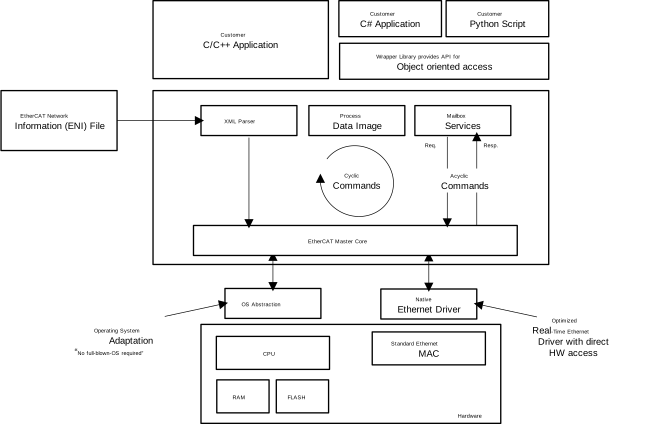 Figure 1-2 EtherCAT Controller Software Architecture