SWRA730 February 2022 CC1311P3 , CC1311R3 , CC1312R , CC1312R7 , CC1314R10 , CC1352P , CC1352P7 , CC1352R , CC1354P10 , CC1354R10
- Trademarks
- Acronyms
- 1Description of the PCB Antenna
- 2Test Setup
- 3Unmatched Results
- 4Single-Band Matching and Result
-
5Dual Band Matching and Results
- 5.1 433-MHz and 2440-MHz Smith Chart, SWR, Bandwidth, and Efficiency
- 5.2 470-MHz and 2440-MHz Smith Chart, SWR, Bandwidth and Efficiency
- 5.3 490 MHz and 2440 MHz Smith Chart, SWR, Bandwidth and Efficiency
- 5.4 510-MHz and 2440-MHz Smith Chart, SWR, Bandwidth, and Efficiency
- 5.5 868/915 and 2440-MHz Smith Chart, SWR, Bandwidth, and Efficiency
- 6Summary - Bill of Materials and Results
- 7Conclusion
- 8References
5.5 868/915 and 2440-MHz Smith Chart, SWR, Bandwidth, and Efficiency
Figure 5-25 and Figure 5-26 show the theoretical Smith chart for matching the antenna for dual-band 892 and 2440 MHz with a theoretical SWR of 1.136 and 1.052.
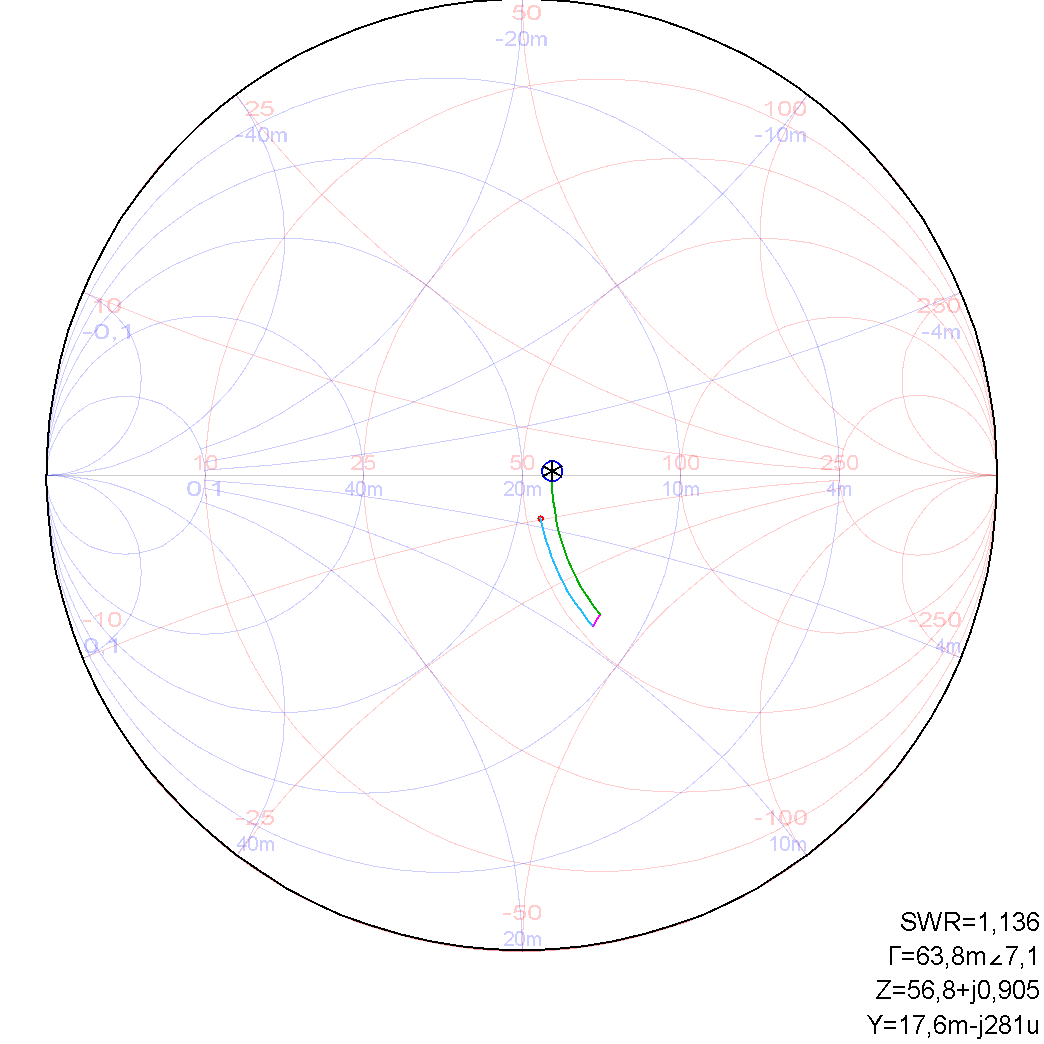 Figure 5-25 Theoretical Smith Chart for Dual-Band 892-MHz Match
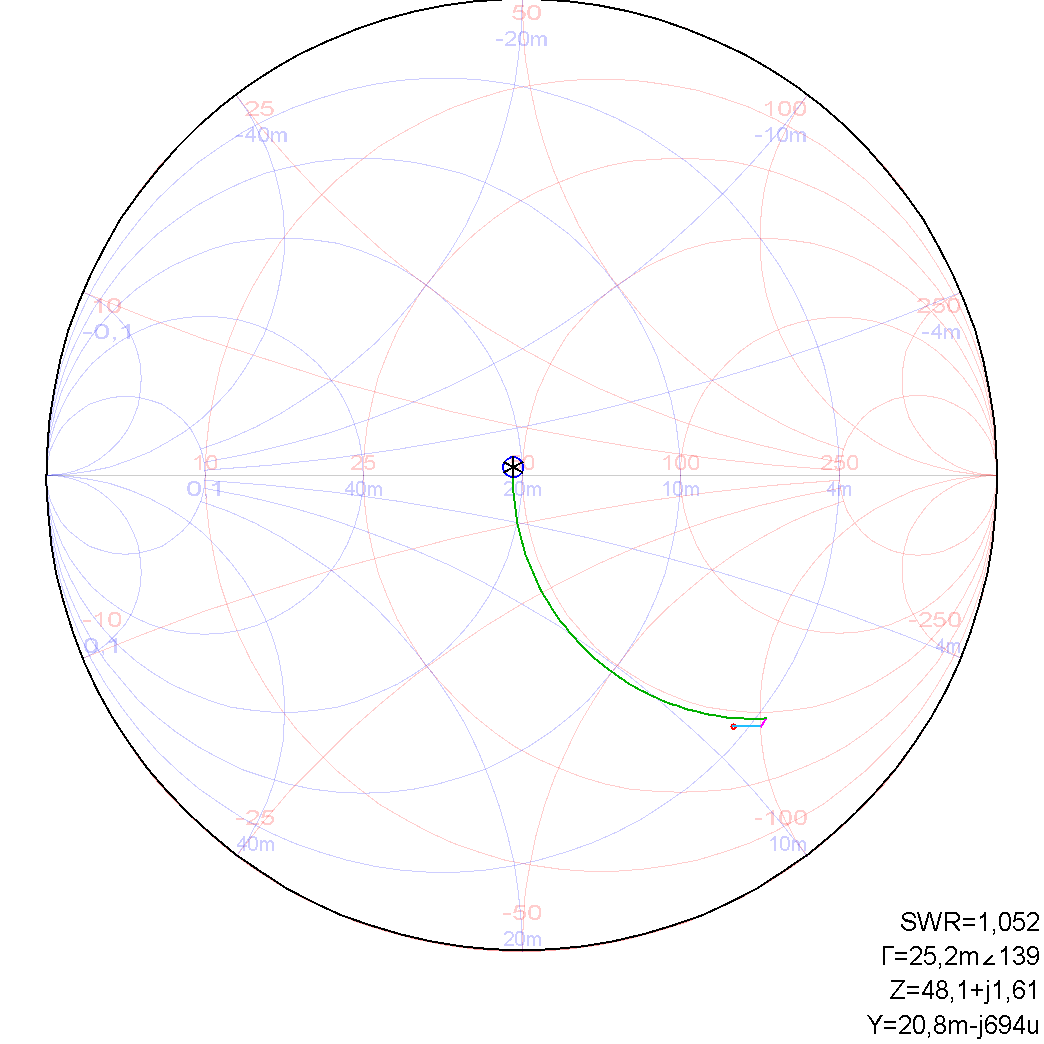 Figure 5-26 Theoretical Smith Chart for Dual-Band 2440-MHz Match
Further tuning of the resonance of the antenna was needed after realizing the theoretical match. Figure 5-27 and Figure 5-28 shows the resulting impedance and SWR which at 1.083 for 892 MHz and 1.239 for 2440 MHz is less than the threshold for a good match of SWR < 2.0. Table 5-9 shows the BOM with components used to relies the matching network given in Figure 1-2.
The bandwidth of the antenna defined by SWR < 2.0 can be seen in Figure 5-28 to be 956.8-847.2 = 109.6 MHz for 892 MHz and 2611-2296 = 315 MHz for 2440 MHz.
| Ref. Designator | Murata Part Number | Value |
|---|---|---|
| Z60 | LQP03TN6N8H02 | 6.8 nH |
| Z61 | DNM | |
| Z62 | LQP03TNR22H02 | 220 nH |
| Z63 | GRM0335C1H6R2BA01 | 6.2 pF |
| Z64 | GRM0335C1H2R0BA01 | 2 nH |
Figure 5-29, Figure 5-30, and Figure 5-31 shows the radiation pattern of the antenna at 868, 915 and 2440 MHz. Table 5-10 shows the TRP and efficiency for the antenna with the given matching network.
| Figure 43 | Figure 65 | Figure 44 | |
|---|---|---|---|
| Frequency | 868 MHz | 915 MHz | 2440 MHz |
| Power setting | 13 dBm | 13 dBm | 10 dBm |
| Conducted output power | 12.17 dBm | 13.23 dBm | 9.15 dBm |
| TRP | 9.84 dBm | 13.1 dBm | 11.98 dBm |
| Efficiency | 62.4 % | 97.05 % | 83.75 % |