SBOSAC8 December   2024 OPT4041

PRODUCTION DATA  

  1.   1
  2. Features
  3. Applications
  4. Description
  5. Pin Configuration and Functions
  6. Specifications
    1. 5.1 Absolute Maximum Ratings
    2. 5.2 ESD Ratings
    3. 5.3 Recommended Operating Conditions
    4. 5.4 Thermal Information
    5. 5.5 Electrical Characteristics
    6. 5.6 I2C Interface Timing Requirements
    7. 5.7 I2C Timing Diagram
    8. 5.8 Typical Characteristics
  7. Detailed Description
    1. 6.1 Overview
    2. 6.2 Functional Block Diagram
    3. 6.3 Feature Description
      1. 6.3.1 Spectral Response
        1. 6.3.1.1 Channel 0: Human Eye Matching
        2. 6.3.1.2 Channel 1: Wide Band
      2. 6.3.2 Automatic Full-Scale Range Setting
      3. 6.3.3 Output Register CRC and Counter
        1. 6.3.3.1 Output Sample Counter
        2. 6.3.3.2 Output CRC
      4. 6.3.4 Threshold Detection
    4. 6.4 Device Functional Modes
      1. 6.4.1 Modes of Operation
      2. 6.4.2 Interrupt Modes of Operation
      3. 6.4.3 Light Range Selection
      4. 6.4.4 Selecting Conversion Time
      5. 6.4.5 Light Measurement in Lux
      6. 6.4.6 Threshold Detection Calculations
      7. 6.4.7 Light Resolution
    5. 6.5 Programming
      1. 6.5.1 I2C Bus Overview
        1. 6.5.1.1 Serial Bus Address
        2. 6.5.1.2 Serial Interface
      2. 6.5.2 Writing and Reading
        1. 6.5.2.1 High-Speed I2C Mode
        2. 6.5.2.2 Burst Read Mode
        3. 6.5.2.3 General-Call Reset Command
  8. Register Maps
    1. 7.1 Register Descriptions
  9. Application and Implementation
    1. 8.1 Application Information
    2. 8.2 Typical Application
      1. 8.2.1 Electrical Interface
        1. 8.2.1.1 Design Requirements
          1. 8.2.1.1.1 Optical Interface
        2. 8.2.1.2 Detailed Design Procedure
          1. 8.2.1.2.1 Optomechanical Design
    3. 8.3 Best Design Practices
    4. 8.4 Power Supply Recommendations
    5. 8.5 Layout
      1. 8.5.1 Layout Guidelines
      2. 8.5.2 Layout Example
        1. 8.5.2.1 Soldering and Handling Recommendations
  10. Device and Documentation Support
    1. 9.1 Documentation Support
      1. 9.1.1 Related Documentation
    2. 9.2 Receiving Notification of Documentation Updates
    3. 9.3 Support Resources
    4. 9.4 Trademarks
    5. 9.5 Electrostatic Discharge Caution
    6. 9.6 Glossary
  11. 10Revision History
  12. 11Mechanical, Packaging, and Orderable Information
    1. 11.1 Mechanical Data
    2. 11.2 Package Option Addendum
    3. 11.3 Tape and Reel Information

Package Options

Mechanical Data (Package|Pins)
Thermal pad, mechanical data (Package|Pins)
Orderable Information

Soldering and Handling Recommendations

The OPT4041 has been qualified for three soldering reflow operations per JEDEC JSTD-020.

Note that excessive heat can discolor the device and affect optical performance.

See application report SLUA271, QFN/SON PCB Attachment, for details on soldering thermal profile and other information. If the OPT4041 must be removed from a PCB, discard the device and do not reattach.

As with most optical devices, handle the device with special care to make sure that optical surfaces stay clean and free from damage. See Section 8.3 for more detailed recommendations. For best optical performance, solder flux and any other possible debris must be cleaned after soldering processes.

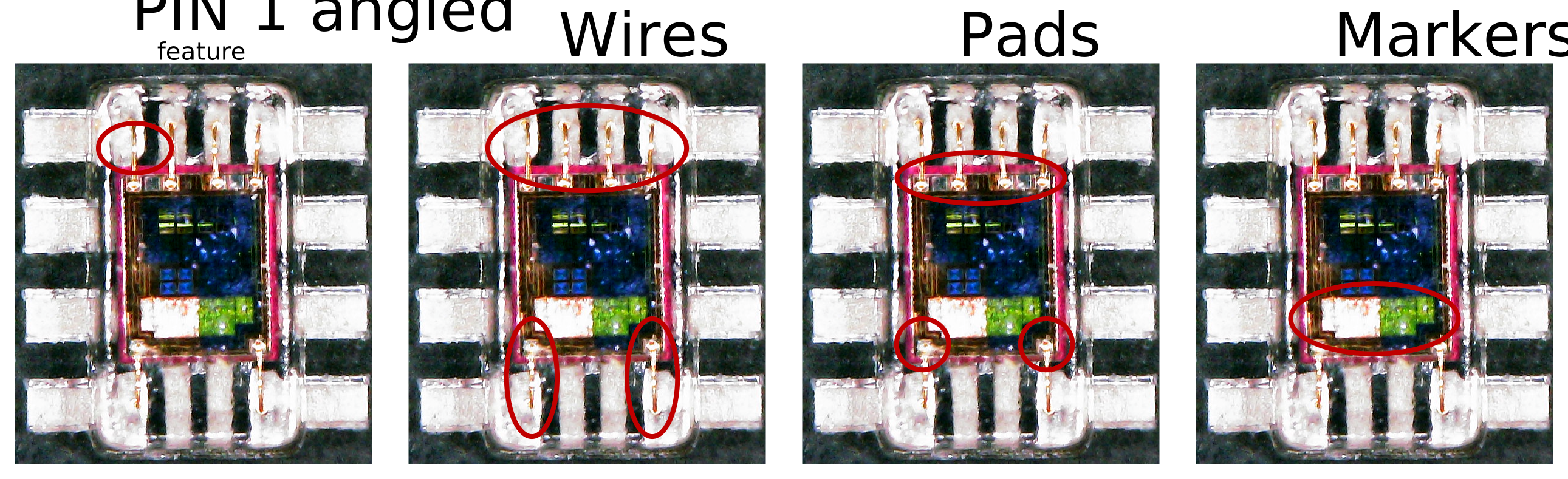
OPT4041 Identification Feature for PIN 1
Note: The bottom side of the device features an angled feature to denote the PIN 1
Figure 8-4 Identification Feature for PIN 1
OPT4041 Identification Features for PIN 1 on PackageFigure 8-5 Identification Features for PIN 1 on Package