at TA = 25°C,
VDD = VAA = 5 V, VREFIN = 2.5 V, unipolar
ranges: VSS = 0 V and VCC ≥ VMAX + 1.5 V for the
DAC range, bipolar ranges: VSS ≤ VMIN – 1.5 V and
VCC ≥ VMAX + 1.5 V for the DAC range, and DAC outputs
unloaded (unless otherwise noted)
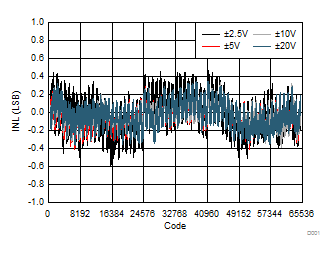 Figure 5-4 Integral Linearity Error vs Digital Input Code (Bipolar Outputs)
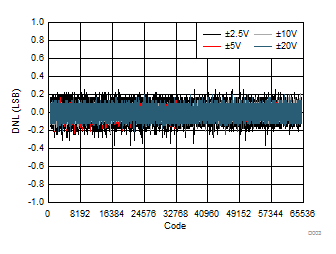 Figure 5-6 Differential Linearity Error vs Digital Input Code (Bipolar
Outputs)
Figure 5-6 Differential Linearity Error vs Digital Input Code (Bipolar
Outputs)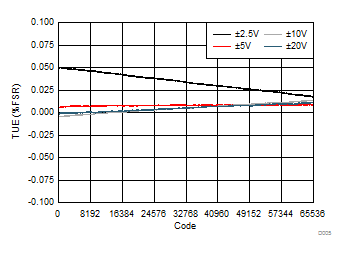 Figure 5-8 Total
Unadjusted Error vs Digital Input Code (Bipolar Outputs)
Figure 5-8 Total
Unadjusted Error vs Digital Input Code (Bipolar Outputs)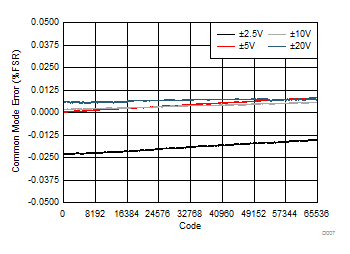 Figure 5-10 Common Mode Error vs Digital Input Code (Differential Bipolar
Outputs)
Figure 5-10 Common Mode Error vs Digital Input Code (Differential Bipolar
Outputs)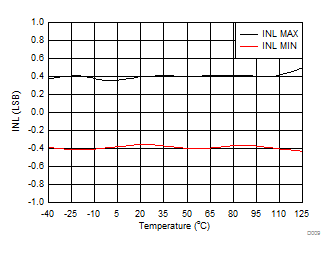 Figure 5-12 Integral Linearity Error vs Temperature
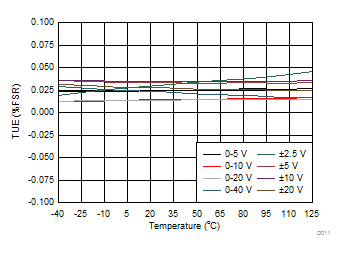 Figure 5-14 Total
Unadjusted Error vs Temperature
Figure 5-14 Total
Unadjusted Error vs Temperature Figure 5-16 Unipolar Zero Code Error vs Temperature
 Figure 5-18 Gain
Error vs Temperature
Figure 5-18 Gain
Error vs Temperature Figure 5-20 Common Mode Error vs Temperature
(Differential Bipolar Outputs) Figure 5-22 Supply Current (IDD, IAA) vs Digital Input
Code
Figure 5-22 Supply Current (IDD, IAA) vs Digital Input
Code Figure 5-24 Supply Current (IIO) vs Supply Voltage
 Figure 5-26 Power-Down Current vs Temperature
 Figure 5-28 VCC Headroom vs Sourcing Current
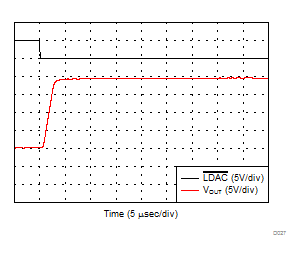 Figure 5-30 Full-Scale Settling Time, Rising Edge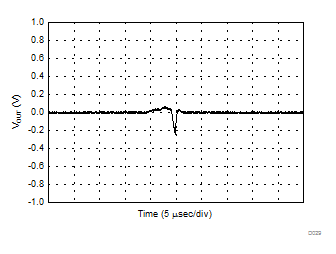
| Power-down to active DAC mode |
|
| ±20-V
output range |
|
Figure 5-32 DAC
Output Enable Glitch
| ±20-V
output range |
|
| Toggle
signal: 1 VPP |
|
| DC
change: midscale to 3/4 full-scale |
|
Figure 5-34 Toggle Output Change Response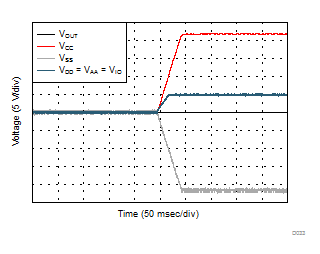 Figure 5-36 Power-Up Response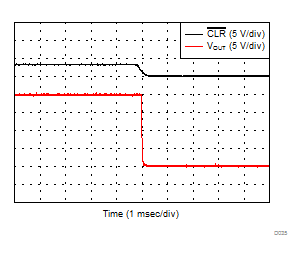
| ±20-V
output range |
|
| Full-scale code to 0 V |
|
| |
|
Figure 5-38 Clear
Command Response
| 0-V to
5-V output range |
|
| Midscale code |
|
Figure 5-40 DAC
Output Noise Density vs Frequency Figure 5-42 Internal Reference Voltage vs Temperature
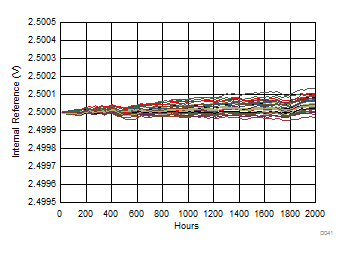 Figure 5-44 Internal Reference Voltage vs Time
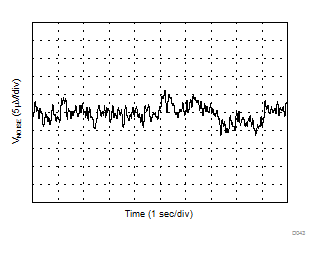 Figure 5-46 Internal Reference Noise
 Figure 5-5 Integral Linearity Error vs Digital Input Code (Unipolar Outputs)
 Figure 5-7 Differential Linearity Error vs Digital Input Code (Unipolar
Outputs)
Figure 5-7 Differential Linearity Error vs Digital Input Code (Unipolar
Outputs) Figure 5-9 Total
Unadjusted Error vs Digital Input Code (Unipolar Outputs)
Figure 5-9 Total
Unadjusted Error vs Digital Input Code (Unipolar Outputs)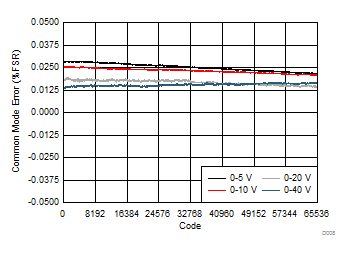 Figure 5-11 Common Mode Error vs Digital Input Code (Differential Unipolar
Outputs)
Figure 5-11 Common Mode Error vs Digital Input Code (Differential Unipolar
Outputs)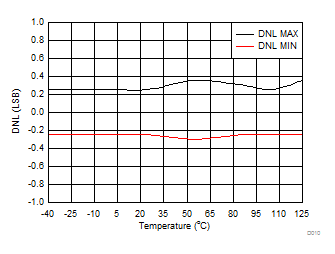 Figure 5-13 Differential Linearity Error vs Temperature
 Figure 5-15 Unipolar Offset Error vs Temperature
 Figure 5-17 Bipolar Zero Error vs Temperature
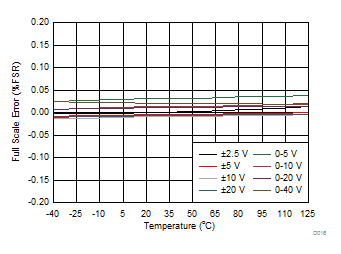 Figure 5-19 Full-Scale Error vs Temperature
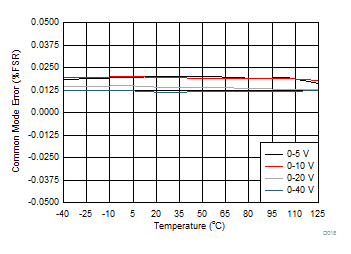 Figure 5-21 Common Mode Error vs Temperature
(Differential Unipolar Outputs) Figure 5-23 Supply Current (ICC, ISS) vs Digital Input
Code
Figure 5-23 Supply Current (ICC, ISS) vs Digital Input
Code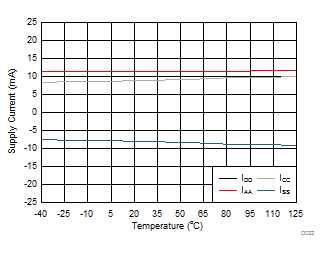 Figure 5-25 Supply Current vs Temperature
 Figure 5-27 Source and Sink Capability
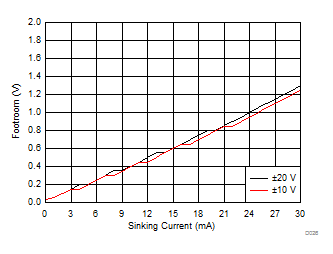 Figure 5-29 VSS Footroom vs Sinking Current
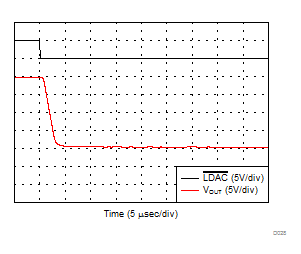 Figure 5-31 Full-Scale Settling Time, Falling Edge
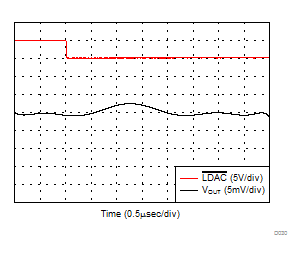 Figure 5-33 Glitch Impulse, 1 LSB Step
| ±20-V
output range |
|
| Toggle
signal: 1 VPP |
|
| DC
value: 3/4 full-scale |
|
Figure 5-35 Toggle Enable Response Figure 5-37 Power-Down Response
| ±20-V
output range |
|
| Toggle
signal: 1 VPP |
|
| DC
value at 20 V |
|
Figure 5-39 Clear
Command Response in Toggle Mode
| 0-V to
5-V output range |
|
| Midscale code |
|
Figure 5-41 DAC
Output Noise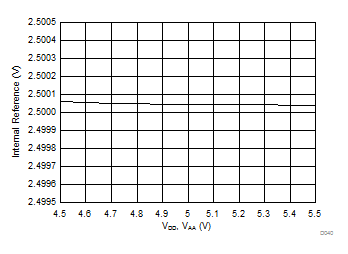 Figure 5-43 Internal Reference Voltage vs Supply Voltage
 Figure 5-45 Internal Reference Noise Density vs Frequency
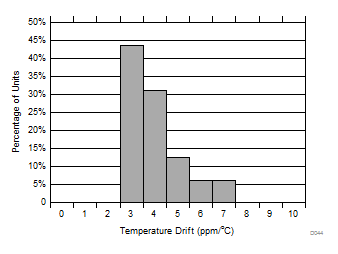 Figure 5-47 Internal Reference Temperature Drift Histogram