SLVUCP8A September   2024  – June 2025 TPS26750


  1.   1
  2.   Description
  3.   Get Started
  4.   Features
  5.   Applications
  6.   6
  7. 1Evaluation Module Overview
    1. 1.1 Introduction
    2. 1.2 Kit Contents
    3. 1.3 Specification
    4. 1.4 Device Information
  8. 2Hardware
    1. 2.1 Power Requirements
    2. 2.2 Setup
      1. 2.2.1 Flashing Firmware Configuration to the TPS26750EVM
      2. 2.2.2 Stand Alone Testing
      3. 2.2.3 Dead Battery Safe Mode
      4. 2.2.4 Dead Battery Always Enable Sink
      5. 2.2.5 TPS26750 and BQ25756
    3. 2.3 Header Information
    4. 2.4 Jumper Information
    5. 2.5 Push Buttons
    6. 2.6 Interfaces
    7. 2.7 Debug Information
    8. 2.8 Test Points and LEDS
  9. 3Software
    1. 3.1 Software Description
    2. 3.2 Software Installation
      1. 3.2.1 Web Browser
      2. 3.2.2 Native Application
    3. 3.3 Software Development
    4. 3.4 Using the Application Customization Tool
      1. 3.4.1 Default View
      2. 3.4.2 Selecting a Configuration
      3. 3.4.3 Filling Out the Questionnaire
      4. 3.4.4 Advanced Configuration Mode
      5. 3.4.5 Flashing Configuration to TPS26750
      6. 3.4.6 Additional Settings
        1. 3.4.6.1 Generating a New Configuration
        2. 3.4.6.2 Exporting and Importing Settings
        3. 3.4.6.3 Generating the Binary
        4. 3.4.6.4 Generating the VIF File
  10. 4Application Specific Use Cases
    1. 4.1 Use With the BQ25756EVM
      1. 4.1.1 Hardware Setup with BQ25756EVM
      2. 4.1.2 Software Setup with the BQ25756EVM
  11. 5Hardware Design Files
    1. 5.1 Schematics
    2. 5.2 PCB Layouts
    3. 5.3 Bill of Materials (BOM)
  12. 6Additional Information
    1. 6.1 Trademarks
    2. 6.2 Electrostatic Discharge Caution
    3. 6.3 Terminology
    4. 6.4 Device Support
      1. 6.4.1 Third-Party Products Disclaimer
      2. 6.4.2 Supplemental Content
    5. 6.5 Documentation Support
    6. 6.6 Receiving Notification of Documentation Updates
    7. 6.7 Support Resources
  13. 7Revision History

Flashing Firmware Configuration to the TPS26750EVM


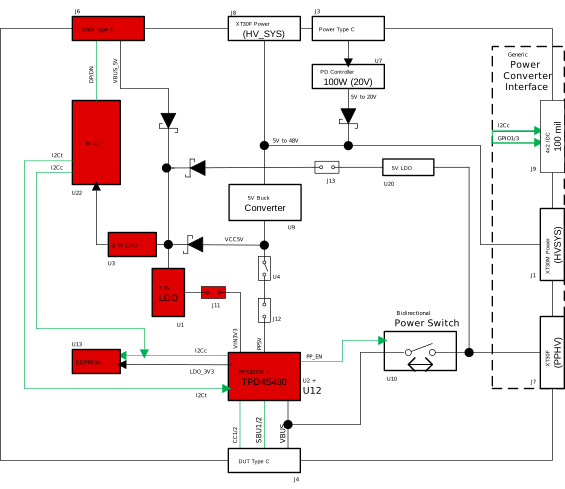
TPS26750EVM EVM Flashing Block Diagram

Figure 2-1 EVM Flashing Block Diagram
Note: The red highlighting shows active or powered portions of the EVM for the specific setup in Figure 2-1 and subsequent block diagrams.

Required hardware setup:

  1. Ensure jumper J11 is connected.
  2. Connect USB-C end of USB-C to USB-C cable or USB-A to USB-C cable to Data Type C port (J6).
  3. Connect other end of cable to computer.
When flashing a new configuration to the TPS26750EVM, the binary configuration file is written to U13, the EEPROM. More details are provided in Section 3.4.6.3.