SBOSAK2A May 2025 – September 2025 INA187
PRODUCTION DATA
- 1
- 1 Features
- 2 Applications
- 3 Description
- 4 Pin Configuration and Functions
- 5 Specifications
- 6 Detailed Description
- 7 Application and Implementation
- 8 Device and Documentation Support
- 9 Revision History
- 10Mechanical, Packaging, and Orderable Information
Package Options
Refer to the PDF data sheet for device specific package drawings
Mechanical Data (Package|Pins)
- DBV|6
Thermal pad, mechanical data (Package|Pins)
Orderable Information
5.6 Typical Characteristics
at TA = 25°C, VS = 5V, VSENSE = VIN+ – VIN– = 0V, VCM = VIN– = 24V, and VREF = VS / 2 (unless otherwise noted)
 Figure 5-1 INA187 Input Offset Voltage Production Distribution
 Figure 5-3 Input Offset
Voltage vs Common-Mode Voltage
Figure 5-3 Input Offset
Voltage vs Common-Mode Voltage Figure 5-5 Common-Mode
Rejection Ratio vs Frequency
Figure 5-5 Common-Mode
Rejection Ratio vs Frequency Figure 5-7 INA187 Gain Error Production Distribution
 Figure 5-9 Power-Supply
Rejection Ratio vs Temperature
Figure 5-9 Power-Supply
Rejection Ratio vs Temperature Figure 5-11 Input Bias
Current vs Common-Mode Voltage
Figure 5-11 Input Bias
Current vs Common-Mode Voltage Figure 5-13 INA187 Gain = 20V/V, Input Bias Current vs
VSENSE
Figure 5-13 INA187 Gain = 20V/V, Input Bias Current vs
VSENSE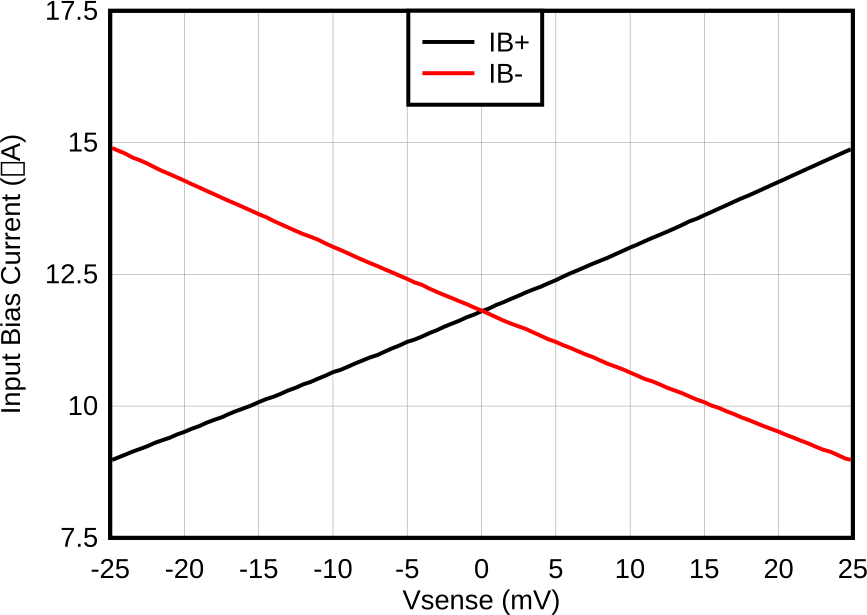 Figure 5-15 INA187 Gain = 100V/V Input Bias Current vs
VSENSE
Figure 5-15 INA187 Gain = 100V/V Input Bias Current vs
VSENSE
| VS = 5V | Gain = 20V/V |
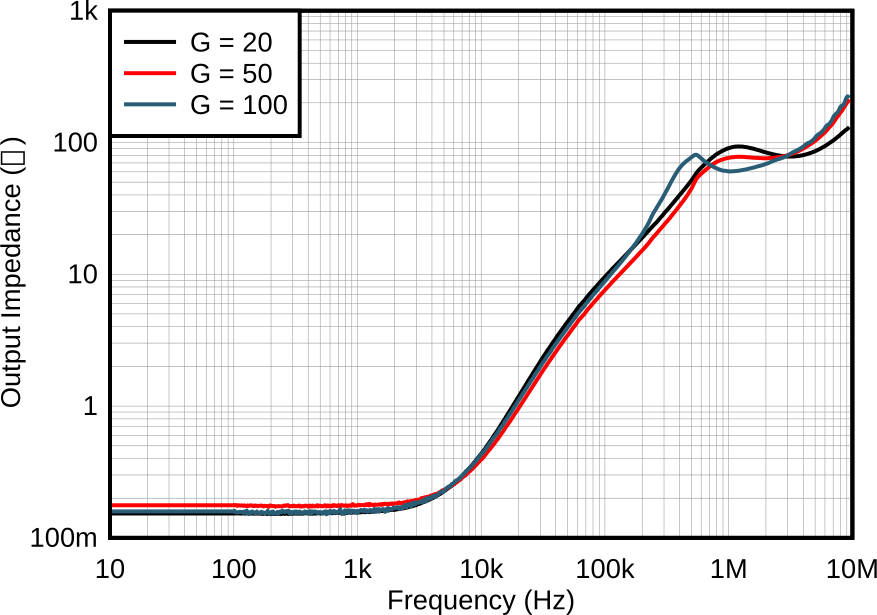

| RL = 10kΩ to GND |
 Figure 5-23 0.1Hz to 10Hz
Voltage Noise
Figure 5-23 0.1Hz to 10Hz
Voltage Noise
| Gain = 20V/V |
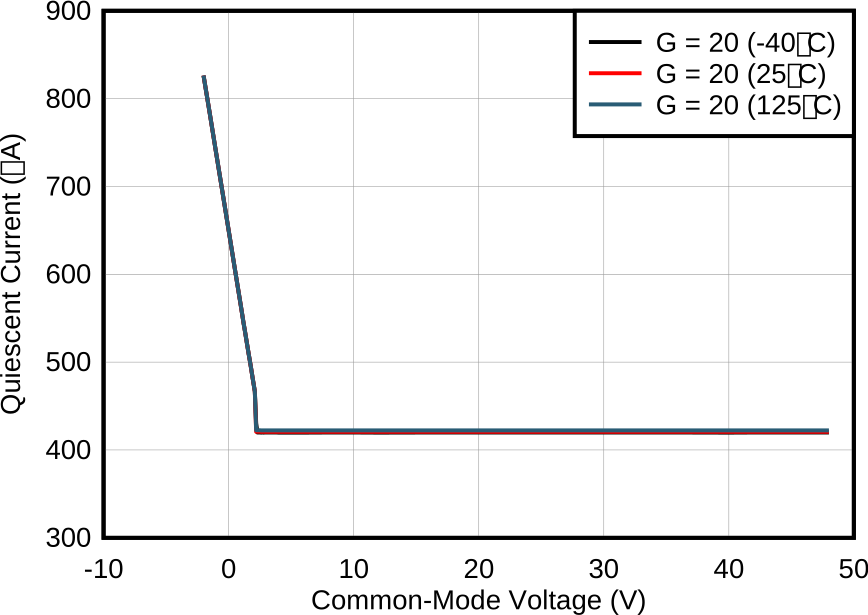
| Gain = 20V/V |

| VCM = 12V | Gain = 20V/V |
 Figure 5-31 Start-Up
Response
Figure 5-31 Start-Up
Response Figure 5-2 Input Offset
Voltage vs Temperature
Figure 5-2 Input Offset
Voltage vs Temperature Figure 5-4 Common-Mode
Rejection Ratio vs Temperature
Figure 5-4 Common-Mode
Rejection Ratio vs Temperature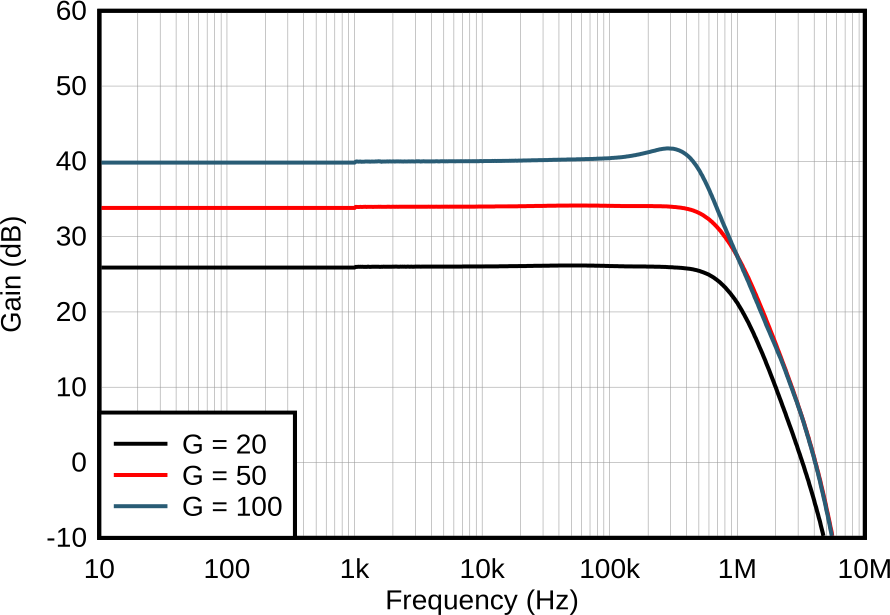 Figure 5-6 Gain vs
Frequency
Figure 5-6 Gain vs
Frequency Figure 5-8 Gain Error vs
Temperature
Figure 5-8 Gain Error vs
Temperature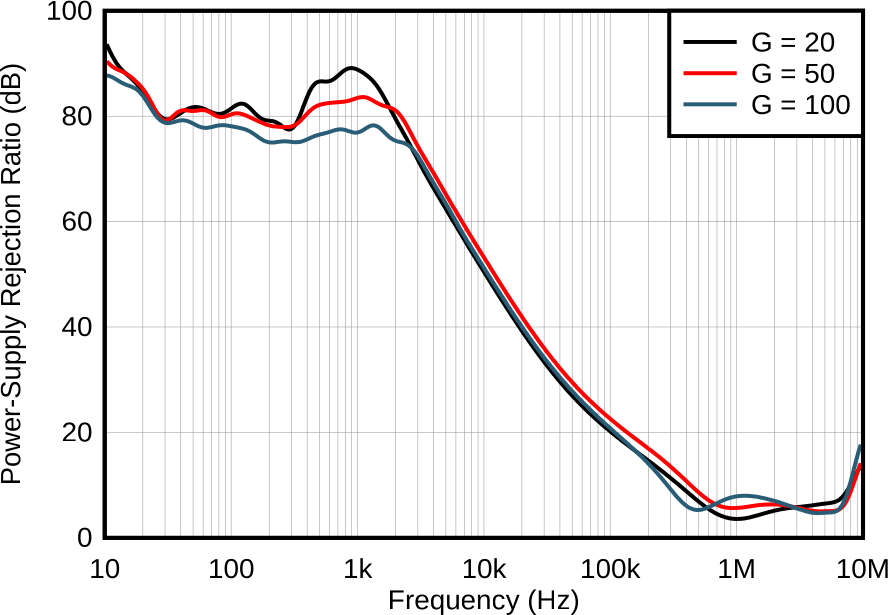 Figure 5-10 Power-Supply
Rejection Ratio vs Frequency
Figure 5-10 Power-Supply
Rejection Ratio vs Frequency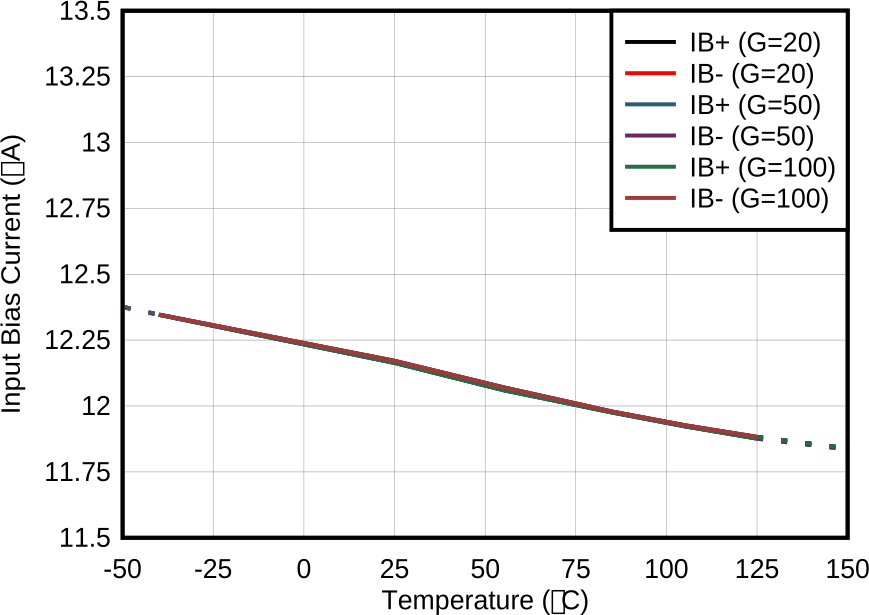 Figure 5-12 Input Bias
Current vs Temperature
Figure 5-12 Input Bias
Current vs Temperature Figure 5-14 INA187 Gain = 50V/V, Input Bias Current vs
VSENSE
Figure 5-14 INA187 Gain = 50V/V, Input Bias Current vs
VSENSE
| VS = 2.7V | Gain = 20V/V |

| VS = 12V | Gain = 20V/V |

| RL = 10kΩ to GND |
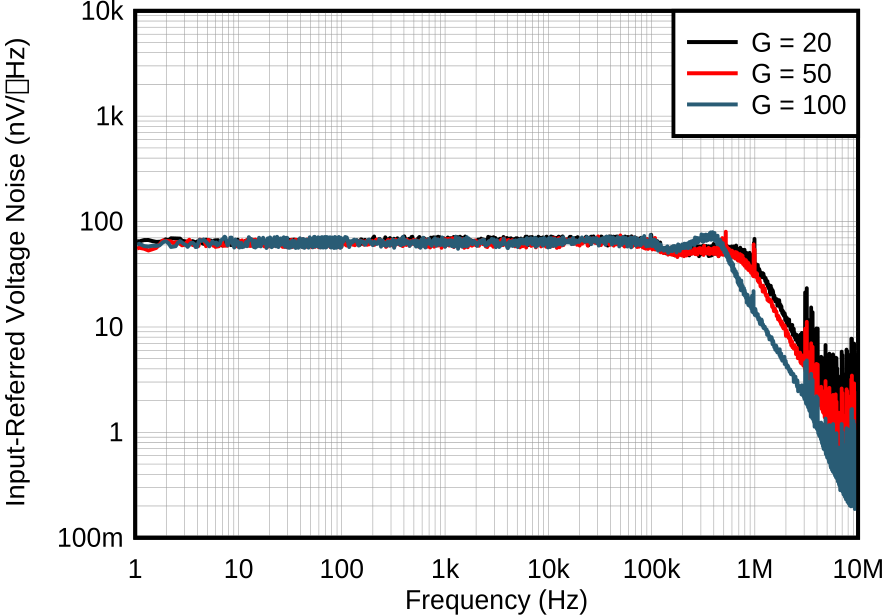 Figure 5-22 Input Referred
Noise vs Frequency
Figure 5-22 Input Referred
Noise vs Frequency
| VCM = 12V | Gain = 20V/V |
 Figure 5-26 Quiescent
Current vs Supply Voltage
Figure 5-26 Quiescent
Current vs Supply Voltage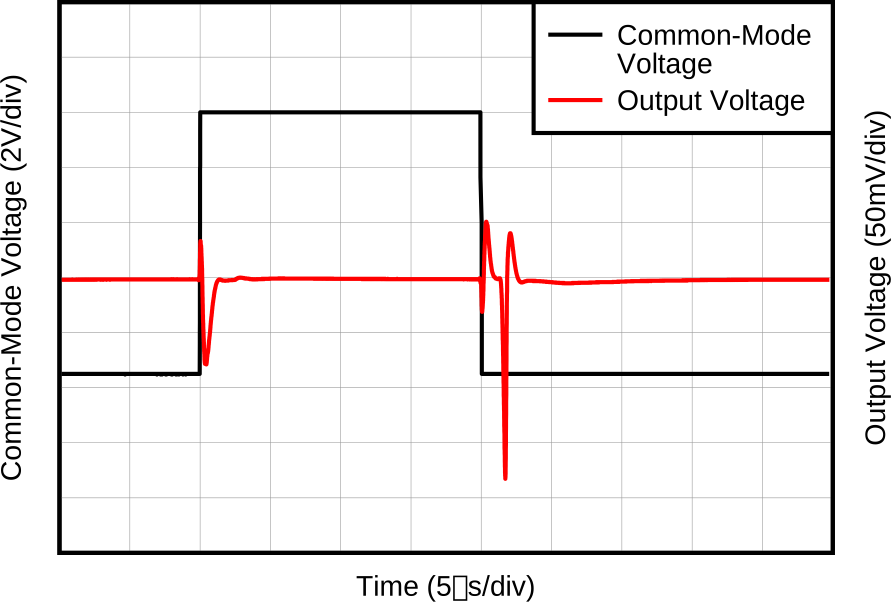 Figure 5-28 Common-Mode
Voltage Fast Transient Pulse
Figure 5-28 Common-Mode
Voltage Fast Transient Pulse
| VCM = 12V | Gain = 20V/V |
 Figure 5-32 Brownout
Recovery
Figure 5-32 Brownout
Recovery