SLUAB29 April 2025 LM2005 , LM2103 , LM2104 , LM2105 , LM5104 , LM5105 , LM5106 , LM5108
2.1 Single Input Capability
In a half-bridge gate driver with independent inputs, a low-side input controls only the low-side transistor output and a high-side input controls only the high-side transistor output. A single input gate driver controls the two outputs with a single pin driven by a pulse width modulated (PWM) signal. When the PWM input signal is low, the low-side output is driven high and the high-side output is driven low. When the PWM input signal is high, the high-side output is driven high and the low-side output is driven low. This is shown in Figure 2-1.
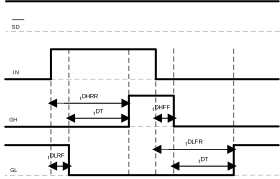 Figure 2-1 LM2104 Single Input
Half-Bridge Gate Driver Timing Diagram
Figure 2-1 LM2104 Single Input
Half-Bridge Gate Driver Timing DiagramIn applications using a microcontroller with a limited number of available PWM or general-purpose input/output (GPIO) pins, a gate driver with a single PWM input capability reduces the required number of controller outputs by half. This makes single input drivers especially helpful in multiphase applications. For example, a three-phase brushless DC motor (BLDC) system driven by three single input half-bridge drivers only uses three microcontroller PWM output pins instead of the six output pins that are required to control three gate drivers with independent inputs.
Using a microcontroller with fewer PWM outputs can save cost and board space. Single input gate drivers can also save on cost and board space by using only a single input filter if required to filter out input noise when compared to independent input devices that can require a filter for both the high-side and low-side inputs.
LM2104 Single Input Pin and Separate Shutdown Pin shows LM2104 with a single PWM input pin. If a gate driver has an independent high-side input and inverting low-side input, the two inputs can be bridged together and used as a single PWM input as shown in Figure 2-2 using LM2103.
 Figure 2-2 Using the Inverting and
Non-inverting Inputs as a Single Input
Figure 2-2 Using the Inverting and
Non-inverting Inputs as a Single Input