SNIS244 September 2025 ISOTMP35R
ADVANCE INFORMATION
- 1
- 1 Features
- 2 Applications
- 3 Description
- 4 Pin Configuration and Functions
- 5 Specifications
- 6 Detailed Description
- 7 Application and Implementation
- 8 Device and Documentation Support
- 9 Revision History
- 10Mechanical, Packaging, and Orderable Information
Package Options
Mechanical Data (Package|Pins)
- DFP|12
Thermal pad, mechanical data (Package|Pins)
Orderable Information
6.3.3 Thermal Response
The SSOP-12 package is designed to maximize the heat flow and minimize the thermal response time from the TSENSE pins to the temperature sensor, while also providing the 5kVRMS isolation rating (UL 1577).
When evaluating thermal response with a thermal contact device, care must be taken to understand the gradient established by the heat source in the application. Traditionally, most temperature sensors are characterized on the basis of a "stirred-liquid" thermal response test, which sees the totality of the device submerged into a circulated oil bath at an elevated temperature, which typically provides the best possible response the device yields, having all parts of the device held to the secondary temperature for the purposes of establishing a new thermal equilibrium point. This style of test is visualized in Stirred Liquid Thermal Response Test, and the results of this test are presented in Thermal Response (Air-to-Fluid Bath).
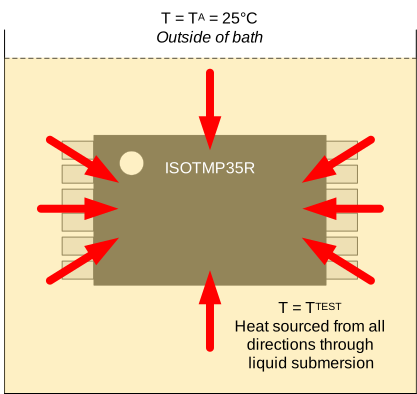 Figure 6-3 Stirred Liquid Thermal Response Test
The ISOTMP35R device is also evaluated by means of a "directional" temperature response test, where only the thermally connected, high-voltage pins of the device are exposed to the elevated temperature, while the remaining low-voltage pins remain in free air at a standard room temperature condition of 25°C. The objective of this form of thermal response test is to more properly evaluate the thermal conductivity of the device under test, even though a slight error can persist from the reference temperature.
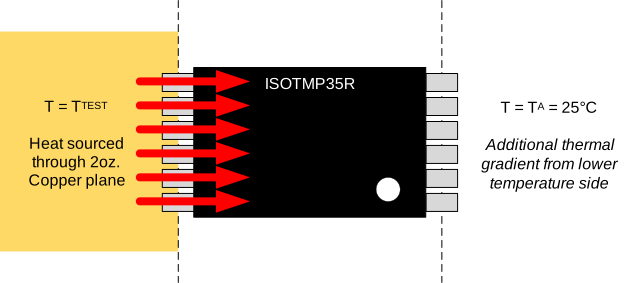
This is demonstrated in Figure 6-5, where ISOTMP35R is shown alongside a standard negative temperature coefficient (NTC) thermistor, as well as the same NTC adhered via non-conductive thermal epoxy to the high voltage copper, placed at a clearance distance of 8mm from the temperature source. The resulting responses demonstrate the excellent response time as well as the accuracy of the ISOTMP35R device. The reference temperature in this test is 75°C.
 Figure 6-5 ISOTMP35R Directional Thermal Response