SPVA018 August 2025 LM2904B
- 1
- Abstract
- Trademarks
- 1Introduction
- 2ESD Overview
- 3Types of ESD Cells
- 4How to Determine the ESD Structure of the Device from the Data Sheet
- 5How to Protect The System from In Circuit ESD/EOS Events
- 6How to Test an Op Amp in a System Level Circuit
- 7Summary
- 8References
5 How to Protect The System from In Circuit ESD/EOS Events
Knowing the internal protection scheme of the op amp is important, because the information helps when designing protection schemes for the system as a whole. ESD diodes are designed for out of circuit events, so additional design consideration is needed if wanting to optimize your system for any in circuit electrical overstress events (EOS).
Consider Figure 5-1. This op amp has the diode to supply protection scheme, with an LDO attached to the positive supply. The max supply of the op amp is 10V, and the LDO is regulating 24V to 5V. 15V is applied to the non-inverting node of the op amp.
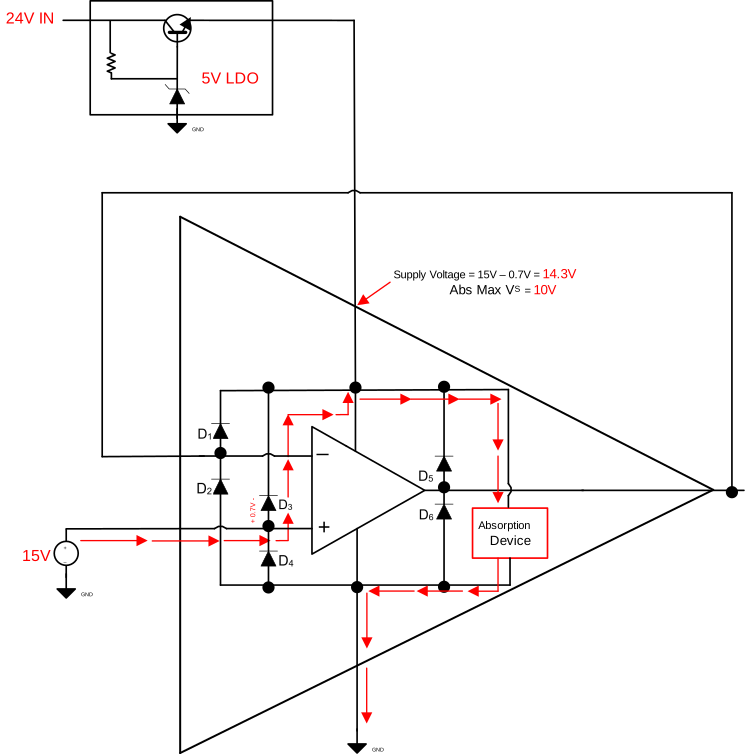 Figure 5-1 EOS Event: Overvoltage
Input
Figure 5-1 EOS Event: Overvoltage
InputD3 directs the voltage through the device into the power supply; since the voltage is above the absolute maximum rating, the absorption device turns on. However, the voltage being supplied is continuous, so the absorption device latches and stays on unless the circuit is power cycled. While the circuit is on, the absorption device is drawing large amounts of current from the LDO, generating a large amount of heat and oftentimes destroying the device.
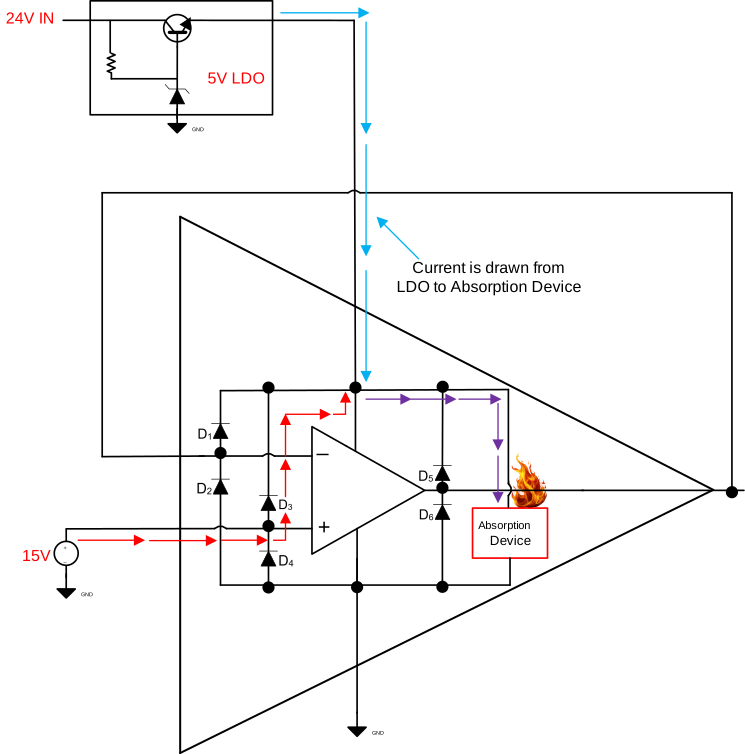 Figure 5-2 EOS Event - Absorption Device
Latches
Figure 5-2 EOS Event - Absorption Device
LatchesHow can this be prevented from happening? There are two simple steps to take. One is to add an input resistance. The next step is to add a TVS diode to the power supply.