SPRACY5 July 2021 AM67 , AM67 , AM67A , AM67A , AM68 , AM68 , AM68A , AM68A , AM69 , AM69 , AM69A , AM69A , DRA821U , DRA821U , DRA821U-Q1 , DRA821U-Q1 , DRA829J , DRA829J , DRA829J-Q1 , DRA829J-Q1 , DRA829V , DRA829V , DRA829V-Q1 , DRA829V-Q1 , TDA4AEN-Q1 , TDA4AEN-Q1 , TDA4AH-Q1 , TDA4AH-Q1 , TDA4AL-Q1 , TDA4AL-Q1 , TDA4AP-Q1 , TDA4AP-Q1 , TDA4APE-Q1 , TDA4APE-Q1 , TDA4VE-Q1 , TDA4VE-Q1 , TDA4VEN-Q1 , TDA4VEN-Q1 , TDA4VH-Q1 , TDA4VH-Q1 , TDA4VL-Q1 , TDA4VL-Q1 , TDA4VM , TDA4VM , TDA4VM-Q1 , TDA4VM-Q1 , TDA4VP-Q1 , TDA4VP-Q1 , TDA4VPE-Q1 , TDA4VPE-Q1
- Trademarks
- 1Introduction to Flashing Tools
- 2Flash Devices on TDA4
- 3Prerequisites for Flashing TDA4
- 4OSPI Flashing
- 5eMMC flashing
2.1 Flashing OSPI and eMMC RAW Sectors
Figure 2-2 is useful to decide which software tools can be used to flash the OSPI flash or eMMC boot partitions given the hardware constrains on the TDA4 custom board.
For example, in a case where the customer wants to flash OSPI but has no MAIN UART, USB or SD card interface, Figure 2-2 clearly directs the customer to use JTAG with CCS or Lauterbach or to use UNIFLASH tool.
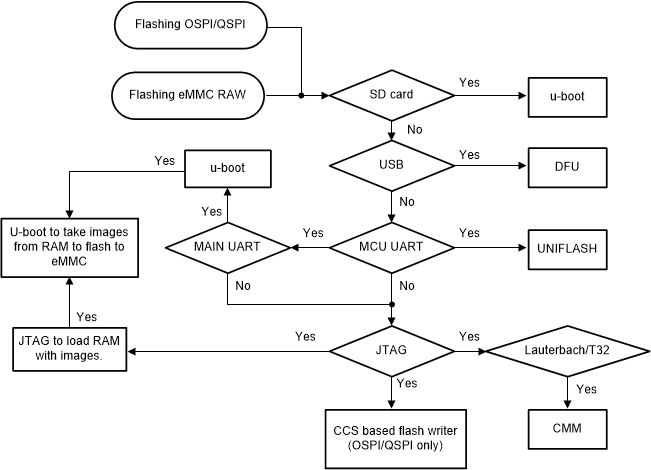 Figure 2-2 Flashing OSPI and eMMC RAW
Sectors
Figure 2-2 Flashing OSPI and eMMC RAW
Sectors