at TA ≅ 25°C, AV
= 10V/V, RF = 2kΩ, RS = 5Ω, and VS = 60V (unless
otherwise noted)
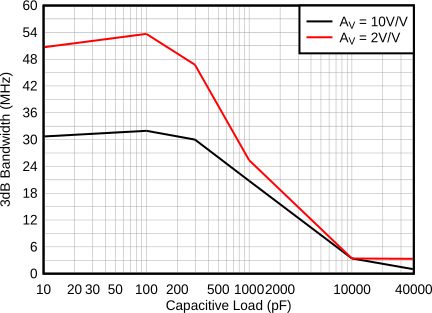 Figure 5-1 Small
Signal Bandwidth vs Capacitive Load
Figure 5-1 Small
Signal Bandwidth vs Capacitive Load
| AV = 2V/V, CLOAD = 1nF,
VOUT = 2VPP |
Figure 5-3 Small
Signal Bandwidth vs Temperature
| AV = 2V/V, CLOAD = 1nF,
VOUT = 2VPP |
Figure 5-5 Small
Signal Bandwidth vs Gain Figure 5-7 Closed Loop Output Impedance vs Frequency
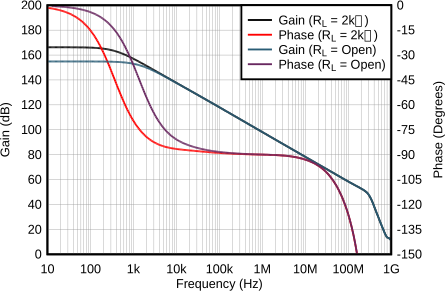 Figure 5-9 Open-Loop Transimpedance vs Frequency
| CLOAD = 1nF, VOUT =
50VPP |
Figure 5-11 Large
Signal Power vs Frequency Figure 5-13 Large
Signal Bandwidth vs Gain
Figure 5-13 Large
Signal Bandwidth vs Gain Figure 5-15 Slew
Rate vs Capacitive Load
Figure 5-15 Slew
Rate vs Capacitive Load
| CLOAD = 1nF, VOUT =
50VPP |
Figure 5-17 Large-Signal Step Response vs Temperature Figure 5-19 Large-Signal Step Response vs Gain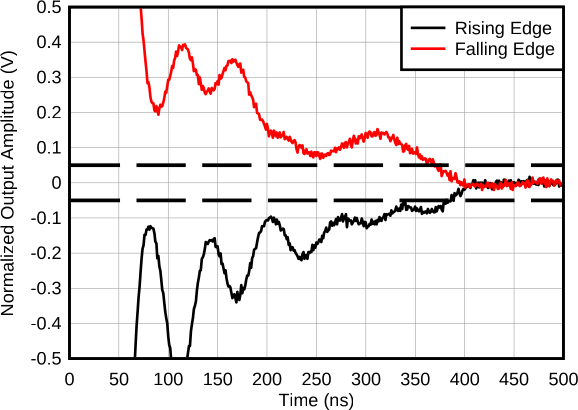
| CLOAD = 1nF, VOUT =
50VPP |
Figure 5-21 Large-Signal Settling Time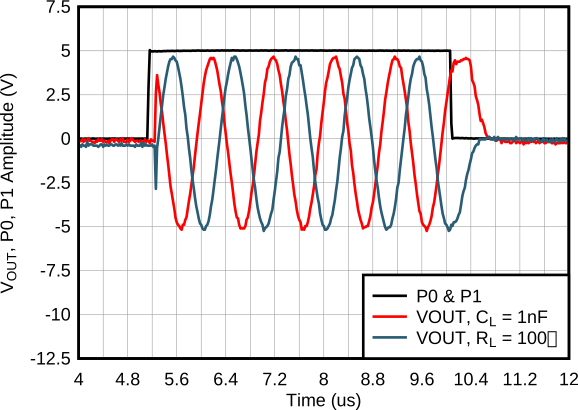
| CLOAD = 1nF, VOUT =
50VPP , fIN = 100kHz |
Figure 5-23 Output Enable/Disable Time Figure 5-25 Harmonic Distortion vs Frequency
| AV = −10V/V, VS = 40V,
fin = 100kHz |
Figure 5-27 Harmonic Distortion vs Output Voltage
| AV = −10V/V, VS = 40V,
fin = 1MHz |
Figure 5-29 Harmonic Distortion vs Output Voltage
| AV = −10V/V, VS = 40V,
fin = 10MHz |
Figure 5-31 Harmonic Distortion vs Output Voltage Figure 5-33 Output-Voltage Headroom vs Temperature
 Figure 5-35 Output Headroom vs Supply Voltage
 Figure 5-37 Output Current Error Drift vs ILIMIT Set
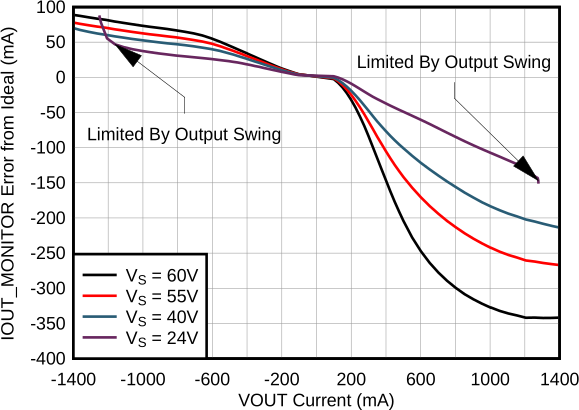 Figure 5-39 IOUT_MONITOR Error vs Output Current
| VOUT = 50VPP, RLOAD = 100Ω,
RIOUT_2048 = 5kΩ |
Figure 5-41 IOUT_MONITOR Response Time  Figure 5-43 Input
Offset vs Input Common-Mode
Figure 5-43 Input
Offset vs Input Common-Mode Figure 5-45 Input
Bias Current vs Input Common-Mode
Figure 5-45 Input
Bias Current vs Input Common-Mode Figure 5-2 Small
Signal Bandwidth vs Capacitive Load
Figure 5-2 Small
Signal Bandwidth vs Capacitive Load
| AV = 2V/V, CLOAD = 1nF,
VOUT = 2VPP |
Figure 5-4 Small
Signal Bandwidth vs Supply Voltage
| AV = 2V/V, RS = 0Ω,
CLOAD = Open, VOUT =
2VPP |
Figure 5-6 Small
Signal Bandwidth vs Resistive Load Figure 5-8 Common-Mode and Power Supply Rejection vs Frequency
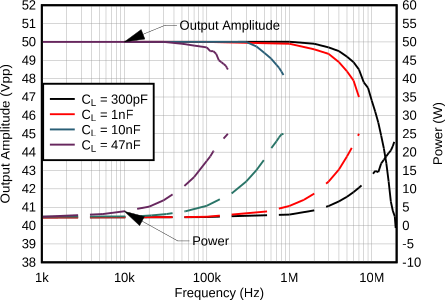 Figure 5-10 Large
Signal Bandwidth vs Capacitive Load
Figure 5-10 Large
Signal Bandwidth vs Capacitive Load Figure 5-12 Large
Signal Bandwidth vs Supply Voltage
Figure 5-12 Large
Signal Bandwidth vs Supply Voltage
| RS = 0Ω, CLOAD = Open,
VOUT = 50VPP |
Figure 5-14 Large
Signal Bandwidth vs Resistive Load Figure 5-16 Large-Signal Step Response vs Capacitive Load
 Figure 5-18 Large-Signal Step Response vs Supply Voltage
| CLOAD = Open, VOUT =
50VPP |
Figure 5-20 Large-Signal Step Response vs Resistive Load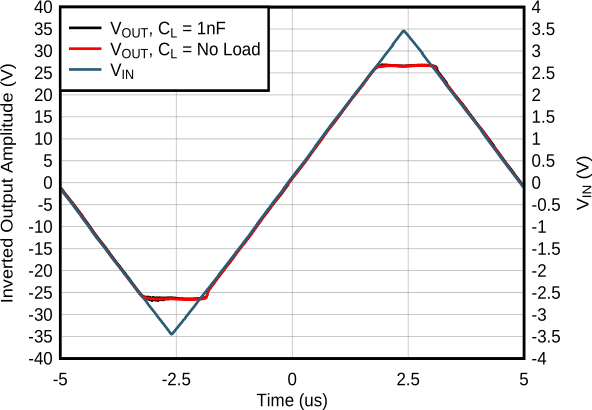
| AV = −10V/V, VOUT =
50VPP |
Figure 5-22 Overload Recovery Time Figure 5-24 Voltage and Current Noise vs Frequency
| CLOAD = Open, AV = 10V/V,
RLOAD = 100Ω |
Figure 5-26 Harmonic Distortion vs Frequency
| AV = 10V/V, VS = 60V,
fin = 100kHz |
Figure 5-28 Harmonic Distortion vs Output Voltage
| AV = 10V/V, VS = 60V,
fin = 1MHz |
Figure 5-30 Harmonic Distortion vs Output Voltage
| AV = 10V/V, VS = 60V,
fin = 10MHz |
Figure 5-32 Harmonic Distortion vs Output Voltage
V
OUT = 25V (Source) and −25V (Sink)
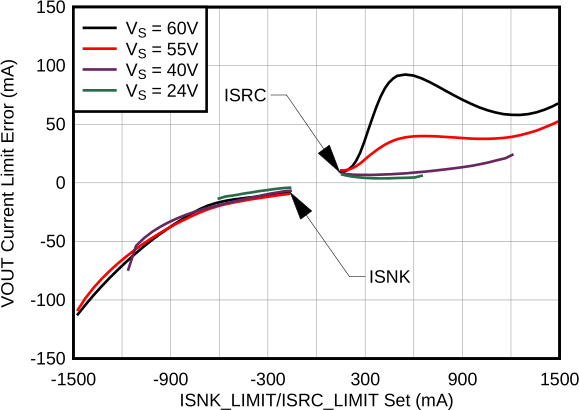 Figure 5-36 Output Current Limit vs ILIMIT Set
| RLOAD = 25Ω, VOUT =
50VPP, ILIMIT = 900mA, fin =
10kHz |
Figure 5-38 Output Current Limit vs Time Figure 5-40 IOUT_MONITOR Temperature Drift vs Output Current
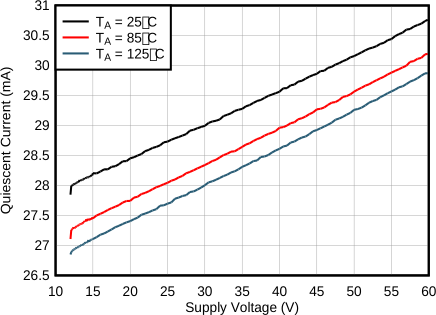 Figure 5-42 Quiescent Current vs Supply Voltage
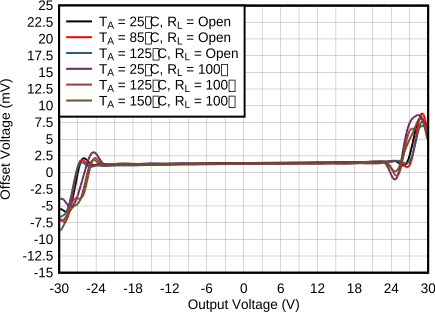 Figure 5-44 Input
Offset vs Output Voltage
Figure 5-44 Input
Offset vs Output Voltage Figure 5-46 DIE_TEMP Accuracy vs Temperature